
Fine hair does not mean flat hair, and a pixie cut does not mean giving up on volume. I know how frustrating it feels when your hair looks thinner than it used to, when a style that once held all day now falls flat by lunchtime, and when every photo seems to show less hair than you remember having. The answer is not longer hair, and it is not more product. The answer is usually a smarter cut—one that builds lift into the shape itself instead of asking your hair to do work it cannot do.
That is why voluminous pixie cuts for women over 50 with fine hair have become such a loved solution. A well-cut pixie removes the weight that pulls fine hair down, stacks layers where lift matters most, and creates texture that makes each strand look like it has company. The result is hair that looks fuller, feels lighter, and takes minutes to style instead of half an hour. It is one of the rare hair decisions that solves several problems at once.
If you have been hesitating, you are probably worried about the same things most women mention to me: Will a pixie make my face look rounder? Will it show my thinning crown? Will I look older? Or will I regret losing the length? Those are fair questions, and this guide answers them honestly: a pixie isn’t right for every face or every texture, and the wrong pixie can make fine hair look thinner. The right one, though, can change how you feel about your hair entirely.
What follows is a practical guide, not a gallery of impossible salon photographs. You will learn why certain layers create lift and others kill it, how colour and texture can fake fullness, which cuts suit which face shapes, and how to style volume that actually lasts. Then you will find twenty-eight distinct voluminous pixie cuts, each described in detail with a real inspiration photo, so you can walk into your next appointment knowing exactly what to ask for.
Voluminous Pixie Cuts for Women Over 50 With Fine Hair: Why Short Hair Can Look Fuller Than Long Hair
The idea that short hair looks thinner is one of the most persistent myths in hairdressing, and for fine hair, it is almost always backwards. Long fine hair is heavy, and weight is the enemy of volume. Every extra inch pulls the roots flatter, separates the ends into wispy strands, and shows the scalp through the lengths. Cut that weight away, and the same hair springs up, because the roots are finally free to lift instead of being dragged down.
A voluminous pixie works through structure rather than magic. Short layers at the crown create a stacked foundation that supports the hair above it. Textured, point-cut ends break up the outline so the hair looks thicker than a blunt edge ever could. A little length left on top gives you something to lift with a brush or your fingers, while tapered sides and a neat nape keep the silhouette clean and stop the cut from looking puffy. The volume is built into the architecture of the cut, which means it survives humidity, a night’s sleep, and a windy walk far better than volume that comes only from a blow-dry.
Colour plays a supporting role that most people underestimate. Fine hair in a single flat shade shows every gap, because light passes straight through to the scalp. Add a few fine highlights, a soft balayage, or a slightly lighter crown, and the eye reads depth and dimension instead of thinness. You do not need dramatic colour to get this effect; two or three subtle tones woven through the top layers are enough to make the hair look twice as full.
A few principles to carry into your appointment:
- Ask for layers that are shorter at the crown and longer toward the front, so the top has something to stand on.
- Avoid blunt, heavy ends on fine hair; textured or point-cut ends always look fuller.
- Keep some length on top, because a pixie that is too short everywhere has nothing to lift.
- Discuss your parting with your stylist, since a deep side part creates instant volume on fine hair.
- Be honest about your styling time; the best cut is one you will actually maintain at home.
With those principles in mind, the twenty-eight cuts below become a menu. Some are classic, some are edgy, and some are soft and romantic, but every one of them is designed to make fine hair look fuller, and every one of them is worn by a real woman over fifty in the inspiration photo beneath it.
Quick Reference Table
| Style | Best For | Key Detail | Why It Works | Styling Tip |
| Classic layered pixie | Everyday volume | Stacked crown layers | Layers support lift | Root spray, fingers only |
| Textured choppy pixie | Fine, straight hair | Point-cut ends | Broken outline looks thicker | Matte paste, piece it out |
| Side-swept pixie | Round faces | Deep side part | Asymmetry creates height | Blow-dry away from the part |
| Pixie with wispy fringe | High foreheads | Long soft fringe | Fringe adds fullness at the front | Round brush, lift at the root |
| Curly pixie | Natural curl or wave | Layers that follow the curl | Curls create natural volume | Curl cream, diffuse gently |
| Tapered pixie | Neat, low-maintenance | Short sides, long top | Contrast makes the top look fuller | Pomade on the top only |
| Pixie bob (bixie) | Wanting more length | Longer nape and sides | Extra length adds weight and swing | Round brush for volume |
| Asymmetrical pixie | Strong features | One side longer | Uneven lengths read as fullness | Sweep the long side forward |
| Feathered pixie | Soft, feminine look | Feathered, wispy ends | Light ends move and lift | Light mousse, air-dry |
| Spiky pixie | Bold personality | Short, piecey spikes | Spikes stand up and add height | Strong wax, pinch the ends |
| Undercut pixie | Thick-feeling top | Shaved sides, long crown | Contrast maximises top volume | Blow-dry the crown upward |
| Wavy tousled pixie | Natural wave | Tousled, undone texture | Waves create width and body | Salt spray, scrunch |
| Pixie with bangs | Covering a high forehead | Full, voluminous fringe | Bangs add density at the front | Dry the fringe forward first |
| Silver pixie | Embracing grey | Layered silver with lift | Light colour reflects and looks full | Purple shampoo, root lift |
| Blonde highlighted pixie | Adding dimension | Fine highlights on top | Light and dark strands create a fake depth | Gloss spray for shine |
Layers That Build Lift Instead of Taking It Away
The single most important thing to understand about voluminous pixie cuts for women over 50 with fine hair is that not all layers are the same. Some layers create volume; others quietly destroy it. Layers cut too long and too heavy will lie flat against the head because there is nothing underneath them to lift them. Layers cut too short and too choppy can look thin and wispy because there isn’t enough hair left to create body. The sweet spot is a graduated layer that is shortest at the crown, where you need lift, and gradually longer toward the front and sides, where you need coverage.
Your stylist should be cutting with the crown in mind from the first snip. The crown is where fine hair is usually thinnest, and it is also where volume matters most, because it is the highest point of your head and the first thing people see. A good pixie builds a small stack of shorter layers right at the crown, like a foundation, and then lets longer layers fall over the top. That foundation is invisible, but it is what holds the style up all day. If your stylist only layers the ends and leaves the crown one length, the cut will look flat within an hour, no matter how much product you use.
Length on top is your other secret weapon, and it is worth protecting in the chair. Many women ask for a pixie to be cut very short everywhere, and then wonder why it looks flat. The top needs at least two to three inches of length to lift, because volume is created by bending hair upward at the root, and hair that is too short has nothing to bend. A pixie with a longer top and shorter sides will always look fuller than a pixie that is uniformly short, because the contrast between the two lengths makes the top look even more generous.
The back of the cut matters too, and it is the part most people forget to discuss. A stacked or graduated back, where the hair is layered shorter underneath and longer on top, creates a rounded shape that supports the crown from behind. A flat, one-length back, by contrast, can make the whole cut look heavy and shapeless. Ask your stylist to show you the back in a mirror before you leave, because a well-shaped back is what makes a pixie look expensive rather than homemade.
Finally, remember that layers need maintenance to keep working. A pixie grows out faster than a longer cut, and as the layers grow, they lose their stacking effect and start to lie flat. Most women with a voluminous pixie book a trim every four to six weeks, not because the cut looks terrible at five weeks, but because the volume starts to fade. That regular appointment is part of the style, not an inconvenience, and it keeps the cut looking intentional rather than grown out.
Why Texture and Choppy Ends Make Fine Hair Look Thicker
Texture is the second pillar of volume, and it makes the biggest visual difference in fine hair. A blunt, straight-across edge on fine hair shows every gap because the eye follows the clean line and notices where the hair thins. A textured, point-cut edge breaks that line into dozens of small pieces, and the eye reads those pieces as fullness, because it cannot tell where one strand ends and the next begins. It is a simple optical trick, and it works every time.
Point cutting is the technique your stylist uses to create that texture, and it is worth asking for by name. Instead of cutting straight across, the stylist holds the scissors vertically and snips tiny points into the ends, which thins the very tips while keeping the body of the hair intact. The result is an edge that looks soft and feathery rather than hard and blunt, and a style that moves naturally instead of sitting like a helmet. On fine hair, point cutting is almost always better than a blunt cut, because it removes the weight that pulls hair down while keeping the illusion of fullness.
Choppy layers work on the same principle, but on a larger scale. A choppy pixie has layers of visibly different lengths throughout the top, which creates a piecey, textured surface that catches the light in different directions. That variation is what makes the hair look thicker, because light and shadow across uneven lengths suggest depth. A smooth, uniform pixie, by contrast, reflects light evenly and shows the scalp more easily. If you want your fine hair to look fuller, a little intentional messiness is your friend.
The styling that goes with texture is deliberately undone. A textured pixie should never look perfectly smooth, because smoothness defeats the purpose of the cut. A small amount of matte paste or texturising spray, worked through with your fingers and then piecey ends pinched apart, will keep the texture visible all day. Avoid heavy serums and oils on a textured pixie, because they weigh the pieces down and glue them together, which erases the very texture you paid for.
One caution: texture can go too far. If the layers are cut too choppy or too thin, the hair can look wispy and sparse rather than full, especially at the crown, where fine hair is already thinnest. The difference between a good choppy pixie and a bad one is restraint, and a good stylist will keep the texture in the mid-lengths and ends while preserving enough weight at the crown to support the style. If your hair is very fine, ask for texture concentrated on the ends rather than throughout the cut.
Fringe, Partings, and the Front of the Cut
The front of a pixie does more work than any other part, because it frames your face, covers or reveals your forehead, and sets the tone for the whole style. A fringe is the most powerful tool you have for making fine hair look fuller, because it adds a whole section of hair across the forehead that would otherwise be bare skin. A full, voluminous fringe can make a pixie look twice as thick, simply because more hair is visible from the front.
A long, wispy fringe is the most forgiving choice for fine hair, because it is light enough to lift and long enough to sweep to the side. It softens the forehead, draws attention to the eyes, and can be styled in several ways, swept across, pushed back, or worn straight down. A short, blunt fringe, by contrast, can look heavy on fine hair and show the scalp through it, which defeats the purpose. If you love a fringe, ask for one that is long and textured rather than short and blunt.
Your parting is the other front-of-head decision that changes everything, and it costs nothing. A centre part on fine hair tends to expose the scalp in a straight line, making the hair look thinner. A deep side part, by contrast, sweeps a large section of hair across the forehead, covering the scalp, creating instant height at the crown, and adding asymmetry that the eye reads as volume. If you have worn a centre part for years, try a deep side part for a week; the difference in fullness is often dramatic, and it requires no cutting at all.
Side-swept length is a related idea that works beautifully on fine hair. Leaving the front longer than the rest of the cut, so it sweeps across the forehead and past the cheekbone, gives you a section of hair that can be styled with real volume, because it has length to lift. It also softens strong features and adds a feminine, elegant feeling to a pixie that might otherwise feel severe. The long front is the part of the cut that photographs best because it creates movement and a sense of abundance.
When you discuss the front with your stylist, bring a photo and be specific about what you like in it. Is it the length of the fringe, the depth of the part, or the way the hair sweeps across the forehead? Naming the detail helps your stylist reproduce it and stops you from leaving the salon with a fringe that is an inch shorter than the one you imagined. The front of a pixie is the hardest part to grow out if it goes wrong, so it deserves the most careful consideration.
How Colour Creates the Illusion of Fullness
Colour is the quiet partner in every voluminous pixie, and it does more work than most women realise. Fine hair in a single flat shade is transparent in the worst way: light passes through the strands, hits the scalp, and comes back to the eye as a pale gap. Add two or three tones to the same head of hair, and the eye can no longer tell where the scalp ends and the hair begins because light and shadow bounce between strands of different colours. That confusion is what we call fullness.
Highlights are the most reliable way to create this effect, and fine, subtle highlights work better than chunky ones on a pixie. A few fine highlights woven through the top layers, slightly lighter than your base colour, will catch the light and make the crown look thicker. Babylights, which are very fine, delicate highlights, are particularly good for fine hair because they add dimension without creating harsh stripes. Ask your colourist to concentrate the lightest pieces at the crown and around the face, where fullness matters most, and keep the underneath slightly darker for contrast.
Balayage is another technique that suits a pixie cut beautifully because it paints light onto the surface of the hair rather than through it. A soft balayage on the top layers of a pixie creates a sunlit effect that makes the hair look thicker, and it grows out gracefully, which matters when you are getting a cut every five weeks. The key is subtlety: a balayage that is two shades lighter than your base will look natural, while one that is four shades lighter will look like a different haircut altogether.
Silver and grey hair deserve a special mention, because going grey is one of the best things that can happen to fine hair. Grey and silver hair reflects more light than darker hair, which makes it look fuller, and a silver pixie with layered texture is one of the most striking looks a woman over fifty can wear. If you are transitioning to grey, a pixie is the fastest way to get there, because you can cut away the old colour in one appointment instead of growing it out for years. Using a purple shampoo once a week will keep silver bright and prevent it from turning yellow.
Whatever colour you choose, remember that healthy hair holds colour and volume better than damaged hair. Fine hair is easily damaged by over-processing, and damaged hair looks thinner, not thicker, because the strands break and the ends split. If your hair is fragile, choose a gentler colour, space your appointments further apart, and invest in a good conditioner. The fullest-looking hair is always the healthiest hair.
Curls, Waves, and Working With What You Have
If your fine hair has any natural wave or curl, a pixie is the best friend you never knew you had. Curls and waves create volume automatically because each bend in the hair pushes it away from the head, creating space between strands. A curly pixie does not need much styling to look full because the texture does the work for you, and it often looks better slightly undone than perfectly smooth.
The cut for curly fine hair differs from that for straight fine hair, and it is important that your stylist understands this. Curly hair should be cut dry or mostly dry, because wet curls shrink as they dry, and a cut that looks perfect when wet can end up far too short when the curls spring up. Layers should follow the curl pattern rather than fighting it, with enough length left on top for the curls to form properly. A curly pixie that is cut too short will lose its curl and look frizzy, while one with enough length will form soft, defined curls that create natural volume.
Wavy hair sits between straight and curly, and it is wonderfully versatile in a pixie. A wavy pixie can be worn tousled and undone for a casual, modern look, or smoothed with a round brush for a more polished finish. The wave gives you a head start on volume, because the hair already bends away from the head, and a little salt spray or texturising spray will enhance the wave without weighing it down. If your wave is uneven, with some sections straighter than others, a few soft layers will even it out and make the wave look intentional.
For straight, fine hair, the goal is to create the movement that curls and waves provide naturally. That means textured ends, layered crowns, and styling that bends the hair rather than flattening it. A round brush and a hairdryer, used to lift the roots as you dry, will create lasting volume, and a light mousse applied to damp hair will give the strands enough grip to hold their shape. Straight fine hair will never look curly, but it can look full, and that is the goal.
One honest note: if your hair is very fine and very straight, a pixie will require more styling than it would for someone with natural texture. That does not mean it is the wrong choice, but it does mean you should be realistic about your morning routine. If you are willing to spend five minutes with a dryer and a brush, a pixie will reward you. If you want to wash and go with no styling at all, a textured, tousled pixie that is designed to air-dry is the better choice, and your stylist should know that before they pick up the scissors.
Styling Products and Tools That Actually Help Fine Hair
The right products can make a voluminous pixie look twice as full, and the wrong products can undo a good cut in minutes. The rule for fine hair is simple: light products, applied sparingly, at the roots. Heavy creams, oils, and serums coat fine strands and pull them down, which is the opposite of what you want. A pea-sized amount of a light product is usually enough for a whole pixie, and less is almost always more.
Root lift spray or mousse is the single most useful product for a voluminous pixie. Applied to damp hair at the roots before blow-drying, it gives the strands grip and hold, so they stand up rather than fall flat. A volumising mousse, worked through only the top layers, will add body without weighing the sides down. Texturising spray, used on dry hair, adds grip and separation to piecey ends. Dry shampoo, used on the second or third day, absorbs oil at the roots and restores volume without a wash—a gift for fine hair that goes flat overnight.
Tools matter as much as products. A small round brush, about an inch in diameter, is the right size for a pixie because it can get close to the roots and lift short layers. Blow-dry the crown upward, lifting the hair away from the head with the brush, and let it cool for a few seconds before releasing it, because hair sets in the shape it cools in. A flat iron should be used sparingly on a voluminous pixie, and only on the very ends if you want a piecey finish, because straightening the roots will flatten the volume you just created.
Heat protection is not optional for fine hair because fine strands are damaged faster than thick ones, and damaged hair looks thinner. A light heat-protectant spray, applied before using any hot tool, will keep your hair healthy and your volume intact. And on days when you do not want to style at all, a little dry shampoo and a quick finger tousle will revive a pixie in under a minute, which is one of the great pleasures of short hair.
| Situation | Recommended Choice | Why It Works |
| Hair falls flat by midday | Root lift spray + cool-shot finish | Heat sets the lift, cool air locks it |
| Crown shows scalp | Deep side part + fine highlights | Part covers scalp, colour fakes depth |
| Ends look wispy | Point-cut texture + matte paste | Textured ends look thicker |
| No time to style | Tousled textured pixie + dry shampoo | Designed to air-dry with volume |
| Special occasion | Round-brush blow-dry + light hairspray | Maximum lift, flexible hold |
| Growing out a pixie | Pixie bob with longer layers | Extra length bridges the awkward stage |
Making a Voluminous Pixie Work in Your Real Life
A photograph of a pixie is not a promise, and the most useful thing you can do with this guide is to translate its ideas into your own hair, your own face, and your own mornings. Start by being honest about three things: how much time you will actually spend styling, how fine your hair really is, and what your face shape needs. Those three answers will narrow twenty-eight ideas down to three or four, which is a far better place to start than trying to choose from all of them.
Your face shape is the filter most women skip, and it is the one that prevents the most regrets. A pixie with volume on top lengthens a round face because the height draws the eye upward. A pixie with side volume and a soft fringe softens a square jaw because the asymmetry breaks up the angles. A pixie with a long side sweep flatters a heart-shaped face because it balances a wider forehead with a narrower chin. None of these rules is absolute, and a good stylist will adapt them to your features, but knowing them before your appointment helps you ask better questions.
Your lifestyle is the second filter. If you swim, work out, or live in a humid climate, a textured pixie that air-dries will serve you better than a sleek one that needs a daily blow-dry. If you work in a formal office, a polished pixie with a neat nape will feel more appropriate than a spiky one. If you wear glasses, consider a pixie with a longer fringe that sits above the frames, or a shorter fringe that clears them entirely, because hair competing with glasses is a daily annoyance.
| Instead of Copying This | Try This Principle |
| The exact cut in a photo | The layering idea behind it, adapted to your density |
| A celebrity’s colour | The dimension idea, in shades that suit your skin |
| A style that needs daily heat | A textured version that air-dries with the same shape |
| A very short pixie on very fine hair | A pixie with two extra inches on top for lift |
| A blunt fringe from a photo | A longer, textured fringe that suits your forehead |
Budget matters too, and it should be part of the conversation. A pixie needs a trim every four to six weeks, which is more frequent than a longer cut, and colour needs refreshing on a similar schedule. If that rhythm does not suit your budget, choose a cut and colour that grow out gracefully, like a pixie bob with soft balayage, rather than a sharp undercut with high-contrast highlights that will look untidy within three weeks. The best pixie is the one you can afford to maintain.
Your Five-Step Formula for Voluminous Pixie Styling
A good cut gives you the shape, but styling is what turns it into volume every morning. Use this five-step routine, and it will work for almost every cut in this guide.
- Start with clean, damp hair. Wash with a volumising shampoo, which is lighter than a moisturising one, and condition only the ends, not the roots. Towel-dry gently, because rough towel-drying creates frizz on fine hair, and comb through with a wide-tooth comb.
- Apply the product only to the roots. A golf-ball-sized amount of mousse, or a few sprays of root lift worked into the crown and top layers, is enough. Product on the sides and nape will weigh them down and make the cut look puffy rather than voluminous.
- Blow-dry upward, in sections. Using a small round brush, lift the crown hair straight up and dry it from underneath, then move to the front and dry the fringe forward and to the side. Finish with a shot of cool air to set the lift in place.
- Add texture with your fingers. Once the hair is dry, warm a pea-sized amount of matte paste between your palms, run your fingers through the top layers, and pinch the ends into pieces. This is what makes the cut look textured rather than smooth, and it takes less than a minute.
- Lock it lightly, then leave it alone. A light mist of flexible hairspray, applied from arm’s length, will hold volume without making the hair stiff. Then stop touching it, because every time you run your hands through fine hair, you flatten the roots and transfer oil from your fingers to it.
Here is the formula in action. Imagine a Tuesday morning, five minutes before you need to leave. You wash, apply mousse to the crown, blow-dry the top upward with a small round brush, pinch the ends with a little paste, and mist with hairspray. The result is a pixie with real lift, built in five minutes from a cut that was designed to hold it. That is the whole point of a voluminous pixie: the cut does most of the work, and your routine wakes it up.
28 Fabulous Voluminous Pixie Cuts for Women Over 50 With Fine Hair
1. Classic Layered Pixie with Crown Volume
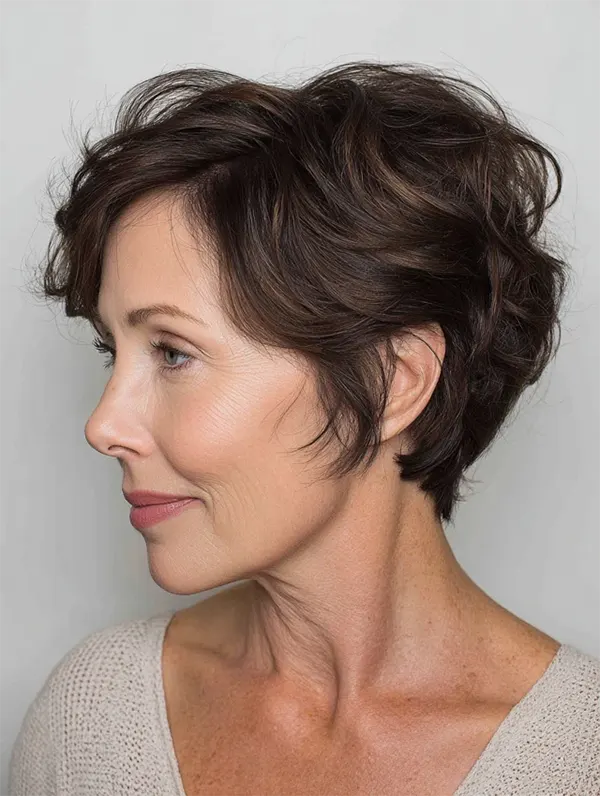
The classic layered pixie is the foundation of this whole guide, and it earns its place first because it is the cut that proves the central idea: layers at the crown create volume that fine hair cannot make on its own. The shape is simple and timeless, with short, stacked layers at the back and crown that gradually lengthen toward the front, so the top has a built-in platform to stand on.
The sides are tapered neatly, the nape is clean, and the overall silhouette is soft and rounded rather than severe, which makes it flattering on most face shapes.
What makes this cut work for fine hair is the way the layers are graduated. The shortest layers sit right at the crown, where your hair is usually thinnest, and they act like a scaffold, holding the longer layers above them and away from the scalp.
Without that scaffold, the longer layers would lie flat, and the cut would look like any other short haircut. With it, the crown has visible height, the hair looks thicker, and the style holds its shape through the day. A good stylist will point-cut the ends lightly, so the outline is soft rather than blunt, which adds to the illusion of fullness.
Styling this pixie is refreshingly simple, and that is part of its appeal. A little root lift spray on damp hair, a quick blow-dry with a small round brush lifting the crown upward, and a pea-sized amount of matte paste pinched through the ends is all it takes. The cut is forgiving if you skip a day, too, because the layers keep their shape even when the hair is not freshly styled.
If you are new to pixies and want one safe, reliable choice, this is the cut to ask for, and it is the one most stylists will recommend first.
2. Textured Pixie with Choppy Layers
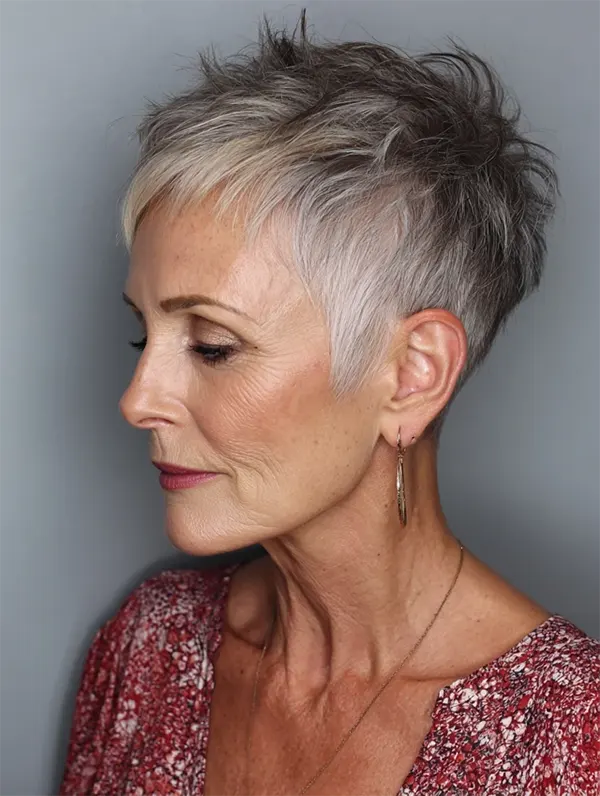
A textured pixie with choppy layers is the cut for fine hair that needs attitude and volume. The layers here are deliberately uneven, with pieces of varying lengths throughout the top, creating a piecey, broken-up surface that catches the light in different directions.
That variation is what makes the hair look thicker, because the eye cannot follow a single clean line and notice where the hair thins. Instead, it reads as a textured surface full of light and shadow, which suggests depth and density.
The choppy effect comes from point cutting and slide cutting, techniques that thin the very ends of the hair while keeping the body intact. Your stylist will hold the scissors at an angle and snip into the ends, creating a feathered edge that moves freely instead of sitting in a solid block. On fine hair, this is transformative, because a solid block of fine hair looks thin, while a textured edge looks full.
The cut is usually worn with a slightly longer top and shorter sides, so the texture has room to show, and the overall feeling is modern, effortless, and a little bit edgy.
This pixie suits women who like a contemporary, low-fuss style, and it is particularly good for straight, fine hair, which benefits most from added texture. Styling is a matter of working a small amount of matte paste or texturising spray through the dry hair with your fingers, then pinching the ends apart to emphasise the pieces.
Avoid heavy products, which can glue the pieces together and erase the texture; let the cut do the talking.
3. Side-Swept Pixie with a Deep Part
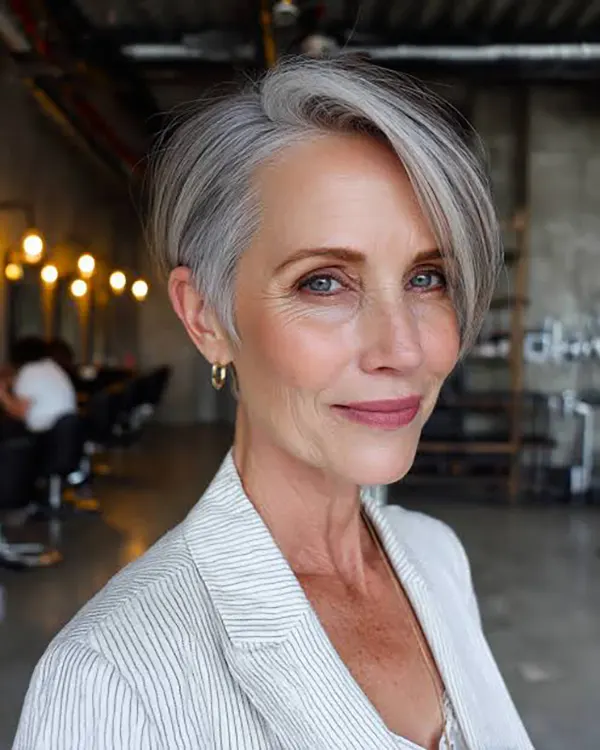
A side-swept pixie with a deep part is the fastest way to create volume without cutting anything new, because the parting itself does half the work. By parting the hair deeply on one side and sweeping a large section across the forehead, you cover the scalp, create instant height at the crown, and add an asymmetry that the eye reads as fullness. It is a simple idea, but it is one of the most effective tricks in this whole guide, and it works on almost every pixie in it.
The cut behind the parting is a classic layered pixie, with the front left longer than the rest, so there is enough hair to sweep. That longer front section is the key: it needs to be long enough to reach past the cheekbone when swept across, because a front that is too short will fall back into place and lose the sweep. The sides are tapered neatly, and the crown is layered for lift, so the sweep has height to fall from. The overall effect is elegant and feminine, with a soft, face-framing quality that flatters most face shapes.
This style is particularly good for round faces because the diagonal line of the sweep breaks up the roundness and creates the illusion of length. It is also a wonderful choice if you are growing out a fringe, because the sweep gives the growing hair a purpose. To style it, blow-dry the front section away from the part with a round brush, then let it fall naturally across the forehead, and finish with a light mist of hairspray to hold the sweep in place.
4. Pixie with Long Wispy Fringe
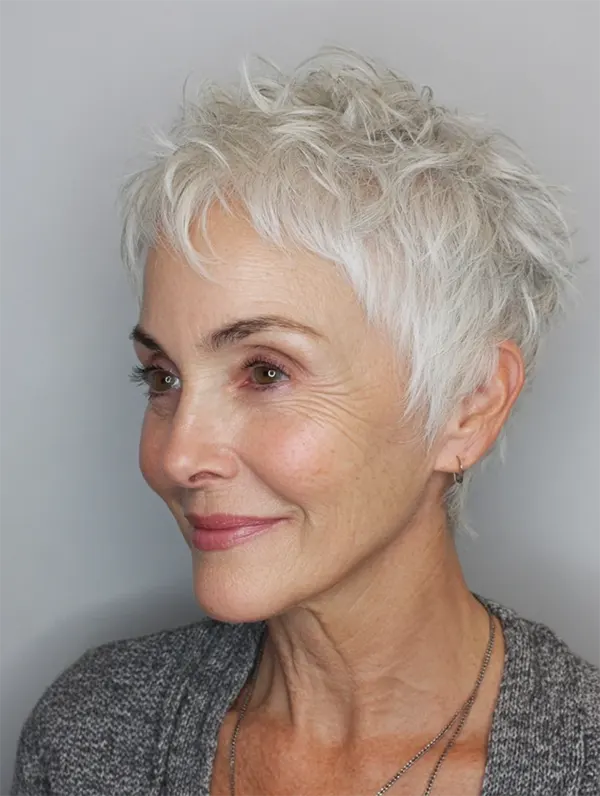
A pixie with a long, wispy fringe is the softest way to add fullness to fine hair, because the fringe adds a whole section of hair across the forehead that would otherwise be bare skin. The fringe is cut long and light, with feathered ends that can be swept to the side or worn straight down, and it frames the eyes beautifully while softening the forehead. It is a gentle, feminine detail that makes a pixie feel romantic rather than severe, and it is one of the most flattering choices for women over fifty.
The wispy quality matters because a heavy, blunt fringe on fine hair can look thin and reveal the scalp through the fringe. A wispy fringe is point-cut and thinned at the ends, so it moves lightly and lets a little light through, which makes it look fuller rather than thinner. The rest of the cut is a classic layered pixie, with volume at the crown and tapered sides, so the fringe is part of a balanced whole rather than the only feature. The combination of a soft fringe and a lifted crown gives this cut its youthful, fresh feel.
This style suits women with high foreheads because the fringe gracefully covers the forehead, and it suits women who like to change their look because the fringe can be swept, pushed back, or pinned. To style it, blow-dry the fringe forward first, while it is still damp, using a small round brush to lift it at the roots, then sweep it to the side or let it fall naturally. A little texturising spray will keep the wisps separated and light.
Also Read: 22 Edgy Pixie Cuts for Women Over 50 Who Love a Bold Look
5. Curly Voluminous Pixie
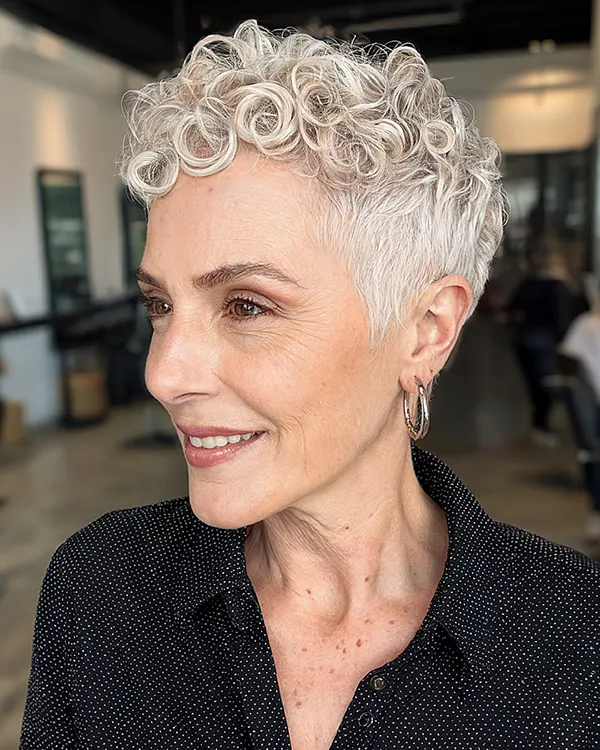
A curly, voluminous pixie is proof that fine hair with natural curl is a gift, not a problem. Curls create volume automatically because each bend pushes the hair away from the head and creates space between strands. A pixie cut that works with the curl pattern will look full with almost no styling at all. The curls form soft, defined shapes on top; the sides are tapered to keep the silhouette neat, and the overall effect is joyful, natural, and full of personality.
The cut is the key, and it should be done with the curls in mind. Your stylist should cut the hair dry or mostly dry, because wet curls shrink as they dry, and a cut that looks perfect when wet can end up far too short when the curls spring up. Layers should follow the curl pattern, with enough length left on top for the curls to form properly. The sides should be tapered rather than cut too short, so the curls have something to sit on. A curly pixie that is cut too short will lose its curl and look frizzy, while one with enough length will form beautiful, defined curls.
Styling a curly pixie is about enhancing what is already there. A curl cream or light mousse, scrunched into damp hair, will define the curls without weighing them down, and diffusing on a low heat will add volume at the roots. Avoid brushing curly hair when it is dry, because that breaks the curl pattern and creates frizz. If your curls are loose rather than tight, a few soft layers will help them form more evenly, and a little curl cream will keep them defined all day.
6. Tapered Pixie with Volume on Top
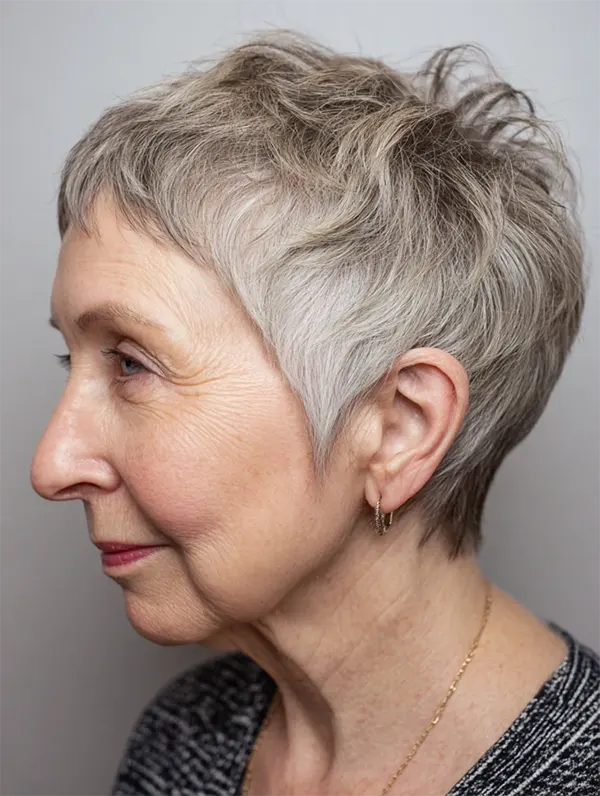
via Outfit Area
A tapered pixie with volume on top is the cut that uses contrast to create fullness. The sides and back are tapered, short, and neat, gradually getting shorter toward the nape, while the top is left significantly longer and layered for lift. That contrast makes the top look even fuller than it is, because the eye compares the short sides with the long top and reads the difference as abundance. It is a clean, polished style that looks intentional and expensive.
The taper is what makes this cut feel modern rather than old-fashioned. A traditional pixie can look uniform, with the same length all over, but a tapered pixie has a clear shape: neat and close at the sides, generous and lifted on top. The taper should be gradual, not a harsh undercut, so the transition from short to long is smooth and flattering. The top layers are point-cut for texture, which adds to the fullness, and the crown is stacked for lift, so the volume is built into the cut rather than relying on styling alone.
This style suits women who like a neat, low-maintenance cut with personality. It is particularly good for fine hair because the short sides remove weight and let the top spring up, and it is easy to style: a little root lift on damp hair, a quick blow-dry to lift the top, and a small amount of pomade to define the pieces. It also grows out gracefully because the taper softens as it grows, and it is a wonderful choice if you want a pixie that looks polished with minimal effort.
7. Pixie Bob (Bixie) with Layers
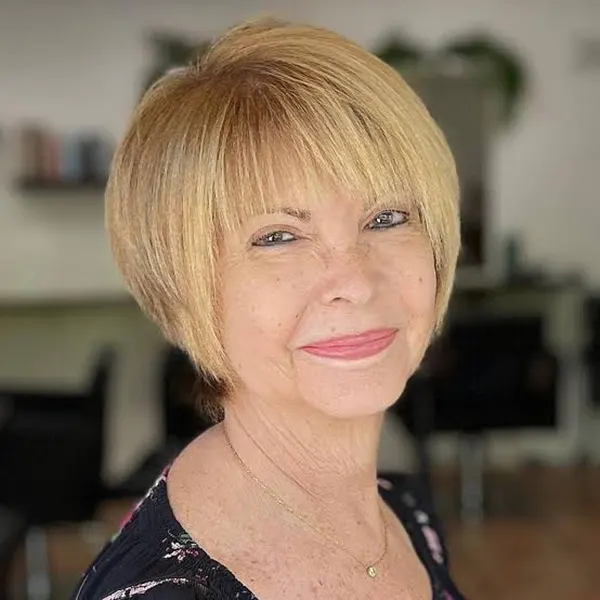
The pixie bob, or bixie, is the in-between cut for women who want the volume of a pixie with the length of a bob. It is longer than a classic pixie, with length at the nape and sides that reaches toward the jaw, but it keeps the pixie’s layered crown and textured top, so it has the lift of a pixie with the swing of a bob. It is the perfect choice if you are nervous about going very short, or if you are growing out a pixie and need a style that bridges the awkward stage.
The layers are what make a bixie voluminous rather than just long. Short layers at the crown create lift, while longer layers through the sides and back add movement and body. The ends are point-cut for texture, so the outline is soft rather than blunt, and the overall shape is rounded and full. The bixie works beautifully on fine hair because the extra length gives you more hair to work with, and the layers prevent that length from lying flat. It is also versatile: it can be worn sleek and polished, or tousled and textured, depending on your mood.
Styling a bixie takes a little more time than a classic pixie, because there is more hair to dry, but the payoff is a style with real presence. A round brush, used to lift the crown and curve the ends under, will create a polished, voluminous finish, while a little texturising spray and a finger tousle will give you a casual, modern look. If you have been thinking about a pixie but are afraid of losing too much length, the bixie is your answer.
8. Asymmetrical Pixie with Volume
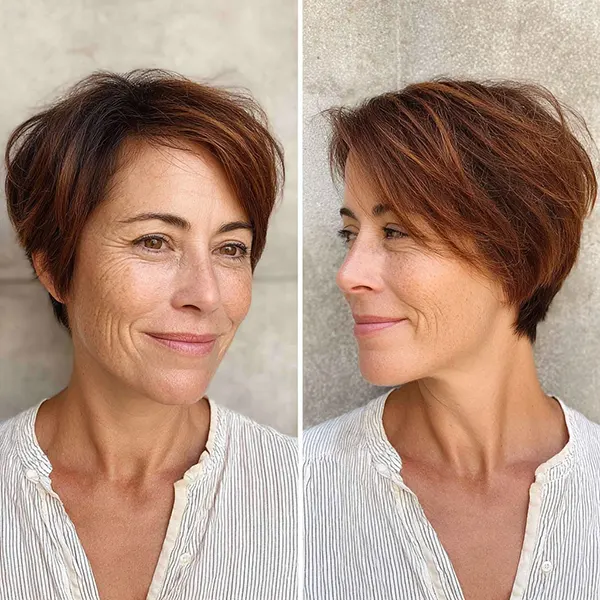
An asymmetrical pixie with volume is the boldest cut in this guide and makes the strongest statement. One side is cut shorter, often tapered close to the head, while the other side is left significantly longer, sweeping across the forehead and past the cheekbone. That asymmetry creates instant visual interest and makes the hair look fuller because the eye is drawn to the longer side and reads its length as abundance.
The volume in an asymmetrical pixie comes from two places: the longer side, which has enough length to lift and sweep, and the crown, which is layered for height. The contrast between the short side and the long side makes the cut feel dynamic rather than static, and it is a wonderful choice for women with strong features because the asymmetry softens and balances the face. It also suits women who like fashion-forward hair, because an asymmetrical pixie is unmistakably modern and confident.
This cut requires a stylist who is comfortable with asymmetry, because the two sides need to be cut with intention rather than by accident. The longer side should be long enough to sweep and style, and the shorter side should be tapered neatly so the contrast looks deliberate. Styling is simple: blow-dry the long side forward and across the forehead, lift the crown with a round brush, and let the asymmetry do the rest. It is a cut that turns heads and one of the most flattering choices for fine hair that needs a bold solution.
9. Pixie with Feathered Layers
via Tired Texan BBQ
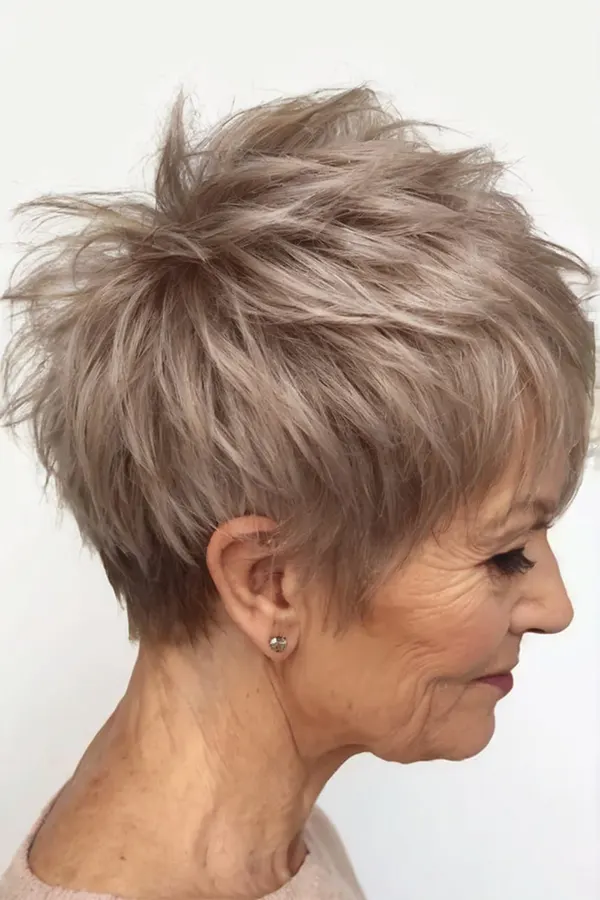
A pixie with feathered layers is the softest, most feminine cut in this guide, and it feels most like a classic. The layers are cut using a feathering technique, in which the ends are thinned and tapered so they lie softly against the head and move gently with every turn. The result is a pixie that looks light, airy, and graceful, with a soft outline that flatters the face and a texture that makes fine hair look fuller.
Feathering works by removing weight from the ends of the hair without removing length, which is exactly what fine hair needs. The thinned ends move freely and catch the light, creating a sense of fullness, while the body of the hair remains intact underneath. The cut is usually worn with a soft fringe and tapered sides, and the overall feeling is gentle and romantic rather than edgy. It is a wonderful choice for women who like a traditional, elegant style, and it is particularly good for fine hair that is also a little thin at the crown, because the feathered layers disguise the scalp.
Styling a feathered pixie is light and easy. A little mousse on damp hair, a blow-dry with a round brush to lift the crown, and a light mist of hairspray is all it takes. The feathered ends should be left soft and natural, not pieced out with heavy product, because the beauty of this cut is its lightness. If you want a pixie that feels like a classic and looks like you have always had it, this is the one.
10. Short Pixie with Spiky Texture
via Hairtical
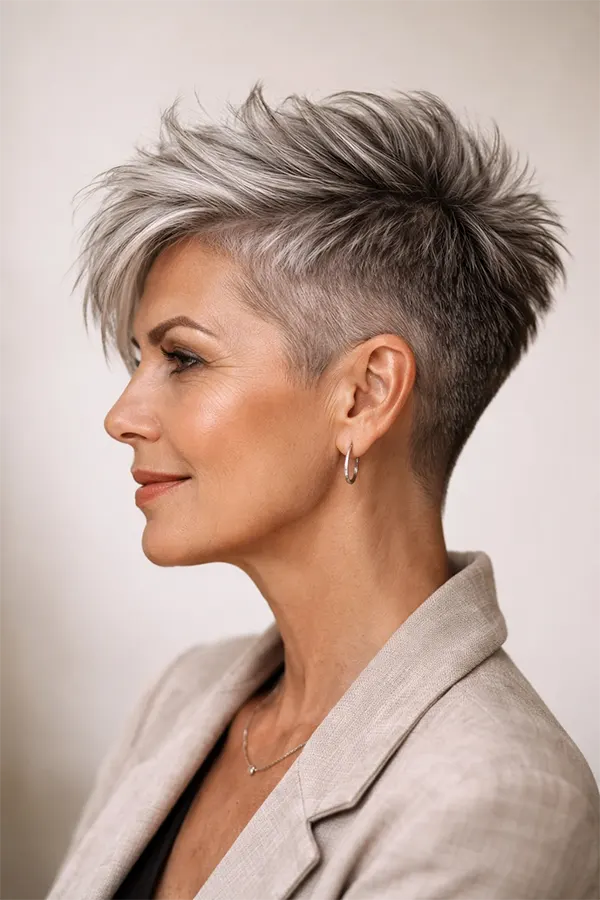
A short, spiky pixie cut is for women who want their hair to have energy and attitude. The top is cut short and piecey, with the ends styled upward into soft spikes that add height and create a bold, modern silhouette. The spikes are not harsh or stiff; they are soft, textured pieces that stand up just enough to add volume and personality, making fine hair look thicker because the upright pieces create visible height.
The cut behind the spikes is a short, layered pixie with a tapered back and sides, which keeps the silhouette neat while the top does the talking. The top layers are point-cut to create the piecey texture, and the crown is layered for lift, so the spikes have a foundation to stand on. This is a cut that looks best with a little styling, because the spikes need product to hold their shape, but the styling itself takes less than a minute: a small amount of strong wax, warmed between your palms and pinched through the ends, will create the spiky texture and hold it all day.
This style suits women with a bold personality and a confident sense of style, and it is particularly good for fine, slightly unruly hair, because the spiky texture turns that unruliness into a feature. It also suits women with oval or heart-shaped faces, because the height on top lengthens the face. If you want a pixie that feels fun, modern, and full of life, the spiky pixie is your cut.
11. Pixie with Undercut and Volume on Top
via vibe.studio.hair
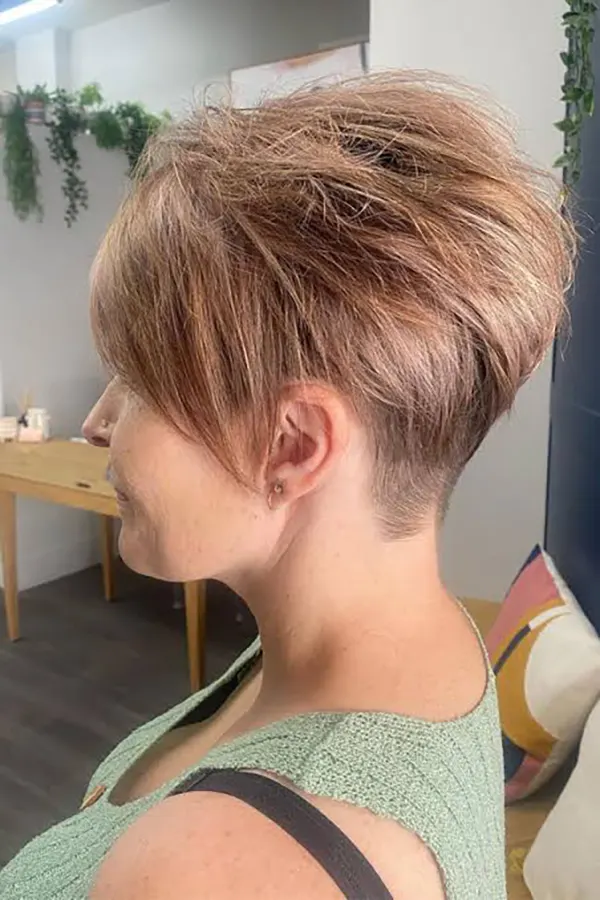
A pixie with an undercut and volume on top is the most dramatic contrast in this guide, and it is the cut that makes the top look the fullest. The sides and back are cut very short, sometimes shaved close to the head, while the top is left long and layered for maximum lift. That extreme contrast makes the top look abundant by comparison, and it is a powerful trick for fine hair that needs all the help it can get.
The undercut is not as intimidating as it sounds, and it can be as subtle or as bold as you like. A soft undercut, where the sides are tapered short but not shaved, gives you the contrast without the drama, and it is a wonderful choice if you want the volume benefit without a very edgy look. A bolder undercut, with a closely shaved nape or sides, creates a stronger statement and is easier to maintain because the shaved sections grow out slowly and do not need frequent trims. Either way, the top is the star, and it should be layered for lift and textured at the ends.
This style suits women who like a modern, confident look, and it is particularly good for fine hair that is thick enough on top to support the contrast. Styling is focused entirely on the top: blow-dry the crown upward with a round brush, add a little texturising spray, and let the undercut keep the sides neat. It is a cut that looks intentional and polished, and it is one of the most effective ways to make fine hair look dramatically fuller.
12. Wavy Pixie with Tousled Volume
via Outfit Area
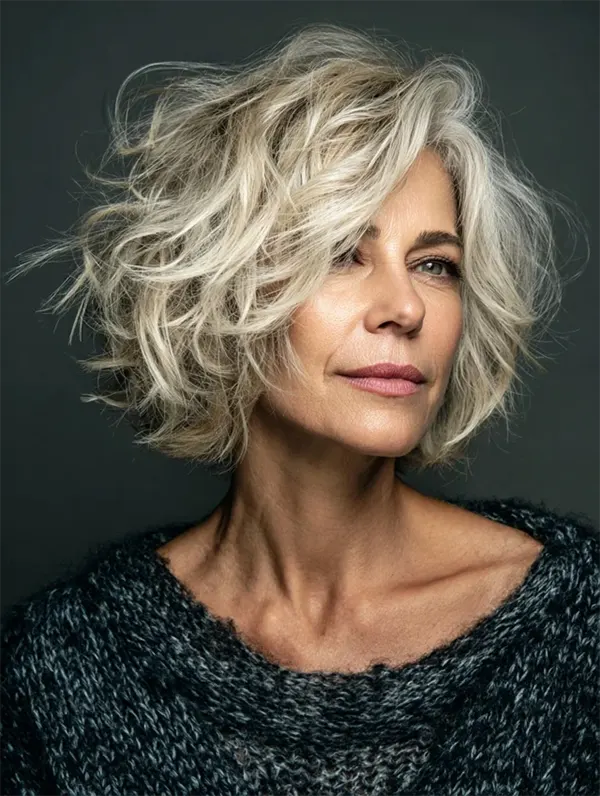
A wavy pixie with tousled volume is the cut for women who want their hair to look effortlessly full, as if they just woke up with perfect hair. The natural wave creates width and body without any styling, and the tousled texture adds a casual, modern feeling that is very now. The cut is layered to enhance the waves, with enough length on top for them to form, and tapered sides to keep the silhouette neat.
The tousled effect comes as much from the cut as from styling. The layers are point-cut and slightly uneven, encouraging the wave to form in different directions, and that variation creates the tousled, undone look. A little salt spray or texturising spray, scrunched into damp hair and left to air-dry, will enhance the wave and add volume, while a quick finger tousle once the hair is dry will separate the pieces and keep the texture visible. The result is a pixie that looks full, relaxed, and completely unforced.
This style suits women with natural waves, and it is a wonderful choice if you want a pixie that requires minimal styling. It also suits women who like a casual, contemporary look, and it works beautifully in summer, when the tousled texture feels beachy and fresh. If your wave is very loose, a few soft layers will help it form more evenly, and a little mousse will give it the hold it needs to last all day.
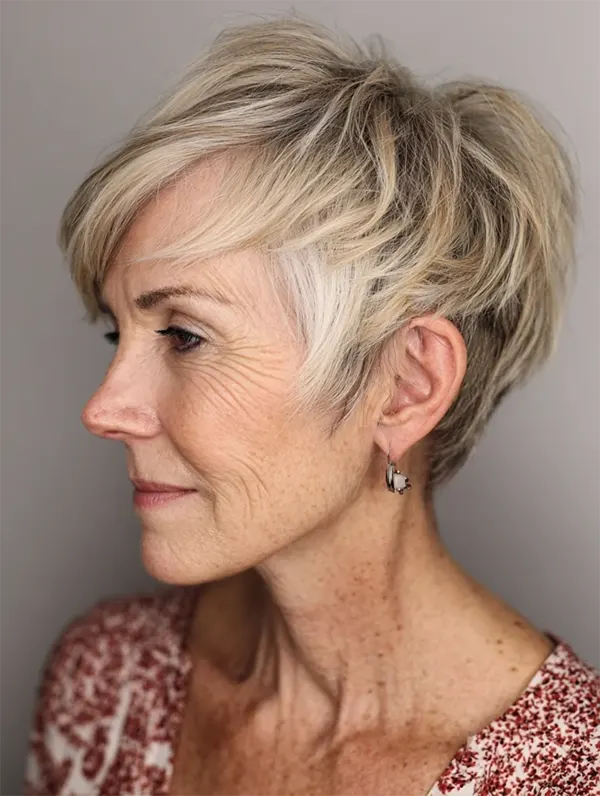
13. Pixie with Voluminous Bangs
via Fits by Dee
A pixie with voluminous bangs is the cut that puts the fullness right where people look first: across the forehead. The bangs are cut full and thick, with enough length and layering to lift at the roots and create a generous, face-framing section that makes the whole cut look thicker. It is a bold, confident choice and one of the most effective ways to make fine hair look abundant, because the bangs add a whole section of visible hair.
The bangs in this cut are not a thin wisp; they are a substantial section, cut with layers that allow them to lift and move. They can be worn straight down for a classic look, swept to the side for a softer feeling, or pushed back for a more dramatic effect. The rest of the cut is a layered pixie with volume at the crown, so the bangs are part of a balanced whole rather than the only feature. The combination of full bangs and a lifted crown creates a silhouette that is round, full, and flattering.
This style suits women with high foreheads because the bangs gracefully cover the forehead, and it also suits women who like a statement fringe. To style it, blow-dry the bangs forward first, while they are still damp, using a small round brush to lift them at the roots, then shape them as you like. A little root lift spray at the front will keep the bangs from falling flat, and a light mist of hairspray will hold them in place without stiffness.
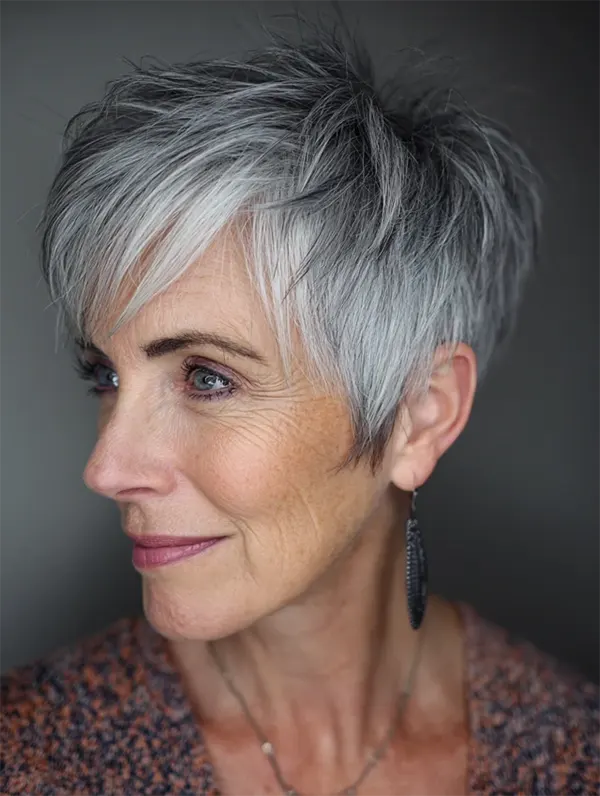
14. Silver Pixie with Layers and Lift
via Outfit Area
A silver pixie with layers and lift is the cut that turns going grey into a style statement. Silver and grey hair reflects more light than darker hair, which makes it look fuller, and a layered pixie cut to maximise that light will look luminous and thick. The layers create lift at the crown, the textured ends catch the light in different directions, and the overall effect is a pixie that glows.
The colour is the hero here, and it deserves care. Silver hair can turn yellow if not maintained, so using a purple shampoo once a week is essential to keep it bright and cool. The cut itself is a classic layered pixie, with stacked crown layers for lift and point-cut ends for texture, and it is often worn with a soft fringe that frames the face. The combination of silver colour and layered volume is striking, and it is one of the most elegant looks a woman over fifty can wear.
This style suits women who have embraced their grey, or who are ready to, and it is a wonderful choice if you want a low-maintenance colour that grows out gracefully. Styling is simple: a little root lift on damp hair, a quick blow-dry to lift the crown, and a gloss spray to enhance shine. If you are transitioning to grey, a pixie is the fastest way to get there, because you can cut away the old colour in one appointment.
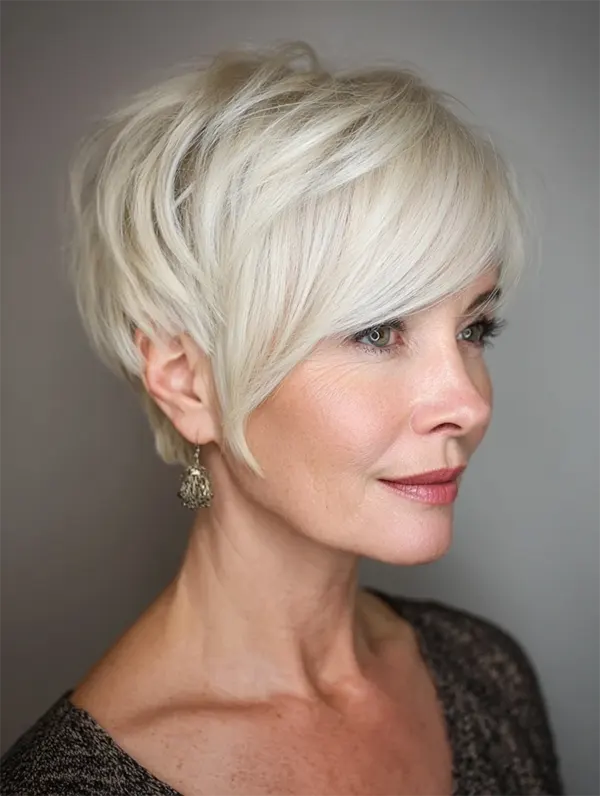
15. Blonde Highlights Pixie for Volume
via Outfit Area
A blonde-highlighted pixie for volume is a cut that uses colour to create the illusion of fullness, and it does it brilliantly. Fine highlights woven through the top layers, slightly lighter than your base colour, catch the light and create the illusion of depth, which makes the hair look thicker. The highlights are concentrated at the crown and around the face, where fullness matters most, while the underlayers are kept slightly darker for contrast.
The highlights should be fine and subtle, not chunky, because chunky highlights on a pixie can look striped and harsh. Babylights, which are very fine, delicate highlights, are ideal for fine hair because they add dimension without creating obvious lines. The cut itself is a layered pixie with a lifted crown and textured ends, and the highlights enhance the texture by making the layers more visible. The result is a pixie that looks sunlit, dimensional, and full.
This style suits women who are already blonde or light brown, and it is a wonderful choice if you want to add dimension without a dramatic colour change. Styling is straightforward: a little root lift, a blow-dry lifting the crown, and a gloss spray to enhance the shine of the highlights. The highlights will need refreshing every six to eight weeks, but they grow out gracefully, and they are worth the maintenance for the fullness they create.
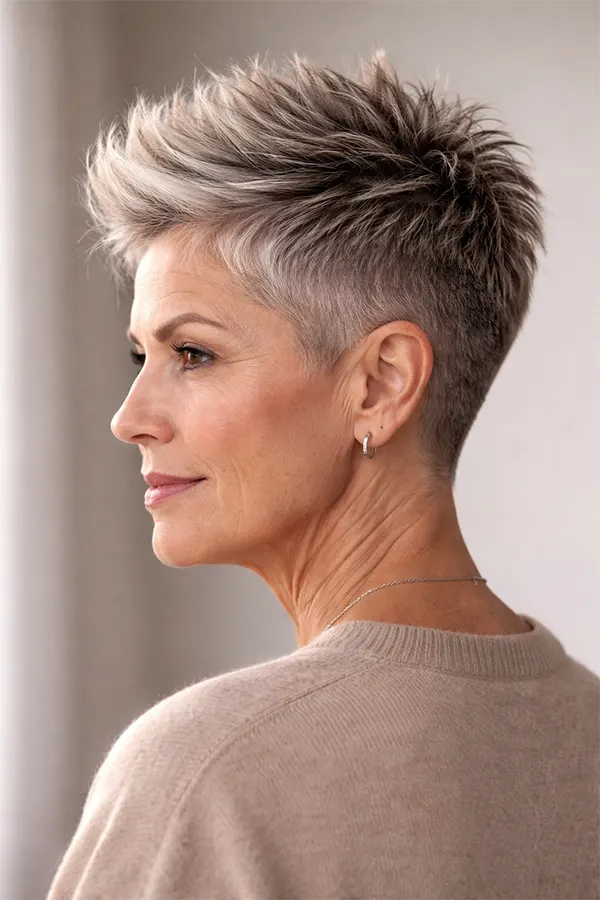
16. Pixie with a Voluminous Quiff
via Hairtical
A pixie with a voluminous quiff is the cut that puts all the drama at the front. The front section is left long and styled upward and back into a soft quiff, which creates height, attitude, and a striking silhouette. The quiff is the focal point of the cut, and it makes the hair look fuller by adding visible height at the highest point of the head. It is a bold, confident style that feels both retro and modern.
The quiff needs length to work, so the front of this pixie is left significantly longer than the rest, with enough hair to sweep up and back. The crown is layered for lift, supporting the quiff from underneath, and the sides are neatly tapered so the quiff stands out. Styling the quiff takes a little practice, but it is simple once you learn it: blow-dry the front section upward and back with a round brush, then use a small amount of pomade or wax to shape it and hold it in place. A light mist of hairspray will keep it from falling.
This style suits women with a bold personality and a love of retro glamour, and it is particularly good for fine hair, because the quiff creates height that fine hair struggles to achieve on its own. It also suits women with oval or heart-shaped faces, because the height lengthens the face. If you want a pixie that makes a statement, the quiff is your cut.
Useful for You: 25 Textured Pixie Haircuts for Women Over 50 With Effortless Style
17. Shaggy Pixie with Piecey Layers
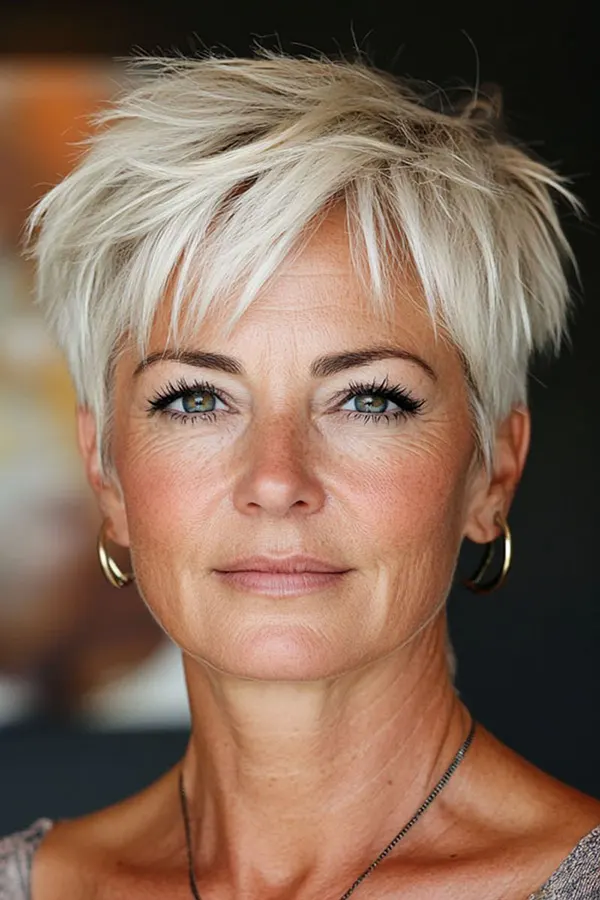
via Itakeyou
A shaggy pixie with piecey layers is the cut for women who want volume without polish. The layers are long, uneven, and deliberately messy, with piecey ends that stick out in different directions, creating a relaxed, rock-and-roll feel. The shag is the opposite of a sleek pixie: it is undone, textured, and full of movement, and that movement is what makes fine hair look thicker.
The shaggy effect comes from long layers cut with a razor or point-cut scissors, which creates a feathered, piecey texture throughout the cut. The top is left longer than a classic pixie, so the pieces have room to move, and the sides are left a little longer too, giving the cut a softer, more lived-in feel. The crown is layered for lift, but the lift is casual rather than structured, which suits the shag’s relaxed personality. It is a cut that looks better slightly messy than perfectly styled, which is a relief for women who do not want to spend time on their hair.
This style suits women who like a casual, contemporary look, and it is particularly good for fine hair with a little natural wave, because the wave enhances the shaggy texture. Styling is minimal: a little texturising spray on damp hair, a quick scrunch, and let it air-dry. The shaggy pixie is the lowest-maintenance voluminous pixie in this guide, and it is a wonderful choice if you want volume without effort.
18. Pixie with Soft Curls on Top
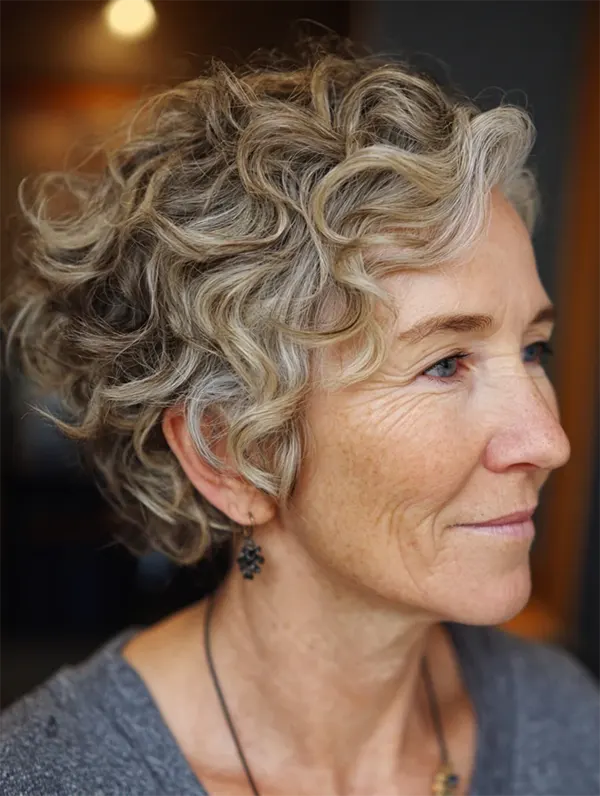
via Outfits Plan
A pixie with soft curls on top is the cut that keeps the sides neat and lets the curls do the talking. The top is left long enough for soft curls to form, while the sides and back are tapered short, which creates a clean silhouette with a romantic, curly crown. The curls add natural volume and texture, and the contrast with the neat sides makes them look even fuller.
The curls in this cut are soft, not tight, which makes them easier to manage and more flattering on mature faces. They can be natural curls, enhanced with a little curl cream, or created with a small curling iron on straight hair, though natural curls will always look better. The top layers are cut to follow the curl pattern, with enough length for the curls to form properly, and the crown is layered for lift, giving the curls height and texture.
This style suits women with natural curl or wave, and it is a wonderful choice if you want a pixie that feels feminine and romantic. Styling is simple: a curl cream or light mousse scrunched into damp hair, then diffused on low heat or left to air-dry. Avoid brushing the curls when dry, because that will break them up and create frizz. If your curls are loose, a few soft layers will help them form more evenly.
19. Graduated Pixie with a Stacked Back
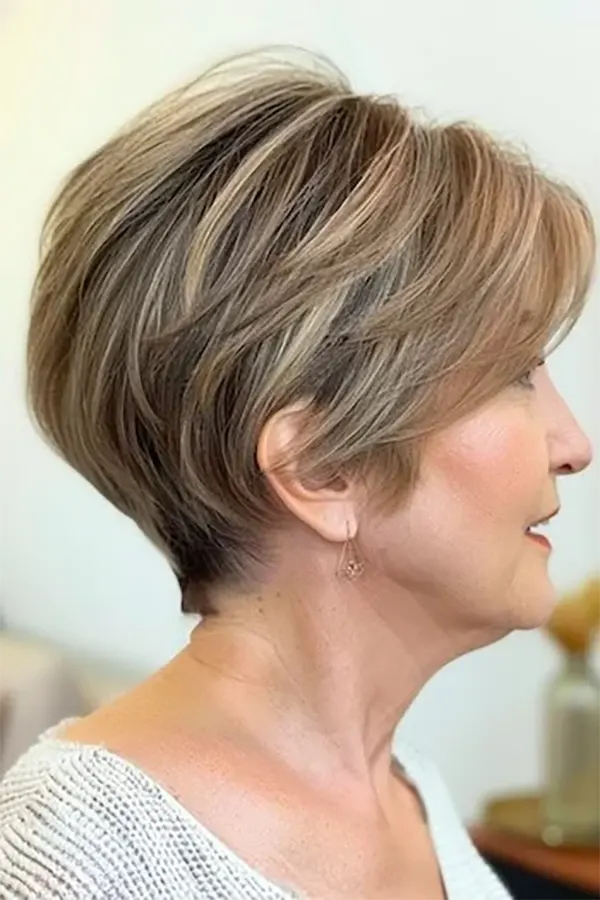
A graduated pixie with a stacked back is a cut that builds volume at the back. The back is layered in a graduated stack, with shorter layers underneath and longer layers on top, which creates a rounded, full shape that supports the crown from the back. The front is left longer and swept to the side, and the overall silhouette is polished, elegant, and full.
The stacked back is a classic technique that has been used for decades because it works. The shorter underlayers act as a foundation, pushing the longer top layers up and out, which creates volume that lasts all day. The graduation should be smooth, not stepped, so the back looks rounded rather than blocky, and the nape should be tapered neatly. This is a cut that looks expensive because of its precise shape, and it is a wonderful choice for women who like a polished, put-together style.
This style suits women with fine hair that needs structure, because the stacked back provides the support that fine hair cannot create on its own. It also suits women who like a classic, elegant look, and it works beautifully with a deep side part and a long front sweep. Styling is straightforward: use a round brush to lift the crown and smooth the back, then apply a light mist of hairspray to hold the shape.
20. Pixie with Side Volume and Long Sideburns
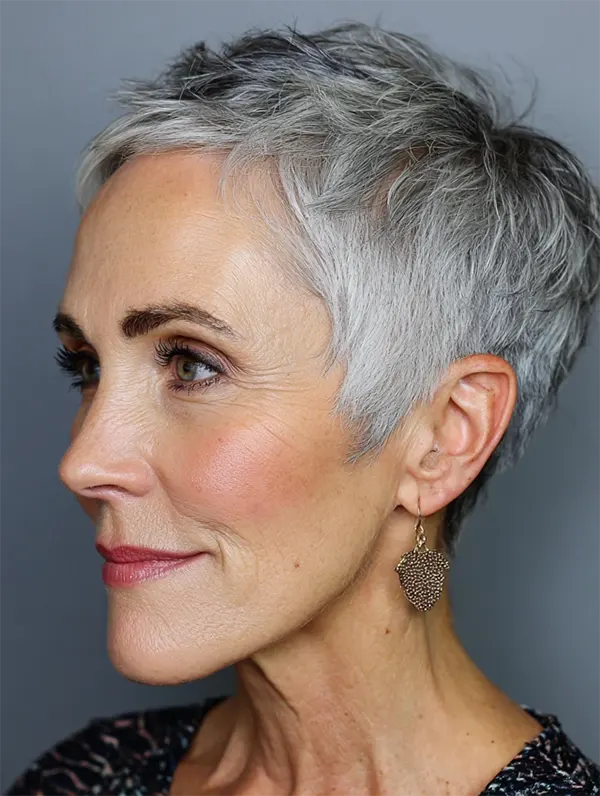
A pixie with side volume and long sideburns adds fullness at the sides, which is unusual for a pixie and very flattering. Most pixies are tapered tight at the sides, but this one leaves the sides a little longer and fuller, with long sideburns that frame the face and add a soft, feminine detail. The side volume balances the crown, creates width, and makes the whole cut look fuller.
The sideburns are the distinctive feature, and they should be long enough to reach the cheekbone, with a soft, tapered end that blends into the rest of the cut. They frame the face, soften the jawline, and add a retro, elegant feeling that is very flattering on mature faces. The crown is layered for lift, so the cut has both height and width, and the overall silhouette is rounded and full rather than narrow and severe.
This style suits women with long or narrow faces because the side volume adds width and balance, and it suits women who like a softer, more feminine pixie. Styling is simple: blow-dry the sides slightly forward with a round brush so the sideburns frame the face, and lift the crown for height. A little texturising spray will keep the side volume from falling flat.
21. Tousled Bedhead Pixie
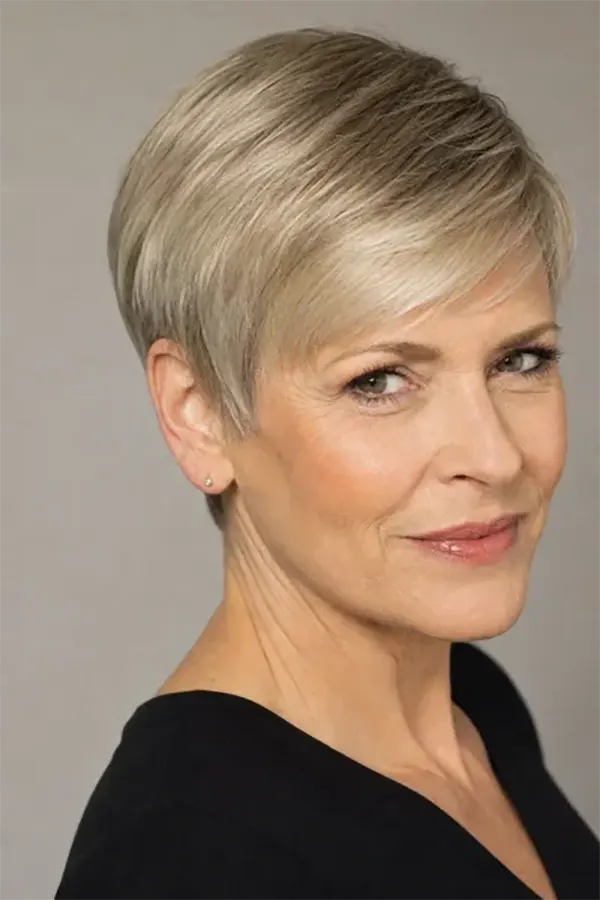
via hairellefashion
A tousled bedhead pixie is the cut that looks like you just woke up with perfect hair, and it is the most low-maintenance, voluminous pixie in this guide. The layers are cut to be deliberately messy, with uneven lengths and textured ends that fall in different directions, and the styling is minimal: a little texturising spray, a quick finger tousle, and you are done. The result is a pixie that looks full, relaxed, and completely unforced.
The bedhead effect is not an accident; it is built into the cut. The layers are point-cut and slightly uneven, which encourages the hair to fall in a tousled pattern, and the crown is layered for lift, so the tousle has height. The sides are tapered, but not too tight, so the cut has a soft, lived-in feeling. It is a style that looks better the less you do to it, which is a relief for women who do not want to spend time styling their hair every morning.
This style suits women who like a casual, contemporary look, and it is particularly good for fine hair because the tousled texture makes it look thicker than a smooth style ever could. It also suits women with a little natural wave, because the wave enhances the tousled effect. If you want a pixie that requires almost no styling and still looks voluminous, the bedhead pixie is your cut.
22. Pixie with Voluminous Crown and Tapered Sides
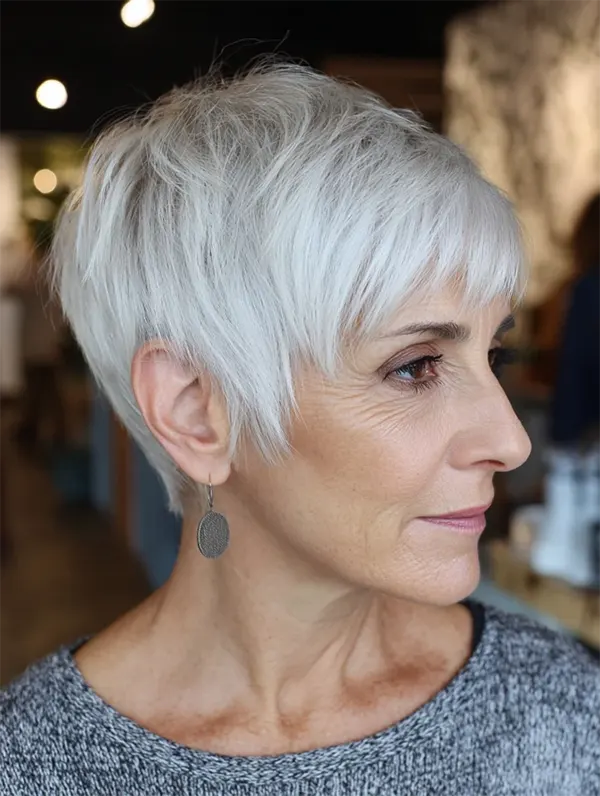
via Jawdrop Ink
A pixie with a voluminous crown and tapered sides is the cut that focuses all its energy on the crown, where volume matters most. The crown is layered and stacked for maximum lift, with enough length on top to create real height, while the sides are tapered, short, and neat, which makes the crown look even fuller by contrast. It is a clean, architectural style that looks polished and intentional.
The crown is the hero of this cut, and it should be cut with care. The layers at the crown are the shortest in the cut, forming a foundation that supports the longer layers above them, and the top is left long enough to lift with a brush or fingers. The sides are tapered gradually, not shaved, so the transition is smooth and flattering. The overall silhouette is rounded at the top and neat at the sides, a classic, elegant shape that suits most face shapes.
This style suits women who want maximum volume with a neat, polished finish, and it is particularly good for fine hair that is thin at the crown, because the stacked layers disguise the scalp. Styling is focused on the crown: a root-lift spray on damp hair, a blow-dry that lifts the crown upward with a round brush, and a light mist of hairspray to hold the height. It is a cut that looks expensive and feels confident.
23. Chin-Skimming Pixie Bob with Volume
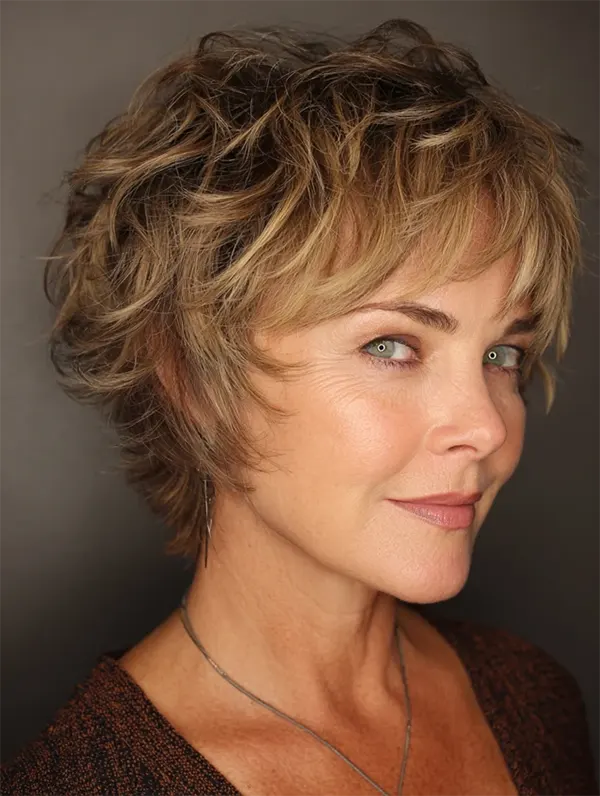
via Cleo Diva
A chin-skimming pixie bob with volume is the longest cut in this guide, and it’s for women who want a pixie’s volume with a bob’s length. The hair reaches toward the chin at the sides and front, with layered volume at the crown and textured ends that swing gently when you move. It is a graceful, elegant style that feels substantial and luxurious, and it is a wonderful choice if you are not ready for a very short cut.
The length is what makes this cut feel different from a classic pixie. The extra inches give you more hair to work with, which means more volume, more movement, and more styling options. The crown is layered for lift, the sides are layered for body, and the ends are point-cut for texture, so the cut has fullness at every level. It can be worn sleek and polished, with a round-brush blow-dry, or tousled and textured, with a little salt spray and a finger tousle.
This style suits women who like longer hair but want the volume of a pixie, and it is a wonderful choice if you are growing out a pixie or transitioning from a bob. It also suits women with fine, slightly wavy hair, because the wave adds volume. Styling takes a few more minutes than a classic pixie, because there is more hair to dry, but the result is a style with real presence.
24. Pixie with Finger Waves
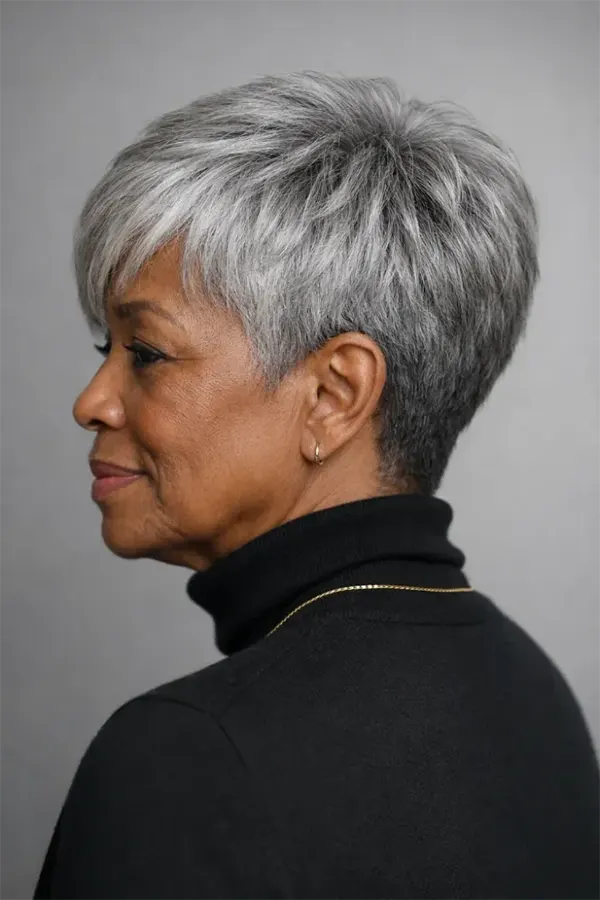
via Chic N Stylish
A pixie with finger waves is the most glamorous cut in this guide, and it brings old Hollywood to fine hair. The top is sculpted into soft, S-shaped waves that lie close to the head in a smooth, polished pattern, while the sides are tapered neatly. The waves create a beautiful, sculptural texture that catches the light, making the hair look thick and luxurious.
Finger waves are created with a comb and setting lotion, working the hair into waves while it is damp and letting it dry in place. On a pixie, the waves are concentrated at the top and front, where they are most visible, creating a vintage, elegant feel that is perfect for special occasions. The technique takes practice, but a good stylist can create finger waves in the salon, and a little setting lotion and a comb will let you touch them up at home.
This style suits women who love vintage glamour and special occasions, and it is particularly good for fine hair because the waves add texture and body without requiring length. It also suits women with oval or heart-shaped faces because the waves frame the face beautifully. If you want a pixie that feels like a special occasion, finger waves are your answer.
25. Layered Pixie with Balayage Dimension
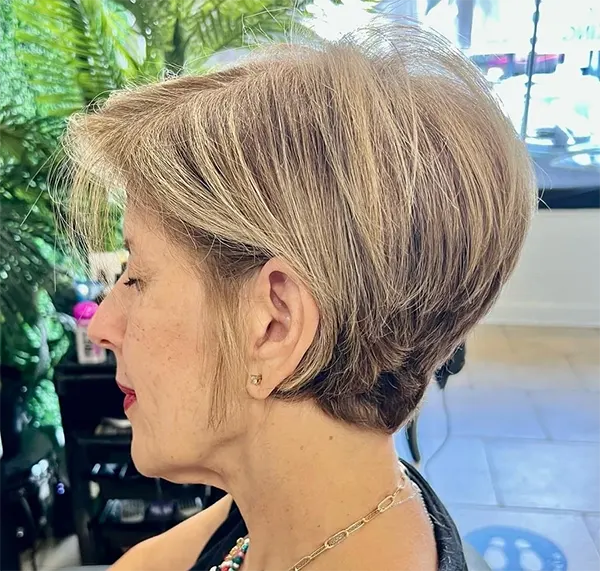
via elas.beauty
A layered pixie with balayage dimension is the cut that uses colour to create volume, and it is one of the most effective combinations in this guide. The balayage paints light onto the surface of the top layers, creating a sunlit effect that makes the hair look thicker, while the layers themselves provide the lift and texture. Together, colour and cut create a pixie that looks dimensional, full, and luminous.
The balayage should be soft and subtle, with light pieces concentrated at the crown and around the face, where fullness matters most. A balayage that is two shades lighter than your base will look natural and sun-kissed, while a stronger contrast will look more dramatic. The cut is a classic layered pixie with a stacked crown and textured ends, and the balayage enhances the layers, making them more visible. The result is a pixie that looks like it has more hair than it does, because the eye reads the dimension as density.
This style suits women who want to add dimension without a dramatic colour change, and it is a wonderful choice if you are growing out grey or transitioning to a lighter shade. The balayage grows out gracefully, which matters when you are getting a cut every five weeks, and it needs refreshing less often than foils. Styling is simple: a root lift, a blow-dry that lifts the crown, and a gloss spray to enhance shine.
26. Pixie with a Deep Side Part and Sweep
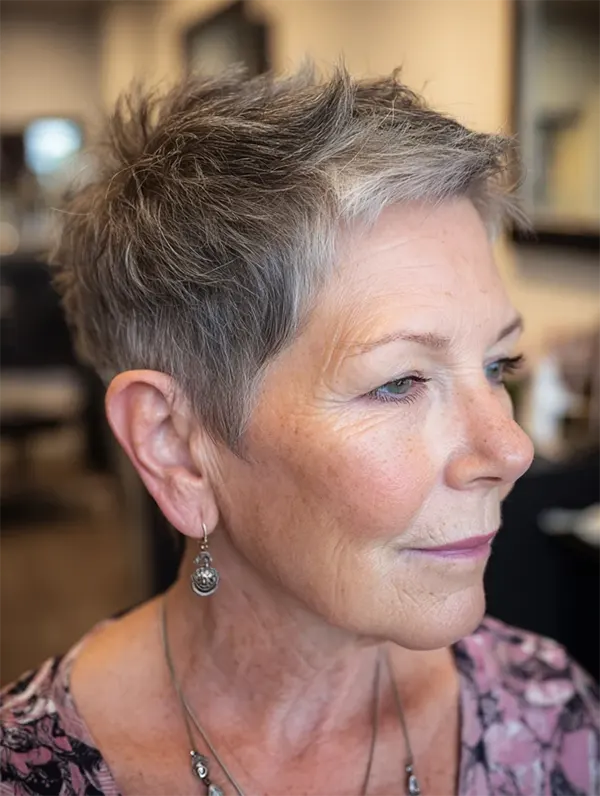
via Outfit Area
A pixie with a deep side part and sweep is the cut that proves a parting can be a styling tool. The hair is parted deeply on one side, and a long front section is swept across the forehead in a smooth, elegant curve that covers the scalp, adds height at the crown, and lends a sophisticated, polished feel. It is a simple idea, but it is one of the most flattering choices for fine hair.
The sweep needs length to work, so the front of this pixie is left longer than the rest, with enough hair to reach past the cheekbone when swept across. The crown is layered for lift, so the sweep has height to fall from, and the sides are tapered neatly. The overall effect is elegant and refined, with a soft, face-framing quality that suits most face shapes. It is particularly good for round faces because the diagonal sweep breaks up the roundness and creates the illusion of length.
To style it, blow-dry the front section away from the part with a round brush, lifting at the roots, then let it fall naturally across the forehead. A light mist of hairspray will hold the sweep in place without stiffness, and a little shine spray will enhance the smooth, polished finish. This is a cut that looks expensive and feels confident, and it is a wonderful choice for women who like a polished, put-together style.
27. Voluminous Pixie with Razored Ends
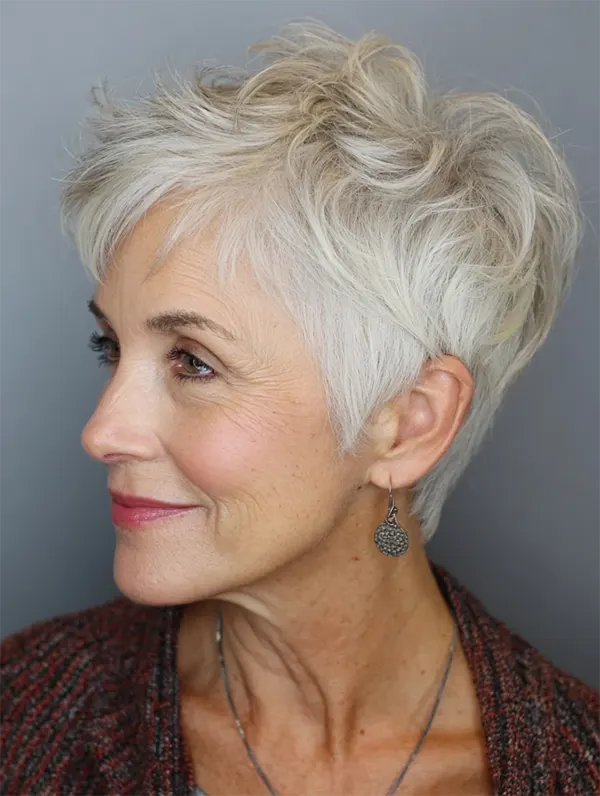
via Outfit Area
A voluminous pixie with razor-cut ends is a cut that uses a razor to create texture and movement. The ends are cut with a razor rather than scissors, which creates a soft, feathered edge that moves freely and looks thicker than a scissor-cut edge. The razor thins the very tips while keeping the body of the hair intact, which is exactly what fine hair needs: less weight at the ends, more fullness in the body.
The razor-sharp ends give this pixie a modern, edgy feel, with pieces that stick out slightly, creating a textured, piecey surface. The crown is layered for lift, the sides are tapered, and the overall silhouette is full and dynamic. Razored ends work particularly well on straight, fine hair because they add the texture that straight hair lacks and make the cut look effortless rather than over-styled.
This style suits women who like a contemporary, slightly edgy look, and it is a wonderful choice if your hair is very fine and very straight, because the razor creates movement that scissors cannot. Styling is minimal: a little texturising spray on dry hair, a quick finger tousle, and the razored ends will do the rest. One caution: razor-sharp ends can look frizzy if the hair is damaged, so keep your hair healthy with regular conditioning and avoid overusing heat tools.
28. Elegant Slicked-Back Pixie with Crown Lift
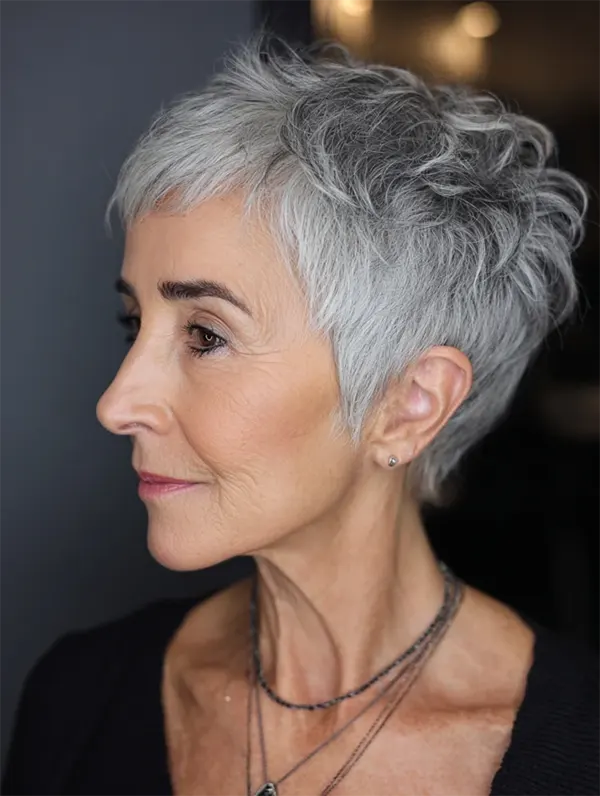
An elegant, slicked-back pixie with a crown lift is the most sophisticated cut in this guide, and it feels most like a red-carpet style. The hair is swept back from the forehead, with volume at the crown and a smooth, polished finish that shows off the face. The slicked-back shape is clean and confident, and the crown lift keeps it from looking flat—the key to making this style work on fine hair.
The crown lift is what separates this cut from a simple slicked-back style. The crown is layered for height, and the hair is blow-dried upward and back, so the top has visible lift rather than lying flat against the head. The sides are tapered neatly, and the front is left long enough to sweep back smoothly. The overall effect is polished, elegant, and striking, with a strong, confident silhouette that suits evening events and formal occasions.
This style suits women with strong features and a confident sense of style, and it is particularly good for fine hair because the slicked-back shape shows off the volume at the crown. Styling requires a little pomade or gel, worked through damp hair and combed back, then blow-dried for lift. A light mist of hairspray will hold the shape, and a shine spray will enhance the polished finish. If you want a pixie that feels like a statement, the slicked-back pixie is your cut.
Building Your Own Voluminous Pixie Formula
With twenty-eight cuts behind you, the most useful thing you can do is develop a personal formula to take to your stylist. Start with your base: the length on top that suits your face and your styling time—whether that is two inches for a classic pixie or four inches for a bixie. Then choose your volume builder—stacked crown layers, a deep side part, or textured ends—and pick the one that matches your hair type. Then choose your detail: a fringe, a colour dimension, or a texture like curls or waves.
Next, choose your finish. If you like polish, ask for a smooth blow-dry and a light gloss. If you like texture, ask for point-cut ends and a matte paste. If you like drama, ask for an undercut or an asymmetrical shape. That formula —length plus volume builder plus detail plus finish —will generate a pixie for every stage of your life, and it will help your stylist understand what you want far better than a single photograph ever could.
Bring this guide to your appointment, point to the three cuts that appeal to you most, and tell your stylist what you like about each one. Is it the crown height, the fringe, the colour, or the texture? Naming the detail helps your stylist combine the best parts of several cuts into one that is yours. And remember: the best pixie is not the one that looks best in a photograph, but the one that looks best on you, on a Tuesday morning, with five minutes to style it.
A voluminous pixie is not about having more hair. It is about making the hair you have look its best, through a cut that builds lift into its shape, a colour that creates depth, and a routine that takes minutes. Choose the cut that feels like you, trust your stylist to adapt it, and enjoy the lightness, volume, and confidence that come with it.
Frequently Asked Questions
Will a pixie cut make my fine hair look thinner?
A well-cut pixie will make fine hair look thicker, not thinner, because it removes the weight that pulls hair flat and builds lift into the layers. The key is the cut itself: stacked crown layers, textured ends, and enough length on top to lift. A pixie cut that is too short everywhere or has blunt, heavy ends can look thin, so discuss volume with your stylist before they start cutting, and ask specifically for layers that create lift at the crown.
How often do I need to trim a voluminous pixie cut?
Most women with a voluminous pixie book a trim every four to six weeks because the layers grow out and lose their stacking effect, which creates the volume. At five or six weeks, the cut will still look good, but the lift will start to fade, and the shape will look less intentional. If you are on a budget, a pixie bob with longer layers will grow out more gracefully and can stretch to six or eight weeks between trims.
What is the best pixie cut for a round face with fine hair?
A pixie with volume on top and a deep side part is the most flattering choice for a round face, because the height lengthens the face and the diagonal sweep breaks up the roundness. Avoid pixies that are very short and round all over, because they can emphasise the roundness, and avoid a centre part, which draws attention to the width of the face. A long side sweep and a lifted crown will create the illusion of length.
Can I get a voluminous pixie if my hair is very thin at the crown?
Yes, and a pixie is often the best solution for thinning at the crown, because short layers disguise the scalp far better than long hair, which separates and shows the scalp through the lengths. Ask your stylist for stacked crown layers and fine highlights at the crown, both of which create the illusion of density. A deep side part will also cover the crown, and a volumising powder or root spray can add extra lift on days when you need it.
How do I style a voluminous pixie cut at home?
Start with clean, damp hair and a root lift spray or mousse applied to the crown only. Blow-dry the crown upward with a small round brush, lifting the hair away from the head, and finish with a shot of cool air to set the lift. Once dry, warm a pea-sized amount of matte paste between your palms, run your fingers through the top layers, and pinch the ends into pieces. A light mist of flexible hairspray will hold the volume without stiffness, and the whole routine takes about five minutes.
Does colour really make fine hair look thicker?
Yes, and it is one of the most effective tricks for fine hair. A single flat colour shows the scalp through the strands, while two or three tones create light and shadow that the eye reads as depth and density. Fine highlights, babylights, or a soft balayage on the top layers will make a pixie look significantly fuller, and the effect is most noticeable at the crown, where fine hair is usually thinnest. Keep the colour subtle, with no more than two shades of difference, for the most natural result.
What should I ask my stylist for at my appointment?
Ask for a layered pixie with stacked crown layers for lift, point-cut or textured ends for fullness, and enough length on top to style with volume. Mention your face shape, your styling time, and whether you want a fringe or a side part, and bring two or three photos from this guide that show what you like. Be specific about the details you love, whether it is the crown height, the fringe length, or the colour dimension, because naming the detail helps your stylist reproduce it.