
Last winter, I watched a friend leave her house wearing a thin tee, a heavy coat, and a scarf that did nothing. She spent the day too warm indoors and too cold outside. When she took the coat off, nothing underneath looked finished. I realized that most of us were never taught layering. We were only taught to add more clothes when we felt cold.
Good layering is different. It is a way of building an outfit in stages, so each piece adds warmth, shape, or interest. When you know how to layer clothes after 50, you gain outfits that adapt to weather, hold their shape through a long day, and look polished without feeling complicated. Layers also let you wear fewer, better pieces more often.
The challenge is balance. Too many layers can add bulk at the hips and shoulders, and too few can leave an outfit looking flat. Bulky knits under heavy coats can make the frame look wider, while thin fabrics stacked together can cling and wrinkle. I have made both mistakes, and I learned that fabric weight, hem lengths, and color order matter more than the number of pieces.
In this guide, I explain the style principles behind layered outfits, then walk through 22 ways to layer with confidence. Each idea covers what to wear, how it should fit, and what to avoid. You will also find a table of mistakes, a reusable formula, and answers to the questions readers ask me most often.
Read the first sections to understand the rules. Then choose the combinations that match your climate and your closet, and start building outfits you will reach for every week.
The Style Principles Behind Layering That Looks Intentional
Layering works when each piece has a job. One layer sits against the skin and feels comfortable. One layer creates the shape of the outfit. One layer adds warmth or polish on top. When every piece earns its place, the whole outfit looks planned instead of piled up.
Proportion comes first. Layers add volume, so I keep at least one layer slim and fitted. A fitted base under a roomy top, or a slim bottom under a long coat, gives the eye a place to rest. Hem lengths also matter. I stagger them so that each layer shows a little of the one beneath, creating a clean, vertical rhythm.
Fabric weight comes second. I start thin and light, then move heavier as I go outward. A fine knit or silk tee goes under a medium sweater, and a structured coat sits on top. When thick fabrics sit against the body and thin ones sit outside, the outfit looks lumpy.
Here are the principles I follow every time:
- Build from thin to thick, with the lightest fabric closest to the skin
- Keep one layer fitted so the outfit holds its shape
- Stagger the hems by a few centimeters for a clean vertical line
- Use two to three colors, with one neutral and one accent
- Mix textures, such as knit, silk, and wool, so layers look rich
- Let the top layer match the occasion, from a blazer to a trench to a cardigan
Color also guides the result. Tonal layers in the same family look sophisticated, while contrasting layers add energy. I place the lightest shade near the face to brighten the skin. When these principles guide your choices, layering clothes after 50 becomes simple, and every outfit feels more finished.
Quick Reference Guide to Layering Choices After 50
Use this table to match your needs to the right choice before you read the full ideas.
| Fashion Element | Recommended Choice | Styling Benefit | What to Consider |
| Base layer | Fine knit, silk, or smooth cotton tee | Feels comfortable and does not add bulk | Choose a fitted, flat-seam style in a neutral shade |
| Middle layer | Merino sweater, shirt, or cardigan | Adds warmth and visual interest | Match the weight to the weather and the outer layer |
| Outer layer | Blazer, trench, coat, or vest | Gives structure and polish | Check shoulder fit and sleeve length |
| Hem order | Staggered by a few centimeters | Creates a clean vertical line | Avoid hems that stop at the widest part of the hip |
| Color palette | Two or three shades with one accent | Keeps the outfit cohesive | Place the lightest shade near the face |
| Texture mix | Knit, silk, wool, denim, leather | Adds depth without extra color | Avoid combining too many heavy textures |
Fabric Weight and Texture: The Foundation of Every Layered Outfit
The fabrics you choose decide whether layers look elegant or lumpy. I spend more time on this than on anything else, because even a beautiful coat cannot rescue a bulky base. If you remember one thing about how to layer clothes after 50, make it this: lightweight first, structure last.
Base layers should feel invisible. Fine merino, modal, silk, and smooth cotton glide under other clothing and do not bunch at the waist or sleeves. I look for flat seams and a close but comfortable fit. A thin turtleneck, a camisole, or a long-sleeve tee in a neutral shade works with almost every outfit I own.
Middle layers carry the warmth. Merino sweaters, cashmere blends, cotton shirts, and light cardigans all work well. I choose a medium weight that holds its shape, and I avoid chunky knits unless the outer layer has room for them. A good middle layer should feel soft against the base and slide easily under the outer piece.
Outer layers give the outfit its frame. A wool blazer, a trench coat, a quilted vest, or a long coat adds structure and polish. I test every outer layer with my thickest sweater underneath to make sure it will fit in cold weather. The shoulders should sit where mine end, and the sleeves should reach the wrist bone.
Color and Proportion: Making Layers Look Calm Instead of Busy
Color keeps layers from competing with each other. Too many shades can make an outfit look scattered, while a tight palette makes even a complicated combination look calm. I choose one neutral base, one supporting shade, and one small accent.
Tonal layering is the easiest approach. A cream tee, an oatmeal cardigan, and a camel coat sit close together, so they flow like one soft gradient. This look suits many skin tones and feels quiet and expensive. Gray, navy, and olive families work the same way.
Contrast works too, when I control it. A white shirt under a navy sweater under a camel coat creates clear lines without chaos. I keep the brightest piece near the face, since light shades reflect brightness onto the skin. A scarf or a necklace can repeat the accent color so the outfit looks coordinated.
Proportion needs attention as well. If the outer layer is long, I keep the legs slim. If the outer layer is short, I allow volume below. A longline cardigan over slim trousers looks balanced, and a cropped jacket over a longer tunic does too. When one piece is roomy, I let the others stay close to the body.
Accessories and Shoes That Finish a Layered Look
Accessories turn layers into a styled outfit. A scarf, a belt, and a simple pair of earrings can pull several pieces together. I choose one or two accessories, not five, since layers already carry plenty of visual detail.
Scarves are the most useful layering accessory. A lightweight silk scarf adds color at the neckline, while a wool scarf adds warmth and texture. I tie them loosely so they do not bunch under coats. Belts can define the waist over a long cardigan or coat, helping keep the frame from disappearing under the volume.
Shoes ground the outfit. Ankle boots with a low block heel suit almost every layered look, and loafers or clean sneakers keep the mood relaxed. Bags should be structured and sized to match the outfit. A medium leather tote or crossbody keeps the look neat, and it carries the extra layers you may remove later.
22 Ways to Layer Clothes After 50 with Confidence
Each look below uses real pieces you can find in most stores. I explain the fit, the fabric, and the details that make the outfit work, and I share one extra tip for each look. Choose the ideas that match your life and adapt them to your own closet.
1. Fitted Tee Under a Long Open Cardigan
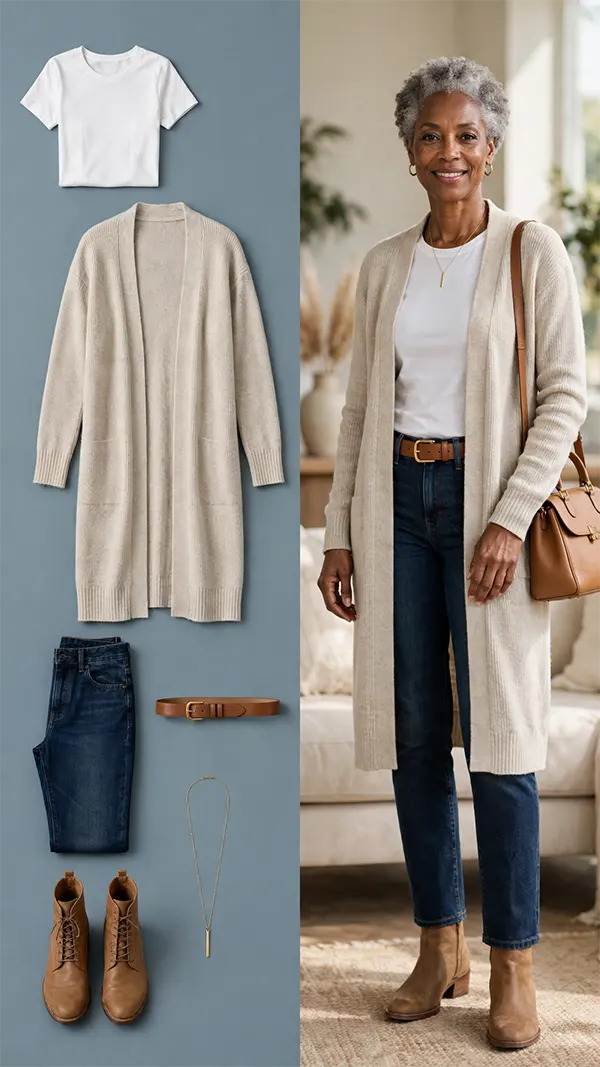
A fitted tee under a long open cardigan is the simplest way to begin. The tee sits close to the body, the cardigan drapes over it, and together they create a soft vertical line. It is the layering formula I recommend first when readers ask how to layer clothes after 50.
Choose a cotton or modal tee with a crew or soft V neckline, in white, cream, gray, or black. The cardigan should fall to mid-thigh or the knee, in merino, cashmere blend, or fine cotton. Oatmeal, camel, navy, and charcoal look elegant. An open front keeps the line long and slim.
Pair the layers with straight jeans or slim trousers and ankle boots. A simple pendant adds shine. This outfit works for errands, travel, and relaxed lunches. It feels comfortable all day, and removing the cardigan leaves a neat outfit underneath.
Fit Note
The tee should skim the body without clinging. A tee that is too tight shows every line under the cardigan, while one that is too loose bunches at the waist.
Check that the tee hem sits a few centimeters below the waistband or tucks neatly. A visible hemline under a cardigan looks sloppy if it hangs unevenly.
2. Tailored Blazer over a Fine-Knit Sweater
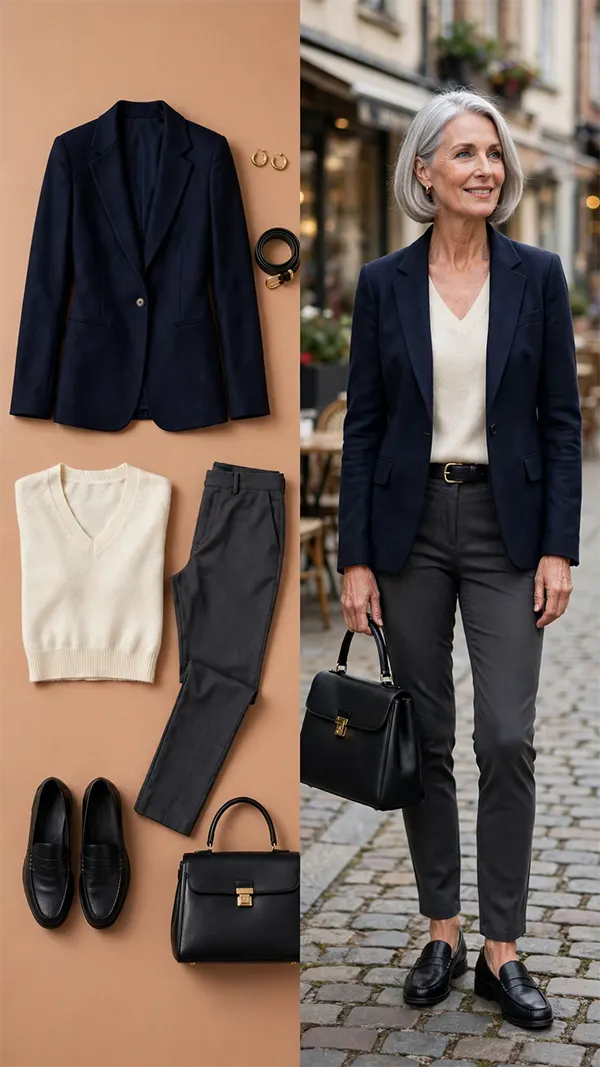
A blazer over a fine knit looks sharp without feeling stiff. The knit adds softness, and the blazer adds shoulders and structure. I wear this combination to meetings, lunches, and dinners, and it always looks polished.
Choose a lightweight merino or cotton-blend sweater in a crew or V-neck, and a tailored blazer in wool, crepe, or soft tweed. The sweater should be thin enough to slide under the jacket without bunching at the sleeves. A navy blazer with a cream sweater, a camel blazer with a gray sweater, or a black blazer with a rose sweater all work.
Wear slim trousers or dark jeans, and add loafers or pointed flats. Let the sweater neckline show, since it frames the face. A small necklace or a pair of earrings finishes the look. This is one of the most dependable layered outfits for women over 50 in cooler weather.
Styling Tip
Keep the blazer open so the sweater creates a vertical line down the center. A closed blazer over a knit can look boxy across the torso.
Push the sleeves up slightly if the sweater cuffs show. A small peek of knit at the wrist looks intentional, while bulky cuffs bunching inside the sleeve look messy.
3. Crisp Shirt Collar Peeking from a Crew-Neck Sweater
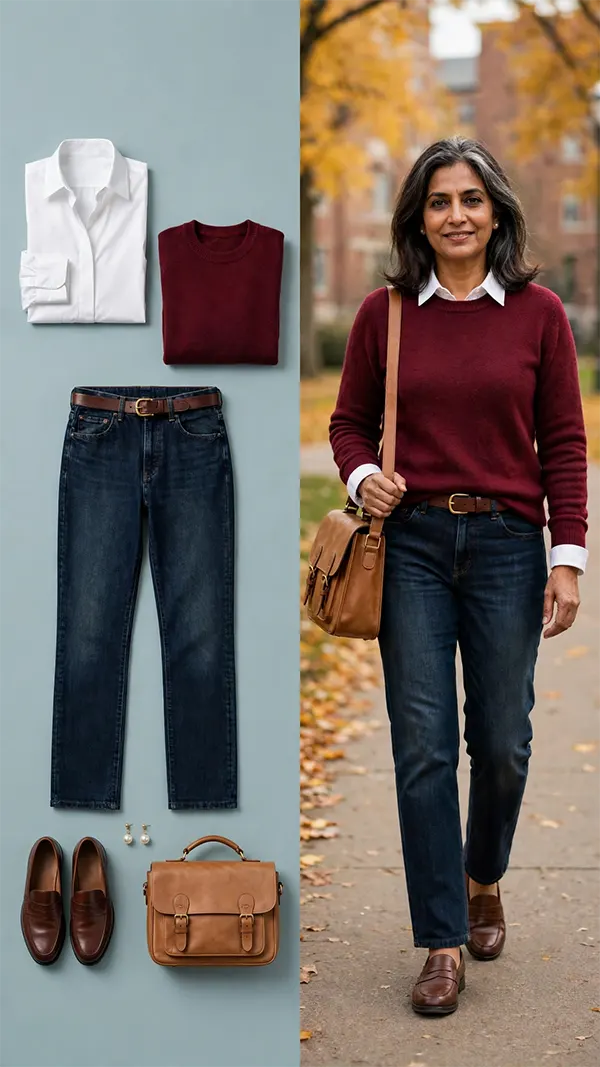
A shirt under a sweater is a classic layering trick that still feels fresh. The crisp collar and cuffs show at the neckline and wrists, and the sweater adds warmth and texture. It looks tidy, intelligent, and a little preppy.
Choose a poplin or Oxford shirt in white, pale blue, or pinstripe, and a crew-neck sweater in merino, cashmere, or lambswool. The sweater neckline should be wide enough to lie flat, and the shirt should be slim through the body so it does not bulge. Navy, burgundy, and gray sweaters look elegant.
Add dark jeans or tailored trousers, and wear loafers or ankle boots. Fold the shirt cuffs over the sweater sleeves for a relaxed touch. This outfit suits office days, lunches, and weekends. It demonstrates how to layer clothes after 50 with simple, classic pieces.
Wardrobe Tip
Buy a shirt one size smaller if you plan to layer it often. A slim shirt slides under a sweater without adding bulk at the waist or arms.
Iron only the collar and cuffs if you are short on time. Those two areas show, and the rest stays hidden under the sweater.
4. Long Vest over a Turtleneck
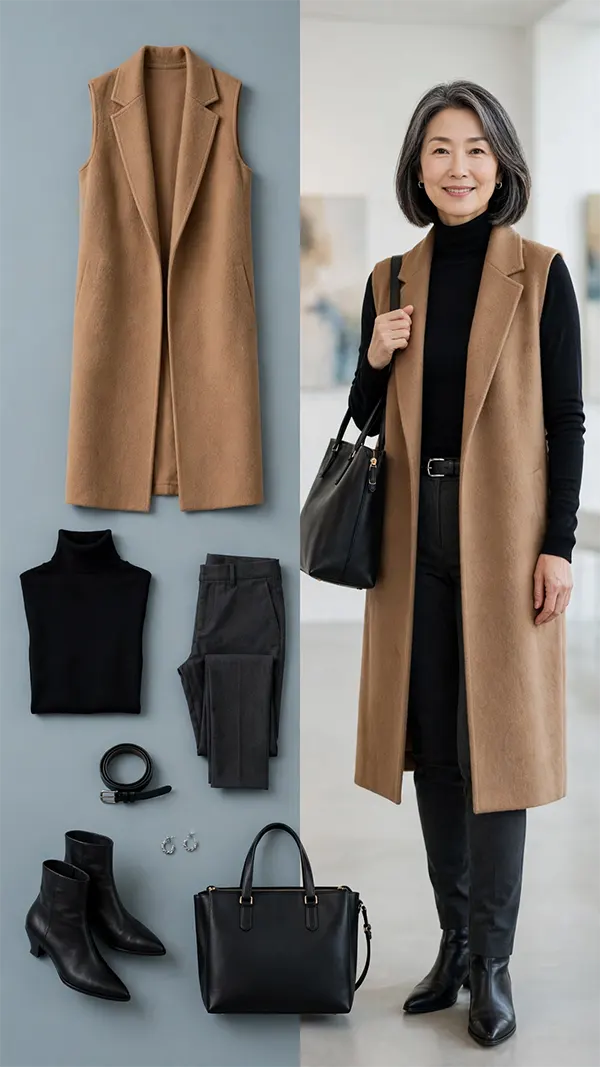
A long vest creates a lean vertical line, and a turtleneck adds a neat base. The combination provides torso structure without adding sleeve bulk, making it a smart choice if you dislike heavy layers on the arms.
Choose a fine-knit turtleneck in black, cream, camel, or navy, and a longline vest in wool, tweed, or a soft knit. The vest should fall to the hip or mid-thigh, with a clean open front. A belted vest adds waist definition. Keep the turtleneck close to the body so the vest drapes cleanly.
Pair with slim trousers or straight jeans and ankle boots. Add a small pendant or earrings. This layered look suits autumn and winter, and it works for office days or casual weekends. It shows how a single piece can change an outfit’s proportions.
Why It Works
A long vest breaks the body into vertical sections, so the eye travels up and down instead of across. That lengthening effect flatters most shapes.
Bare arms under a vest also stay slim. Since sleeves come from the turtleneck, the outfit avoids extra bulk at the shoulders.
5. Denim Jacket over a Midi Dress
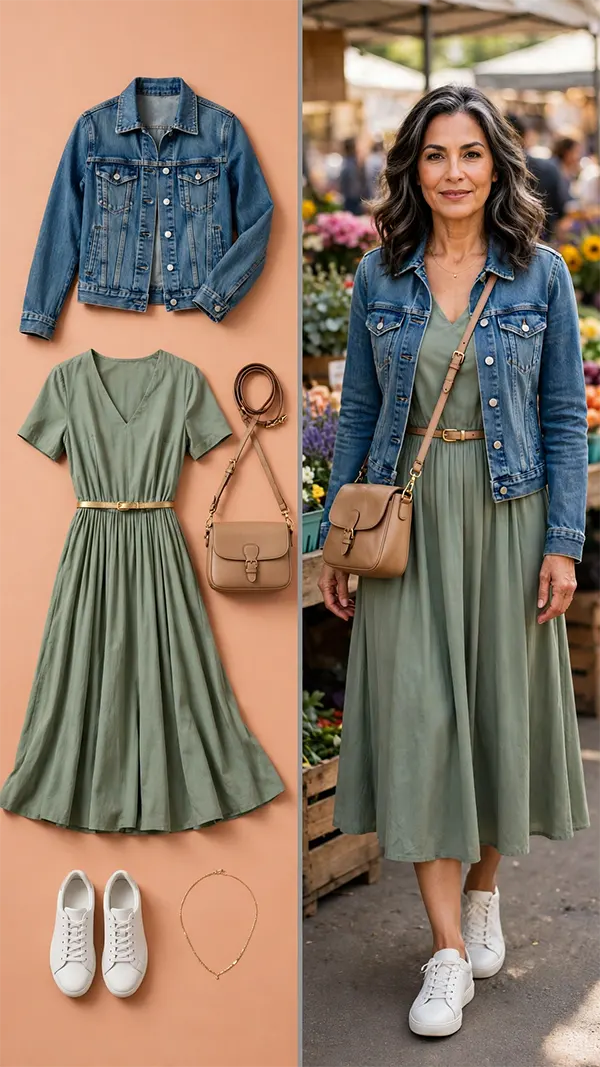
A denim jacket gives a dress a relaxed, modern twist. The dress brings softness and movement, and the jacket adds structure and a casual edge. It is one of the easiest ways to layer in spring and early autumn.
Choose a midi dress in jersey, cotton, or a flowy crepe, in a solid color or a small print. A denim jacket in a medium or light wash should end at the waist or hip. Choose a jacket with a slightly relaxed fit, so the shoulders sit comfortably. A fitted jacket over a flowy dress looks neat.
Wear ankle boots or white sneakers, and add a crossbody bag. Push the jacket sleeves up for a casual look. This outfit suits lunches, markets, and travel. It also shows that layered outfits for women over 50 do not need to feel heavy.
Styling Tip
Match the jacket length to the dress waist. A cropped jacket with a high-waisted dress looks proportionate, while a long jacket over a short dress can look boxy.
Choose a wash that echoes the dress color. A pale wash suits pastel dresses, while a dark wash suits navy or black dresses.
6. Trench Coat over a Knit Dress
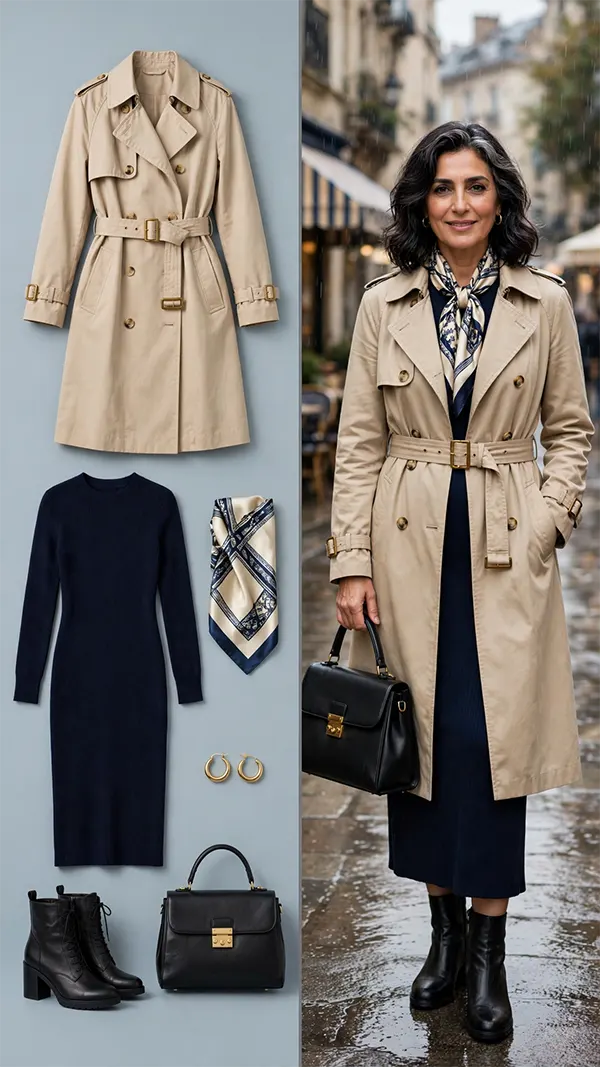
A trench coat over a knit dress feels elegant and practical. The dress gives you a streamlined base, and the trench adds weather protection and a classic silhouette. It works for rainy city days and cool spring evenings.
Choose a knit dress in merino or a cotton blend that falls below the knee, in navy, gray, camel, or black. The trench should be cotton gabardine or a similar weight, in stone or beige, with a belt. The coat should fall a few centimeters below the dress hem for a clean stagger.
Add ankle boots or loafers, a silk scarf, and a structured bag. Tie the belt loosely or leave it open. This outfit suits travel and city days. It also demonstrates how to layer clothes after 50 to create one long, graceful line.
Layering Idea
Wear a thin thermal under the knit dress on cold days. Silk or merino thermals add warmth and stay invisible.
Choose a trench slightly longer than the dress. A longer coat creates a pleasing stagger and avoids a blunt horizontal line at the knee.
7. Slip Dress over a Fine Turtleneck
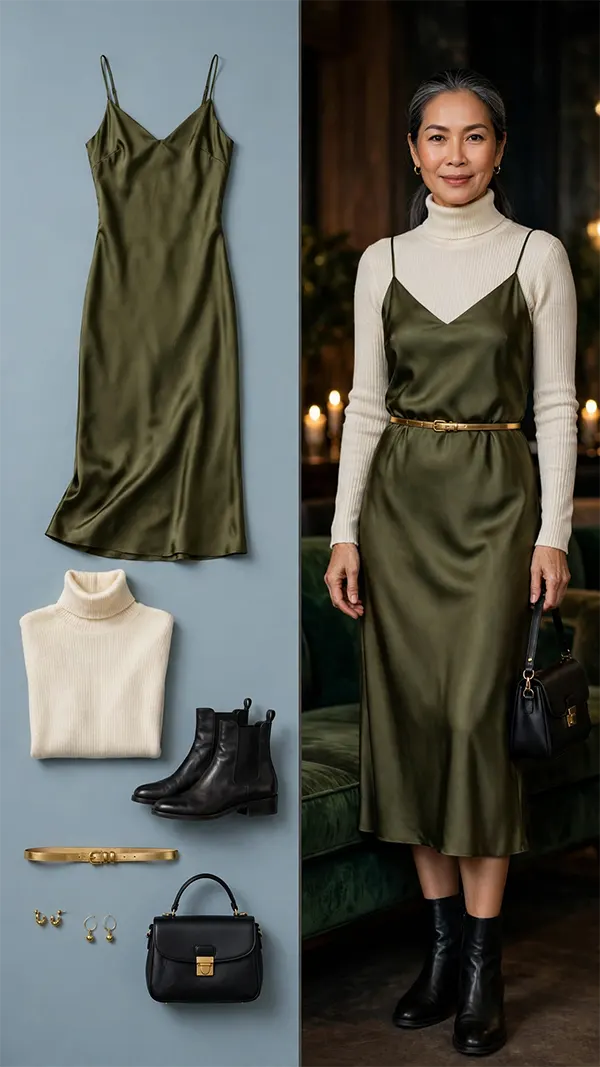
A slip dress over a turtleneck is a clever seasonal trick. The silky dress catches the light, the turtleneck adds warmth, and the layers create a mix of textures that looks modern and chic. It lets you wear a summer dress in cooler months.
Choose a satin or silk slip dress in champagne, olive, navy, or black that falls to mid-calf. Pair it with a fitted turtleneck in a neutral shade, such as cream, black, or gray. The turtleneck should be thin so it does not bunch at the shoulders under the dress straps.
Add ankle boots or loafers, a belt at the waist, and a small bag. A long cardigan or a leather jacket on top completes the outfit. It suits dinners and city days. This is a refined example of layered outfits for women over 50.
Fabric Insight
Choose a slip dress with a bit of weight so it doesn’t cling to the turtleneck. Heavier satin and silk blends hang better than thin polyester.
If static is a problem, run a dryer sheet lightly over the turtleneck. A small trick prevents the slip from sticking to the knit.
Worth a Look: How to Wear a Leather Jacket After 50 for a Confident and Timeless Look
8. Shirt Dress under a Longline Coat
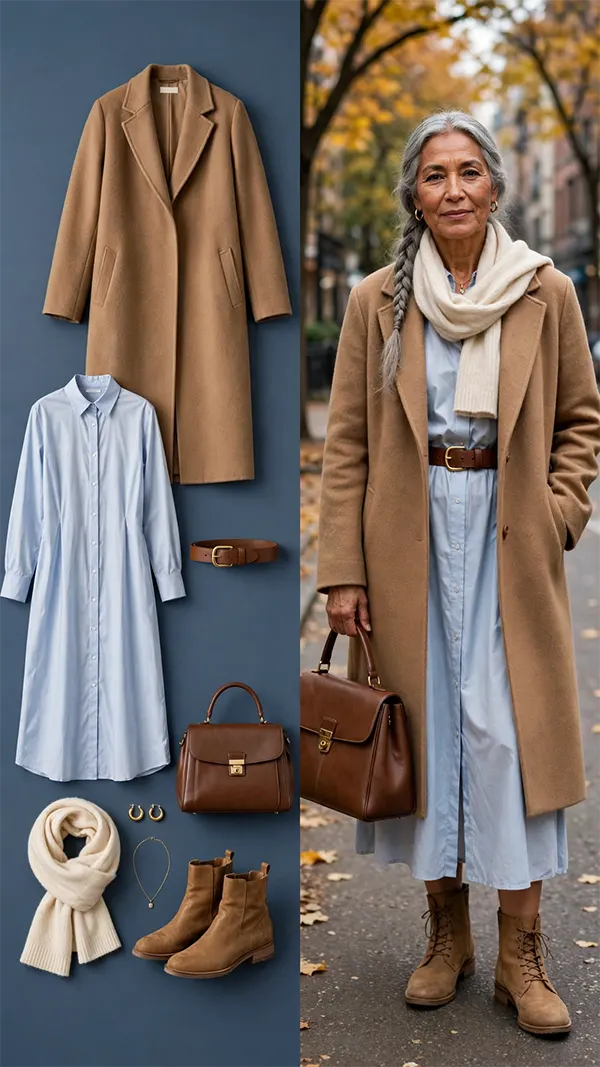
A shirt dress under a longline coat gives you two layers that work as one smooth column. The crisp collar peeks from under the coat, and the dress hem shows just below the coat hem. It looks refined and slightly dramatic.
Choose a cotton or poplin shirt dress in white, pale blue, or stripes that falls to the mid-calf. A longline coat in wool or a wool blend, in camel, gray, or navy, should fall to the knee or just above the dress hem. A belt on the dress helps define the waist under the coat.
Wear ankle boots or loafers, and add a scarf. This look suits autumn and winter, and it works for the office and for weekend errands. It is a neat answer to how to layer clothes after 50 when you love dresses.
Why It Feels Chic
The stagger between the coat hem and the dress hem creates a lovely line. Seeing a few centimeters of the dress below the coat adds interest without any extra accessories.
The crisp collar also frames the face. When the coat opens, the white or pale shirt collar reflects light onto the skin.
9. Silk Scarf Layered over a Turtleneck and Blazer
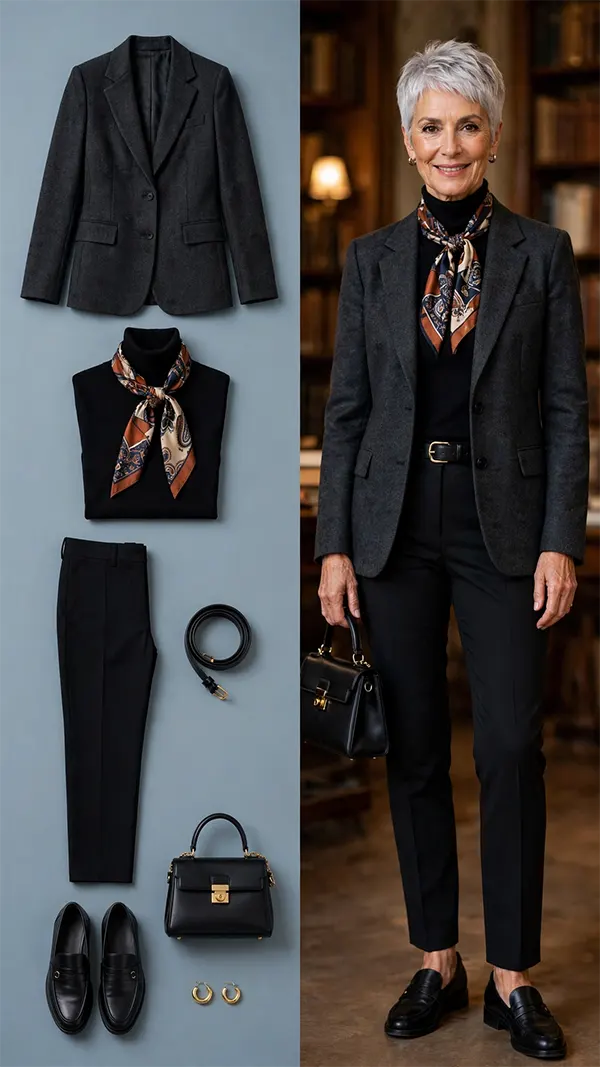
A silk scarf adds a layer of color and texture without adding warmth or bulk. Tied loosely over a turtleneck and under a blazer, it creates a pop of interest at the neckline. It is a small layer with a big effect.
Choose a silk or silk-blend scarf in a muted print with colors from your wardrobe, such as navy, rust, and cream. Wear it with a thin turtleneck in a neutral shade and a tailored blazer. Tie the scarf loosely at the neck or let it hang as a long line beneath the blazer lapels.
Pair with slim trousers or dark jeans and loafers. The scarf draws attention upward, which flatters the face. This idea shows how to layer clothes after 50 with accessories, and it suits office days and dinners.
Accessory Advice
Choose a scarf with at least one color that appears elsewhere in your outfit. A repeated color ties the layers together.
Keep the knot small and flat. A bulky knot under a blazer can push the lapels out of shape, while a flat knot lies smoothly.
10. Cropped Jacket over a Long Tunic
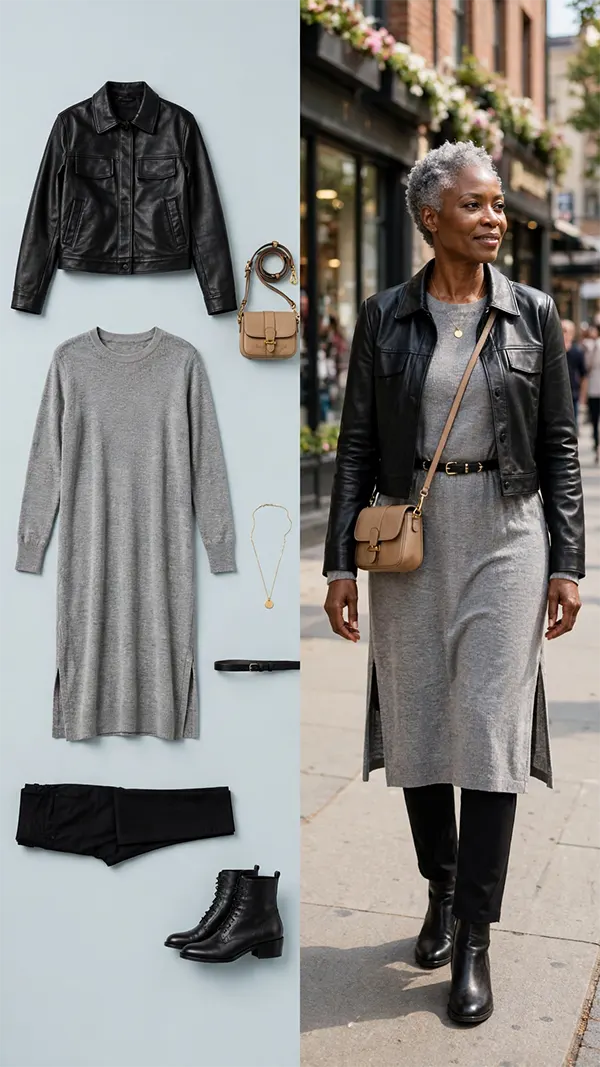
A cropped jacket over a long tunic creates an interesting stagger. The jacket ends at the waist, and the tunic falls to mid-thigh, so the eye sees two clear lengths. It is a modern way to layer while keeping the hips covered.
Choose a tunic in jersey, cotton, or a fine knit, in a solid color. A cropped jacket in denim, leather, or tweed sits above it. The tunic should be slim enough to avoid bulk, and the jacket should end at the narrowest part of the waist.
Wear slim trousers or leggings and ankle boots. Add a small necklace and a crossbody bag. This outfit suits casual weekends and travel. It proves that layering clothes after 50 can include contrasting lengths for a fresh look.
Fit Note
Choose a tunic hem that falls a hand’s width below the jacket hem. A smaller gap looks accidental, while a bigger gap looks deliberate.
Check the jacket sleeves over the tunic sleeves. If the tunic sleeves bunch inside the jacket, choose a thinner fabric or a sleeveless tunic.
11. Camisole under a Sheer Blouse
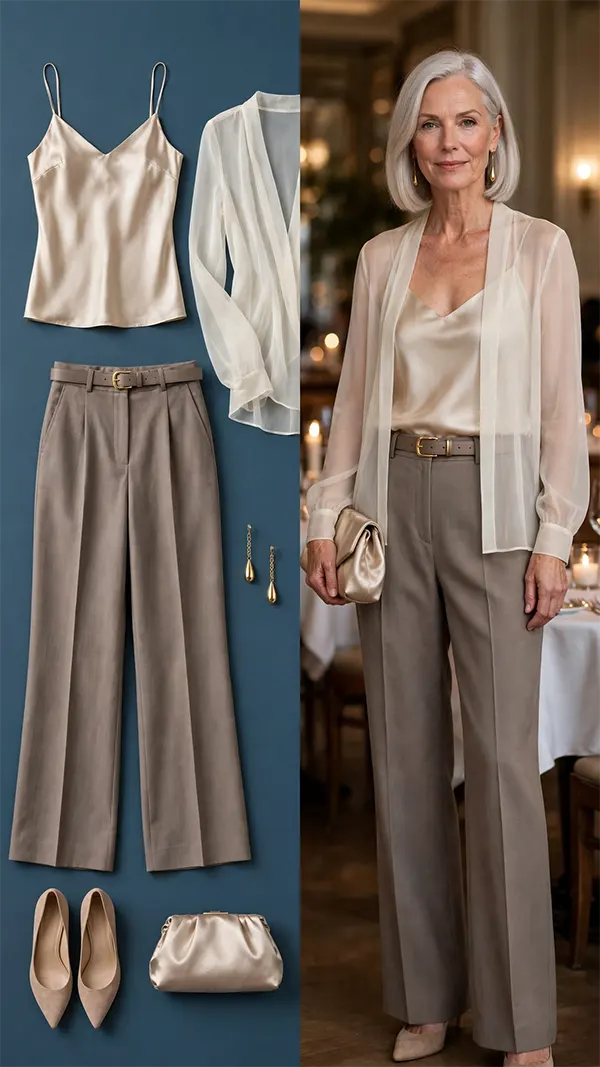
A silk camisole under a sheer blouse creates delicate, romantic layers. The camisole adds coverage and a soft shine, and the sheer blouse adds floating volume and elegance. It suits dinners and warm evenings.
Choose a camisole in satin or silk in a skin-tone or matching shade, and a sheer blouse in chiffon, georgette, or voile. The blouse should have long or three-quarter sleeves for coverage. An ivory camisole under a champagne blouse, or a navy camisole under a navy dotted blouse, looks refined.
Pair with tailored trousers or a midi skirt, and wear pointed flats or heels. Add drop earrings and a small clutch. This look suits events and dressier days. It is a graceful example of layered outfits for women over 50 in warm weather.
Comfort Tip
Choose a camisole with adjustable straps so the neckline sits comfortably under the blouse. A strap that shifts or digs can ruin an evening.
Look for a camisole with a bit of stretch. A stretchy fabric moves with you, and it does not wrinkle under the sheer layer.
12. Wool Coat over a Chunky Sweater and Scarf
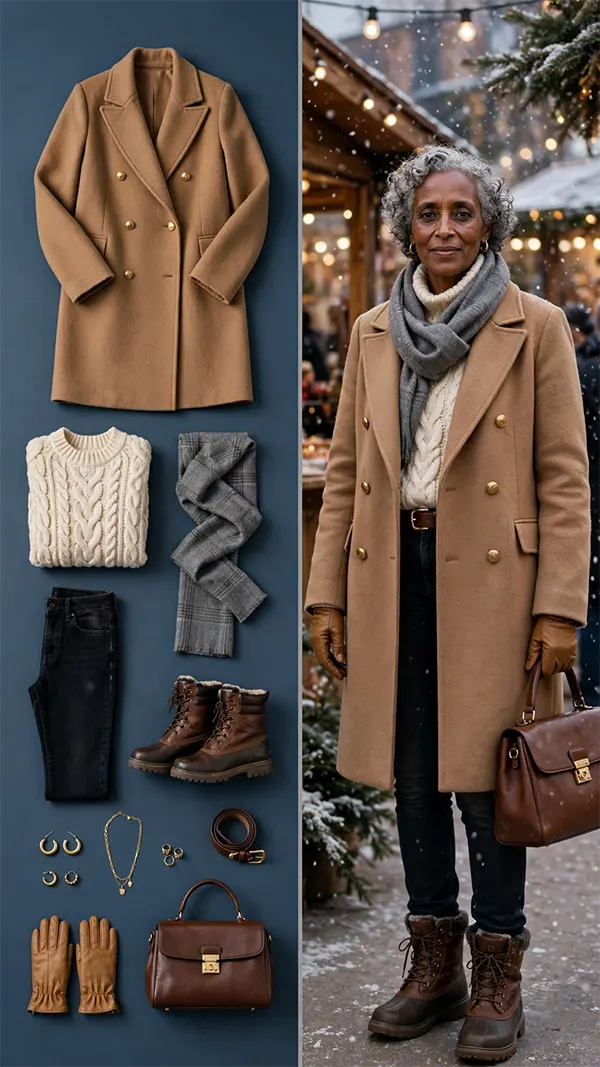
Cold weather calls for real warmth, and a wool coat over a chunky sweater delivers it. The sweater provides insulation, the scarf seals the neckline, and the coat adds structure. The key is leaving enough room so the layers do not squeeze.
Choose a coat one size up from your usual if you plan to wear a thick sweater underneath. A wool or wool-blend coat in camel, gray, or navy works best. The sweater should be soft and medium to thick, in cream, oatmeal, or deep green. A wool scarf in a complementary shade adds texture.
Wear slim jeans or wool trousers and winter boots. Add gloves and a hat. This look suits cold-weather walks and holiday trips. It shows how to layer clothes after 50 for real winter, without losing a polished silhouette.
Layering Idea
Wear a thin thermal under the sweater when the temperature drops below freezing. It adds warmth without adding bulk.
Keep the scarf loose around the neck and tuck the ends inside the coat. This prevents bunching at the collar and keeps the neckline tidy.
13. Chambray Shirt as a Light Jacket over a Tee
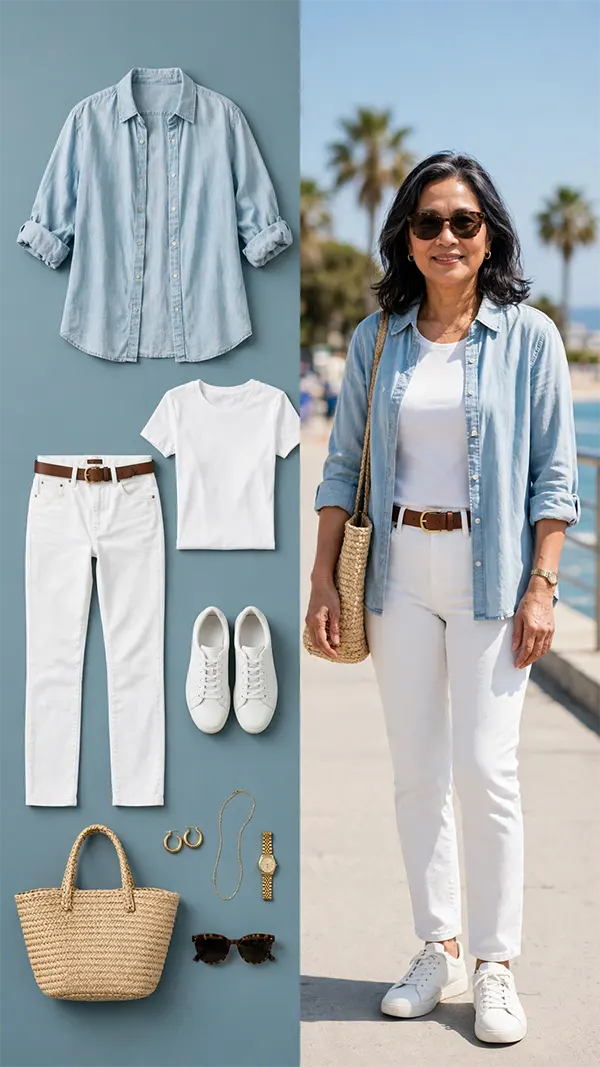
A chambray shirt worn open over a tee acts as a light jacket. It adds a layer of soft texture, a touch of color, and some sun protection, without the weight of a coat. It suits mild weather and travel days.
Choose a lightweight chambray or denim shirt in a pale- to medium-wash. Wear it open over a fitted white, striped, or pastel tee. Roll the sleeves to the forearm for a relaxed look. The shirt should fall to mid-hip, covering the waistband and hips.
Pair with white jeans, cropped trousers, or a midi skirt, and wear sneakers or sandals. Add a straw bag and sunglasses. This outfit suits warm days and shows how simple layered outfits for women over 50 can be.
Style Tip
Wear the shirt untucked and open, with the collar flat. A casual, loose fit looks more modern than a tucked and buttoned one.
Let one sleeve slip slightly lower than the other. Small asymmetry looks effortless and not staged.
14. Kimono Duster over a Tank and Jeans
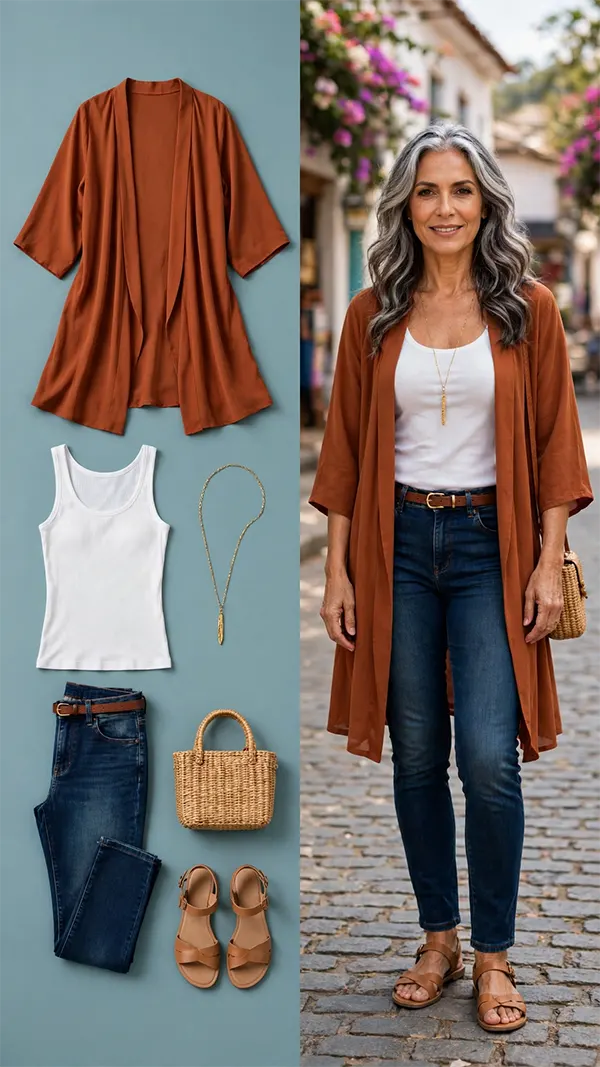
A kimono duster adds flow and movement to a simple outfit. The long, open front falls to the knee, creating a vertical line, and the light fabric feels airy in warm weather. It brings an artistic, relaxed mood.
Choose a duster in chiffon, crepe, or a light viscose, in a solid color or a soft print. Wear it open over a fitted tank or tee and straight or skinny jeans. Black, cream, rust, and navy dusters work with many outfits. The fabric should drape, not cling.
Wear flat sandals or ankle boots, and add a long necklace. The outfit suits travel, markets, and summer dinners. It shows how to layer clothes after 50 in warm weather without feeling hot or heavy.
Wardrobe Tip
Choose a duster in a neutral color first. Solid shades pair with nearly every top and bottom you own.
Check the sleeve width. Very wide sleeves can swallow the arms, so look for a slim or bell sleeve that ends at the wrist.
15. Quilted Vest over a Fitted Long-Sleeve Top
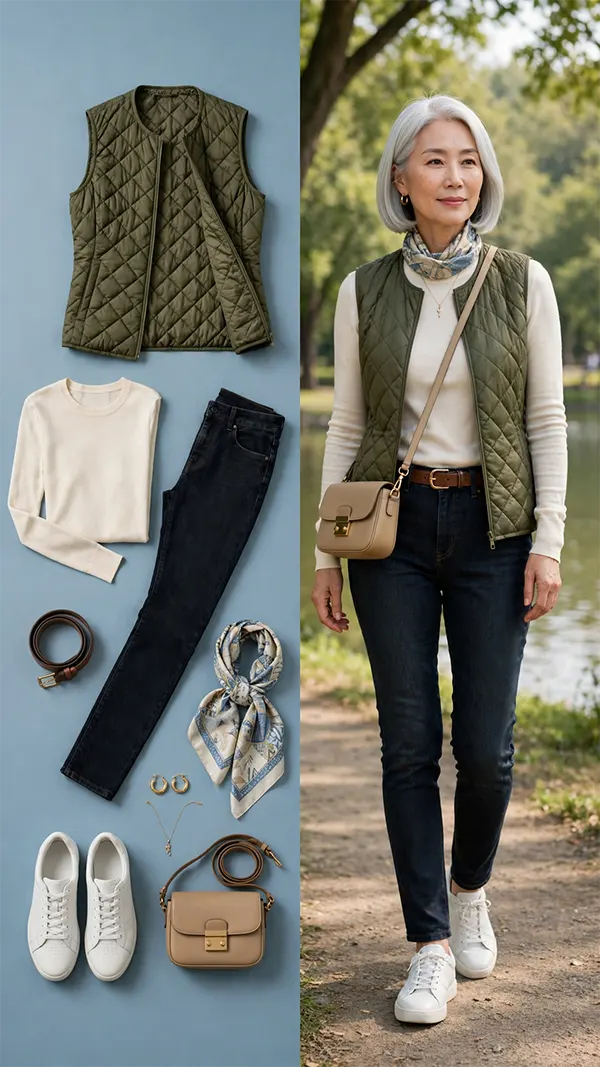
A quilted vest adds warmth to the core without making the arms bulky. It feels sporty and practical, and when styled well, it looks smart. It suits cool mornings, walks, and travel days.
Choose a slim quilted vest in navy, olive, black, or camel, with a fitted shape that falls to the hip. Wear it over a fitted long-sleeve top in merino, cotton, or a thermal blend. A turtleneck or a crew neck works nicely. Avoid oversized vests, which add width at the torso.
Pair with slim jeans or leggings and clean sneakers or ankle boots. Add a scarf in a contrasting color. This look suits parks, errands, and travel. It shows how layered outfits for women over 50 can be comfortable and still look neat.
Why It Works
The vest keeps the core warm, and the arms stay free. Since the top layer has sleeves, the look stays slim.
A fitted vest also creates structure at the waist. When the hem sits at the hip, it defines the body’s middle without clinging.
16. Cape or Poncho over a Fine Turtleneck
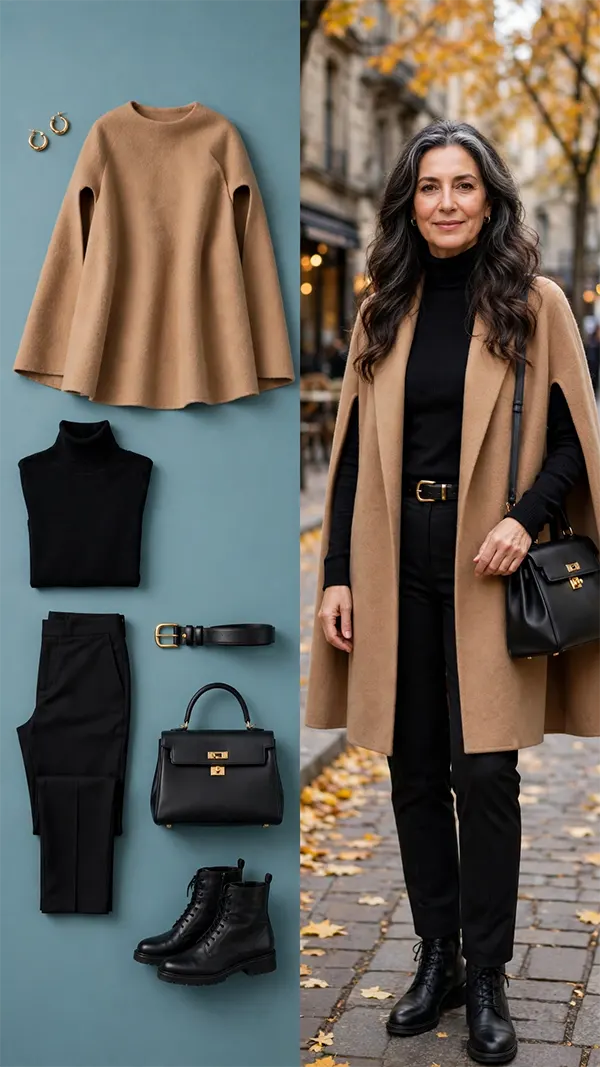
A cape or poncho adds drama and elegance with one piece. The draped shape covers the arms and shoulders, and the open front shows the layers beneath. It feels artistic and refined, and it suits women who love flowing silhouettes.
Choose a cape in wool or a wool blend, in camel, gray, black, or a muted plaid. The length should reach the hip or mid-thigh. Wear it over a fitted turtleneck and slim trousers, so the volume stays on top and the lower body stays slim.
Pair with ankle boots and a structured bag. A belt over the cape can define the waist if desired. This look suits autumn and winter, and it works for city walks and dinners. It is a graceful approach to layering clothes after 50.
Modern Update
Choose a cape with armholes or slits for the arms. Armholes give you the cape look and keep your hands free.
Style it with a fine-knit turtleneck in a matching shade. A tonal base keeps the shape looking clean.
17. Leather Jacket over a Knit Dress
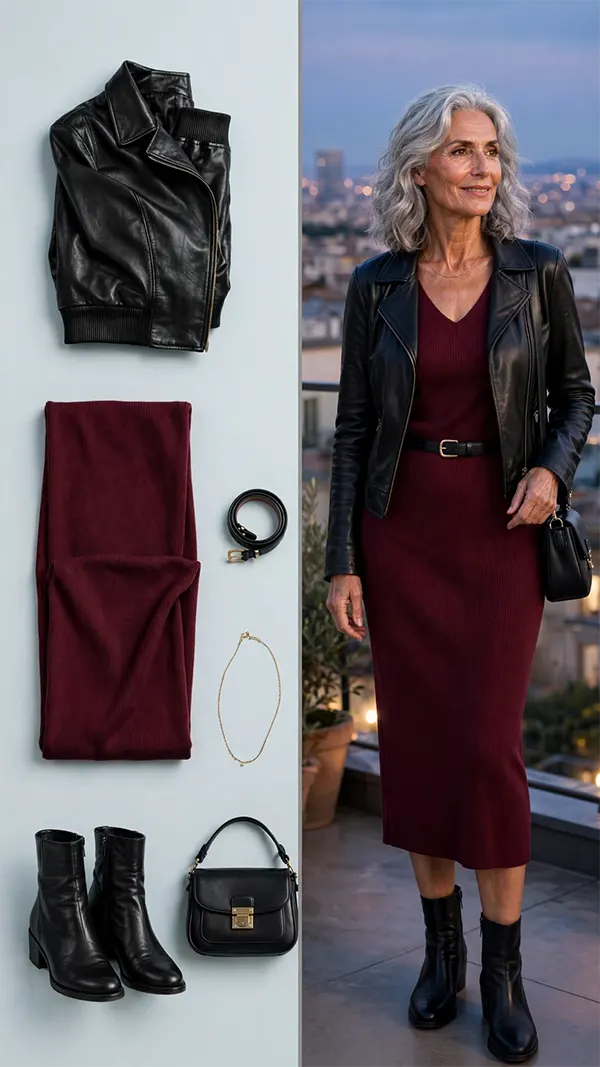
A leather jacket over a knit dress balances soft and tough. The knit dress feels comfortable and feminine, and the leather adds an edge and structure. It suits evenings and weekends, and it layers neatly.
Choose a knit dress in merino or a cotton blend, falling to the knee or mid-calf, in black, burgundy, gray, or camel. A fitted leather jacket in black or cognac, cropped or hip-length, goes on top. The jacket should sit smoothly over the dress without pulling.
Wear ankle boots and add a thin chain necklace. Keep the bag small and structured. This look suits dinners and city days. It shows how to layer clothes after 50 with leather, and it feels modern and confident.
Color Pairing
Match the jacket color to your shoes and bag. A black jacket, black boots, and a black bag look unified.
If the dress is bold, such as burgundy, choose a black or dark brown jacket. Neutral leather keeps the color in focus.
18. Down Vest over a Flannel or Plaid Shirt
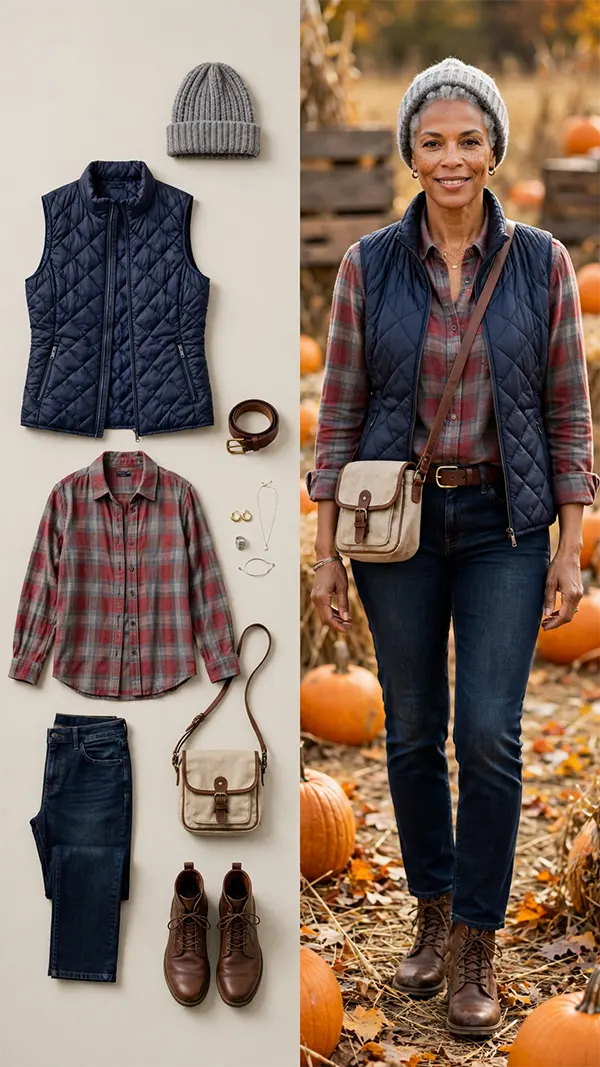
A down vest over a plaid shirt feels cozy, outdoorsy, and easy to wear. The shirt adds pattern and warmth to the arms, and the vest adds insulation to the core. It suits weekends, travel, and cold-weather walks.
Choose a slim-down or synthetic vest in navy, olive, black, or burgundy, and a soft flannel or plaid shirt in muted colors. A cotton flannel shirt feels warm without being heavy. Wear the shirt slightly tucked or untucked, depending on length.
Pair with jeans and leather boots, and add a beanie or a scarf. The look suits farmers’ markets, autumn trips, and casual lunches. This is a relaxed answer to how to layer clothes after 50 in cooler weather.
Comfort Upgrade
Choose a vest with a smooth lining and a soft collar. A comfortable collar keeps your neck warm without scratching.
Pick a flannel with a modern slim fit. An oversized flannel under a vest can bunch, while a slim fit sits neatly.
You May Also Love: How to Wear Leggings After 50 for a Stunning, Comfortable, and Confident Look
19. Monochrome Tonal Layers in Cream and Camel
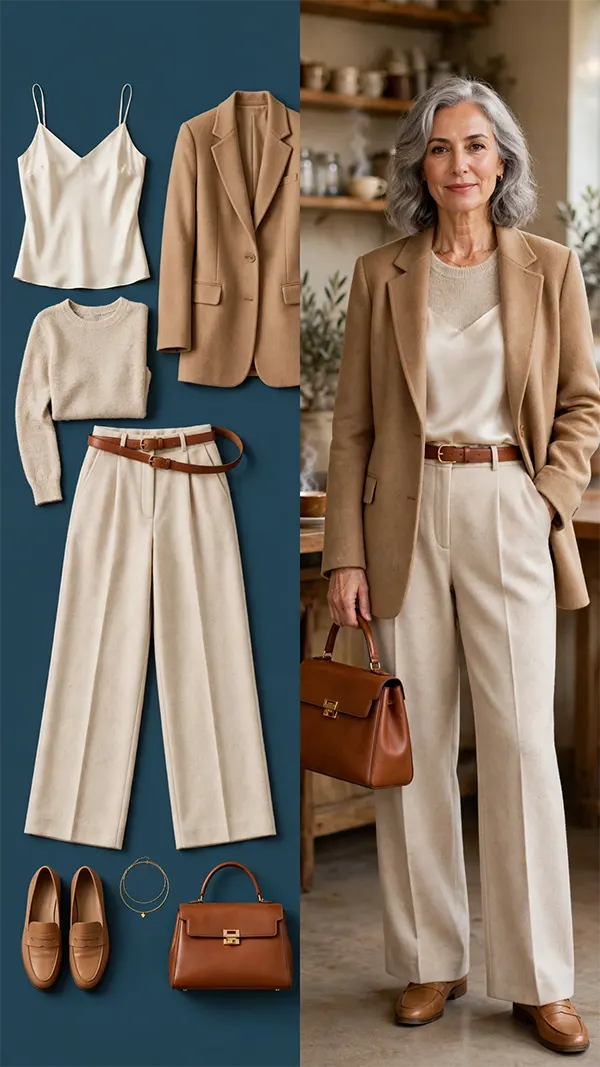
Tonal layering uses shades from one color family, so the outfit feels calm and expensive. Cream, oatmeal, and camel are easy to combine, and the layers create depth without contrast. It is one of the most polished ways to layer.
Start with a cream tee or camisole, then add an oatmeal knit, and finish with a camel coat or blazer. Add trousers in a lighter or darker neutral. The shades should be close but not identical, since slight differences create interest.
Wear tan boots or loafers, and add gold jewelry. The look suits autumn, winter, and early spring. It shows how to layer clothes after 50 with a palette instead of a pattern, and it is easy to build from basics you may already own.
Color Pairing
Keep the undertones the same. Warm cream, warm oatmeal, and warm camel look harmonious, while a cool white next to warm camel looks off.
Add a small contrasting accent, such as a navy scarf or a dark bag. One darker piece grounds the soft palette.
20. Waistcoat over a Shirt with Trousers
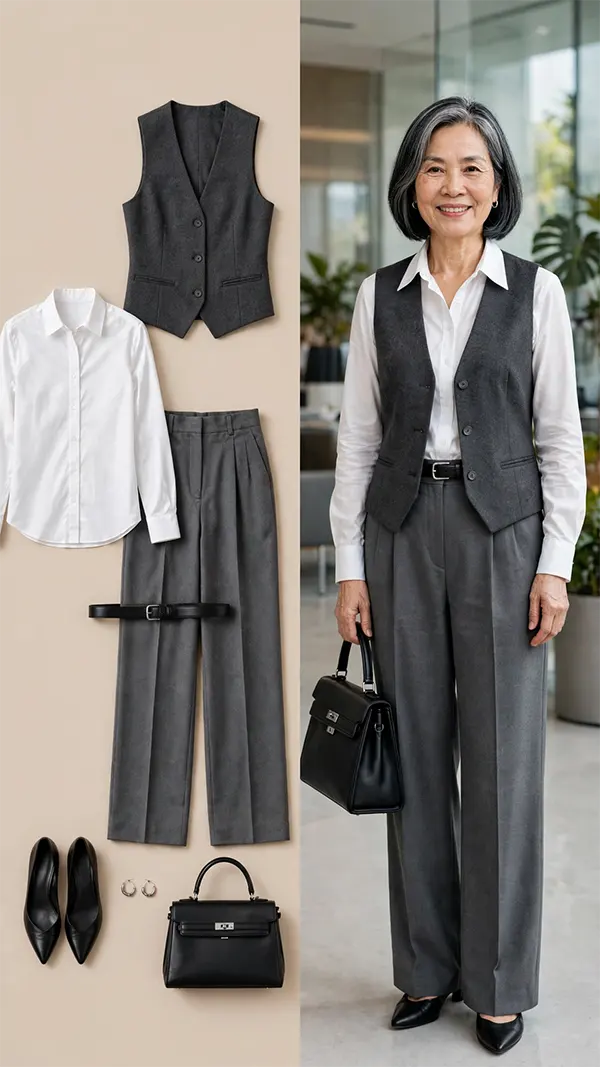
A waistcoat, or tailored vest, brings a smart, menswear-inspired touch. Over a crisp shirt and tailored trousers, it creates a sharp and polished outfit that still feels feminine. It suits office days and dressy occasions.
Choose a waistcoat in wool, crepe, or suiting fabric, in black, gray, navy, or camel, with a V-neckline and a fitted shape. Wear it over a white or pale shirt with the collar visible. High-waisted tailored trousers complete the look. Make sure the waistcoat hem meets the trouser waistband smoothly.
Add loafers or pointed flats, and a thin belt if the trousers need one. Small earrings finish the look. This outfit proves that layered outfits for women over 50 can be structured and elegant.
Fit Note
The waistcoat should follow the shape of your body without pulling at the buttons. If it gapes at the bust or pulls at the waist, size up and ask a tailor to adjust.
The hem should land at the top of the trousers. A hem that rides above the waistband looks cropped, which may not flatter every body.
21. Belted Cardigan Coat over a Dress
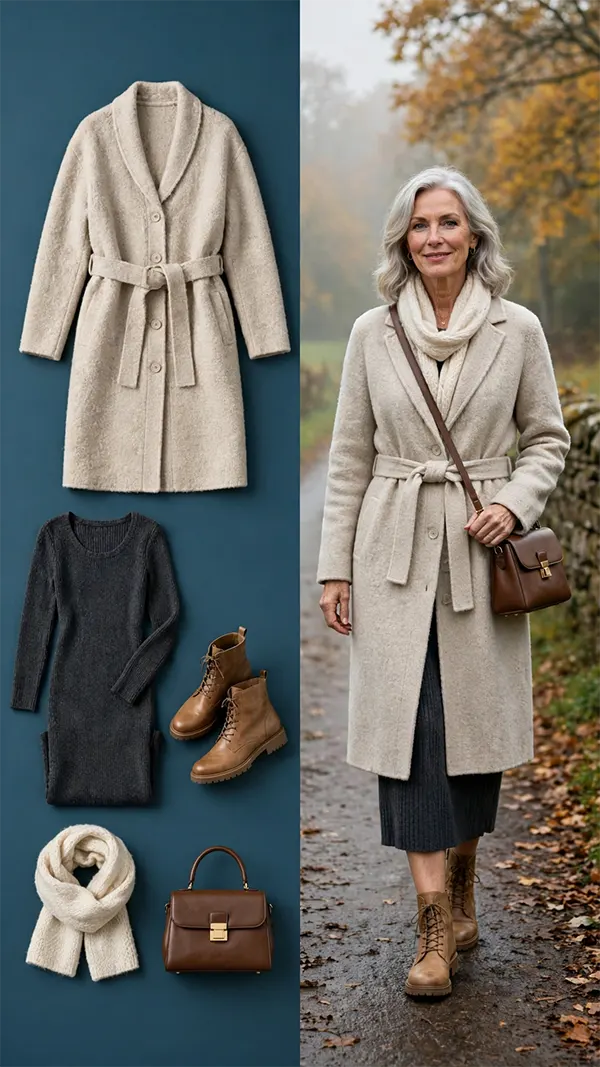
A belted cardigan coat is a soft, wrapped layer that works like a robe-style coat. It adds warmth and shape without the stiffness of a tailored coat, and it feels cozy and graceful. It suits cool days when you want comfort and polish.
Choose a cardigan coat in wool, cashmere blend, or a thick knit, falling to the knee, in camel, gray, or oatmeal. A belt cinches the waist and creates shape. Wear it over a knit or jersey dress in a coordinating shade, or over slim trousers and a tee.
Add ankle boots and a scarf. The look suits autumn, winter, and early spring. It is a comfortable way to learn how to layer clothes after 50, since the soft fabrics move with you and look elegant.
Layering Idea
Tie the belt loosely at first, then adjust until the waist looks defined but not squeezed. A relaxed belt keeps the coat comfortable.
Match the dress hem so it sits a few centimeters below the coat hem. A visible dress hem adds a nice stagger.
22. Lightweight Cardigan over a Sleeveless Dress for Travel
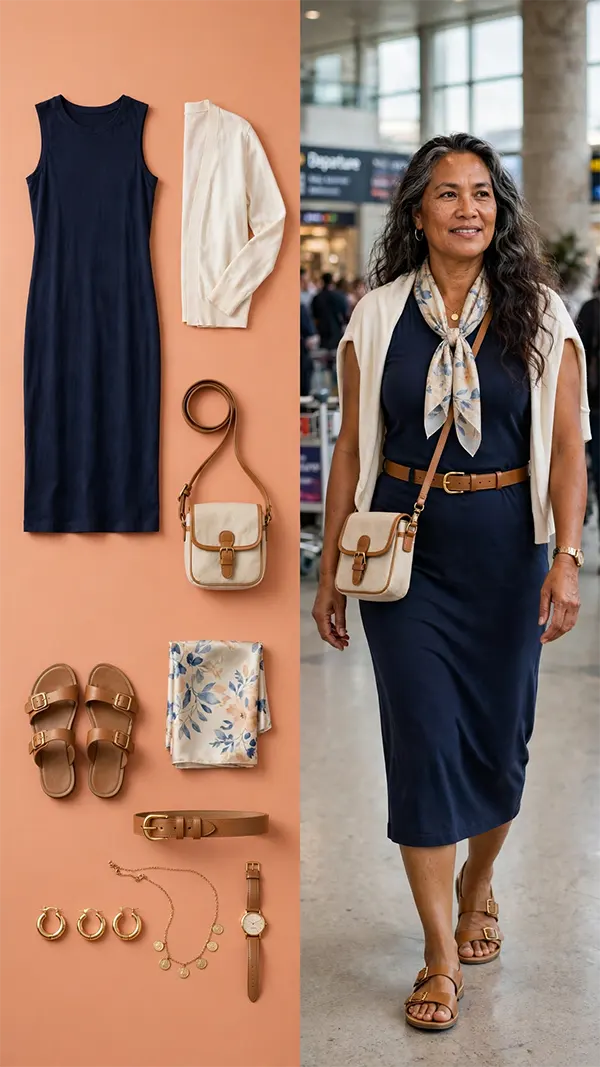
A lightweight cardigan over a sleeveless dress is the layer I pack for every trip. It works on planes, in air-conditioned restaurants, and during cool evenings, and it folds into a small space. It adds just enough coverage and warmth.
Choose a sleeveless midi dress in jersey, cotton, or a wrinkle-resistant blend, in navy, black, or a soft print. A thin cardigan in merino, cotton, or a silky knit goes on top. Choose a color that matches the dress or one of the print colors.
Wear flat sandals or white sneakers, and add a scarf you can use as a wrap. A crossbody bag keeps your hands free. The outfit suits travel and warm evenings. It shows how layered outfits for women over 50 can be light and flexible.
Wardrobe Tip
Pack a cardigan in a color that works with at least three of your travel outfits. A versatile shade like navy, black, or oatmeal pairs with almost anything.
Roll the cardigan instead of folding it. Rolled knits wrinkle less and take up less room in a bag.
Common Layering Mistakes and How to Fix Them
Most layering problems come from a few repeated choices. I have made several of them, and each one has an easy fix. Here is what to watch for when you plan an outfit.
The first mistake is the bulk in the middle. Thick knits under thick coats add width at the torso and hips. Choose thin, fitted layers that sit close to the body, and keep the volume on the outside.
The second is matching hems. When every layer ends at the same line, the outfit looks flat and heavy. Stagger the hems by a few centimeters so each layer shows a little of the one beneath.
The third is a muddy palette. Too many colors make layers look scattered. Stick to two or three shades, and let one piece carry the accent.
| Common Mistake | What It Looks Like | Better Choice |
| Bulky base layer | Extra width at the waist and arms | Fine knit or silk base in a fitted cut |
| All hems at the same line | Flat, heavy silhouette | Stagger the hems by a few centimeters |
| Too many colors | Busy and scattered look | Two or three shades with one accent |
| Ill-fitting outer layer | Bunching at the shoulders and sleeves | Test with your thickest sweater underneath |
| Heavy fabric over heavy fabric | Lumpy, restricted look | Thin fabric close to the body, structure outside |
| Skipping accessories | Outfit feels unfinished | Add one scarf, belt, or pair of earrings |
Turning Layering Ideas into Your Own Personal Style
A look from a photo does not always translate to your life. Your climate, routine, body, and budget all change what works. I find it helpful to copy the principle rather than the exact outfit.
If you live somewhere warm, choose thin cardigans, chambray shirts, and kimono dusters. If you live somewhere cold, rely on merino bases, wool coats, and scarves. If you work in an office, lean on blazers, waistcoats, and silk scarves. If you travel often, choose a few neutral layers that mix and match well and pack well.
| Instead of Copying This | Try This Principle |
| A wool coat over a chunky sweater in a mild climate | Choose a light cardigan over a thin knit and add a scarf |
| A cape for a formal office | Use a tailored blazer with a silk scarf for similar drama |
| Many colors in one outfit | Pick one neutral palette and add one accent |
| Thick layers on a warm day | Use a lightweight cotton or silk layer on top |
| A heavy vest in a small frame | Choose a slim vest and a fine-knit base |
Budget shapes the plan too. Spend more on the pieces you wear most, such as a good coat, a quality blazer, and fine merino bases. Save on simple tees, camisoles, and scarves, since these are easy to find at lower prices. Secondhand and vintage shops often carry beautiful wool coats and cashmere cardigans.
A Repeatable Formula for Building Layered Outfits Every Time
After many seasons of testing outfits, I settled on a formula that keeps decisions quick and results polished. It works for every look in this guide.
- Choose a fitted base. Start with a thin tee, camisole, or turtleneck in a neutral shade.
- Add a middle layer. Pick a sweater, shirt, or cardigan in a medium weight.
- Select a structured outer layer. Choose a blazer, coat, trench, or vest that fits over the others.
- Stagger the hems. Let each layer show a little of the one beneath.
- Limit the palette. Keep to two or three shades with one accent.
- Add one accessory. Choose a scarf, a belt, or a pair of earrings.
- Finish with shaped shoes. Wear boots, loafers, or clean sneakers.
- Run a movement test. Reach, sit, and walk in front of a mirror before you leave.
If you want a short rule, remember this one: thin base, soft middle, structured top. That simple pattern answers the question of how to layer clothes after 50 on almost any day.
Building a Layering Wardrobe You Will Reach for Every Day
The last step is turning these ideas into a closet that works for you. I do not believe in buying many pieces—only the right ones. Use the steps below to build a layering wardrobe.
Start with the base layers. Three fine-knit tees or turtlenecks in white, black, and a neutral shade form the foundation. Add two silk or satin camisoles for warm weather. These pieces cost little and get worn most often.
Add middle layers next. Two merino sweaters, one cardigan, and two shirts in white and pale blue give you plenty of combinations. Choose colors that mix, such as cream, gray, navy, and camel. Then add one or two outer layers, such as a tailored blazer and a coat. These pieces set the tone.
Finally, bring in accessories and shoes. A silk scarf, a belt, ankle boots, and loafers complete most outfits. With about fifteen well-chosen pieces, you can create dozens of layered outfits for women over 50, and you will always have something that looks polished.
Frequently Asked Questions
How do I start layering clothes after 50?
Begin with a thin fitted base, such as a tee or turtleneck, then add a sweater or shirt, and finish with a blazer, cardigan, or coat. Keep hems staggered and colors limited to two or three shades. This simple structure is the best way to learn how to layer clothes after 50.
How can I layer without looking bulky?
Choose thin, smooth fabrics close to the body, such as merino, silk, and modal. Keep the volume on the outer layer, not the inner ones. Stagger the hems, and keep at least one layer fitted. Avoid stacking thick knits under thick coats, as it adds width to the torso.
What are the best layering pieces for women over 50?
A fine-knit turtleneck, a fitted tee, a merino sweater, a tailored blazer, a long cardigan, a trench coat, and a quilted vest all layer well. Choose neutral shades that mix and match, such as cream, gray, navy, and camel. Quality and fit matter more than quantity.
How do I layer for warm weather?
Use lightweight fabrics like cotton, linen, and silk. A chambray shirt, a thin cardigan, or a kimono duster adds a layer without heat. Choose breathable materials and light colors, and keep the layers easy to remove when the temperature rises.
What colors work best for layered outfits?
Neutral palettes like cream, oatmeal, camel, gray, and navy look polished. Choose one main neutral, one supporting shade, and a small accent. Place the lightest shade near the face to brighten the skin, and repeat the accent in a scarf or jewelry.
Can I layer a dress with other pieces?
Yes. A dress works well under a cardigan, blazer, denim jacket, or trench coat. It can also be layered over a thin turtleneck or under a longline coat. Choose layers that sit just above or below the dress hem to create a clean stagger.
How do I choose the right outer layer?
Choose an outer layer that fits comfortably over your thickest sweater. The shoulders should sit where yours end, and the sleeves should reach the wrist bone. Test it with your usual layers underneath, and choose a length that suits your height and the outfit you wear most.