
A maxi dress is the easiest piece in a wardrobe to love and the hardest to wear well. It looks beautiful on a hanger, promises comfort, and needs no coordination, yet it can swallow your frame, drag on the ground, or look more like a nightgown than an outfit. If you have ever put one on and felt unsure, the problem is rarely you. It is almost always proportion, fabric, or finishing.
That is why I think the question of how to wear a maxi dress after 50 deserves a proper answer. At this stage of life, you know what you like and what you do not, you want clothes that move comfortably, and you are not interested in costumes. A good maxi dress can give you all of that, and it can look striking in the best way—the kind of look that makes people ask where you found it.
The secret is not a particular brand or print. It is a handful of decisions about waistline, sleeve, neckline, hem, fabric, and shoes, and once you understand them, you can walk into a shop or open your closet and choose with confidence. None of them require a bigger budget, only a little attention.
In this guide, I will explain the style principles behind a flattering maxi dress, then walk you through 24 specific ideas for choosing, layering, and finishing one. You will also find a table of common mistakes, a method for adapting these ideas to your own wardrobe, and a simple framework for building a small collection of maxi dresses that works year-round.
Read the first sections if you like the logic, or jump to the ideas that match what you need today. Either way, you should leave knowing exactly what to look for and how to wear it.
The Style Principles Behind Wearing a Maxi Dress Well
A maxi dress covers a lot of the body, so every decision shows more than it would in a shorter dress. That is good news, because a few smart choices can change the whole look. These are the principles I come back to whenever I am deciding whether a long dress works.
- A visible waist, even a soft one. Whether it is a wrap tie, a seam under the bust, a belt, or a gentle gathering, some definition keeps a long dress from looking like a tube. You do not need a tight waist, only a clue about where yours is.
- A neckline that frames the face. V-necks, wrap necklines, square necks, and open collars open the top half of the dress and balance the length below. A very high, closed neck with a very long skirt can feel heavy.
- Fabric with drape and some weight. Crepe, viscose, soft jersey, Tencel, and fine knit fall in smooth lines. Very thin fabrics cling and show every seam, and very stiff ones can look boxy.
- A hem that clears the ground. The dress should skim the top of your shoes or sit an inch above the floor. A hem that drags looks careless and can be dangerous on stairs.
- Sleeves that suit you. Short, three-quarter, and long sleeves all work. Choose the length you feel comfortable in, and use a layer if you want more coverage.
- One strong focal point. A beautiful print, a bold color, a statement necklace, or a great belt is enough. A long dress already has a lot of presence, so everything else can be quiet.
I would also add a practical rule: try the dress on with the shoes you plan to wear, sit down, walk up a few stairs, and raise your arms. A maxi dress that feels good in all four situations is one you will wear again and again.
Maxi Dress Reference Table: Choices That Make the Biggest Difference
Use this table to see the main decisions at a glance. The ideas later in the article explain each one in detail.
| Fashion Element | Recommended Choice | Styling Benefit | What to Consider |
| Waistline | Wrap, empire, or belted waist | Defines the shape without tightness | Check that the waist sits where you want it |
| Neckline | V-neck, wrap, or square neck | Opens the face and balances the length | Make sure it stays in place when you bend |
| Fabric | Crepe, viscose, jersey, or fine knit | Drapes smoothly and moves well | Avoid very thin or very stiff materials |
| Small to medium scale, muted palette | Adds interest without overwhelming | Keep other pieces plain | |
| Hem | Skims the shoe or sits just above the floor | Looks neat and is safe to walk in | Hem it with your chosen shoes on |
| Layer | Denim jacket, cropped cardigan, or blazer | Adds structure and warmth | Keep it shorter than the dress |
| Shoes | Flat sandals, sneakers, wedges, or boots | Sets the mood and the formality | Choose a style you can walk in |
| Accessories | Belt, necklace, hat, and bag | Finishes the look | Pick one or two, not all |
Silhouettes That Decide Whether a Maxi Dress Flatters You
The shape of the dress matters more than the color or print. A good silhouette follows your body gently and lets the fabric flow. These five shapes are the ones I find most useful when I am explaining how to wear a maxi dress after 50, and each solves a slightly different problem.
If you are not sure where to start, try the wrap and the A-line first. They come in many styles, are easy to find at different price points, and look good with almost any shoe.
1. Wrap Maxi Dress for a Defined Waist
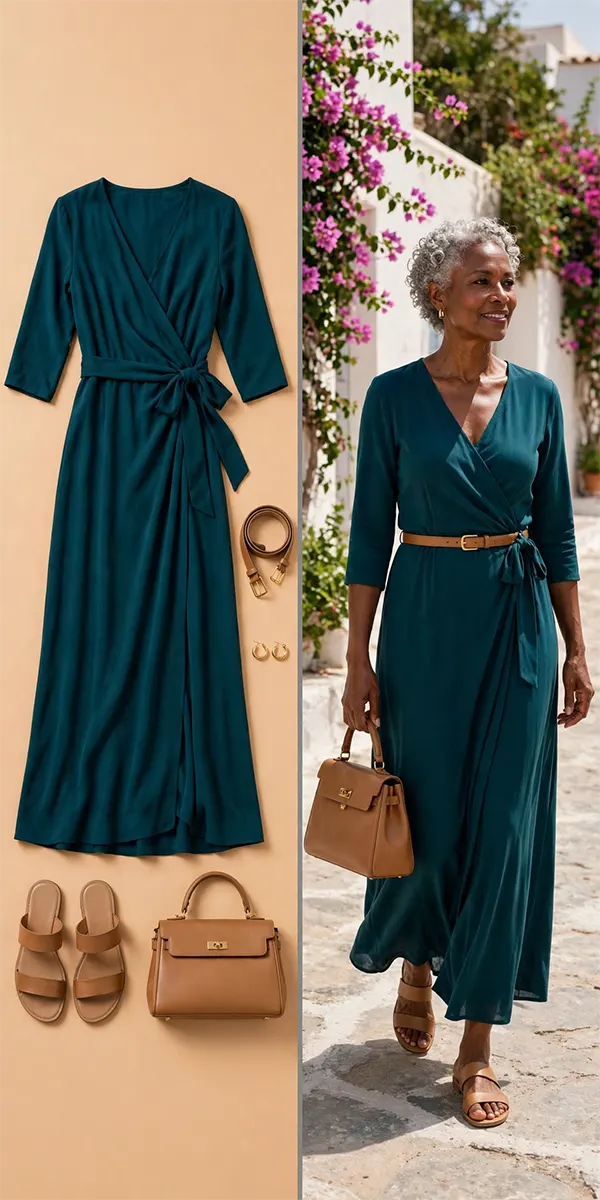
A wrap maxi dress is the shape I suggest most often because it solves several problems at once. The crossover bodice creates a V-neckline, the tie at the waist defines your shape, and the skirt falls in soft folds from the tie to the hem. You can adjust the tie for comfort, which means the dress fits through a long lunch as well as it does in the fitting room.
Choose a wrap dress in a fluid crepe, jersey, or viscose with sleeves in a length you like. A dress with a generous overlap stays closed when you move, and a slightly higher wrap at the chest is more secure than a very low one. Pair it with flat sandals or wedges, a thin scarf, and small earrings. The dress already has movement, so you do not need much more.
Fit Guide: Check the Wrap Before You Sit Down
A wrap dress should stay closed when you reach, bend, and sit, and the bodice should lie flat without gaping. Try it on and test those movements in the fitting room. If the neckline opens, a hidden snap, a small safety pin, or a camisole underneath solves the problem easily.
Look at the waist tie as well. A wide, soft tie in the same fabric looks refined, and a long tie lets you wrap it twice for security. A skirt with enough fullness lets you walk comfortably, and a hem that skims the floor with your shoes gives a clean line. This shape suits many figures, and it is a very good first choice.
2. Empire-Waist Maxi Dress for Easy Comfort
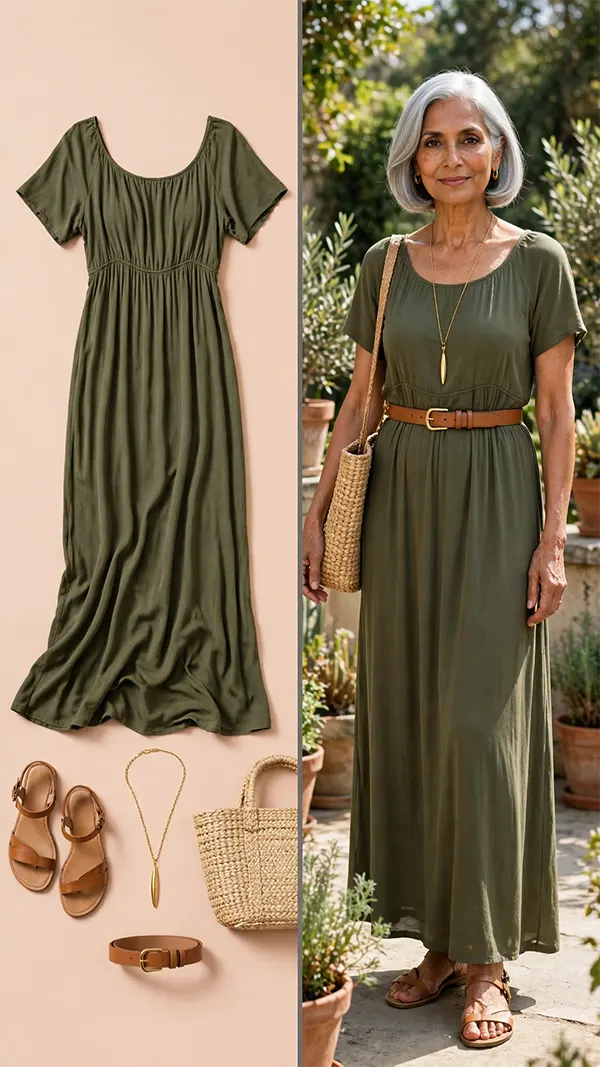
An empire-waist maxi has its seam just under the bust and a skirt that falls straight to the floor. This shape is wonderfully comfortable, since nothing presses on the waist or stomach, and the high seam gives a graceful vertical line. It is a dress I would recommend for long days, travel, and warm weather.
Look for a style with a fitted bodice, sleeves or wide straps, and a skirt with a little fullness. Fabrics such as viscose, cotton voile, and soft jersey work well, and a small print hides creases. Wear it with flat sandals, a long pendant necklace, and a woven bag. A lightweight cardigan or denim jacket adds a layer when the evenings cool.
Fabric Insight: Pick a Fabric With Some Weight
Because an empire dress hangs from the bust, the fabric needs enough weight to fall smoothly. Very thin materials can cling to the body and cause the skirt to ride up, while a mid-weight crepe or a dense jersey hangs straight and moves gracefully. Hold the fabric up to the light, and choose one that does not show through.
A lining adds comfort and prevents cling, especially in tights weather. Check where the seam sits when you put the dress on, since it should fall just under the bust, not on it. If the seam sits too low, the dress can look shapeless. A small adjustment by a tailor can neatly raise it.
3. A-Line Maxi Dress with a Gentle Flare
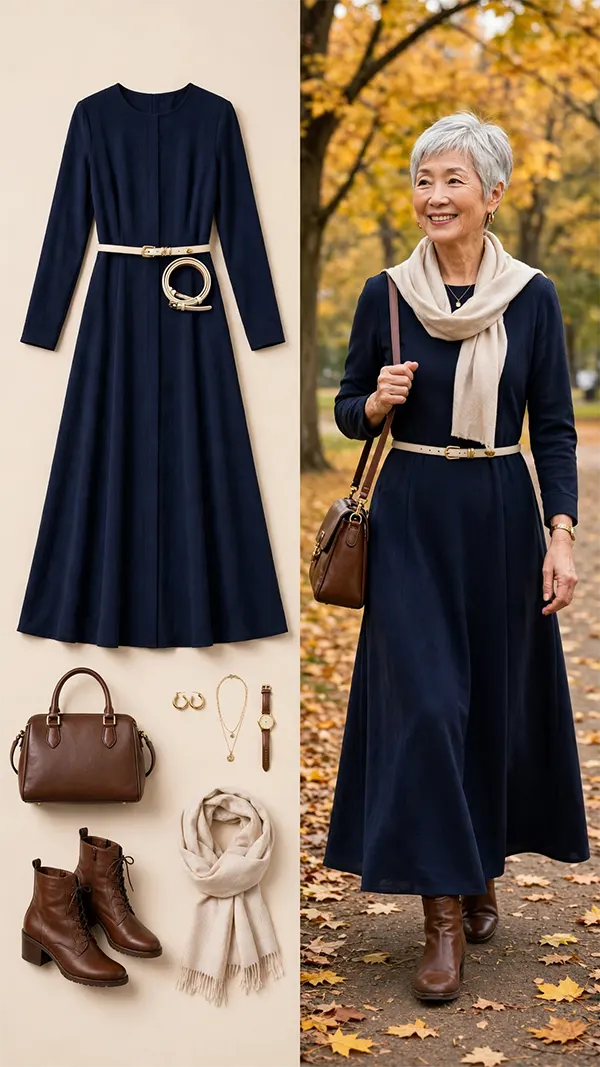
An A-line maxi dress skims the body from the shoulders and widens gently toward the hem. It does not cling anywhere, so it is comfortable and forgiving, and the flare makes walking easy. In a solid color or a small print, it is one of the simplest ways to look polished with no effort.
Choose an A-line in a crepe, ponte, or heavier jersey with a V-neck or boat neck and sleeves in your preferred length. A thin belt can add definition, and a long cardigan or a trench keeps the line elegant. Ankle boots, loafers, and sandals all work, depending on the season. This is a good dress for gatherings, church, and casual dinners.
Why It Works: A Gentle Flare Creates Balance
The widening skirt balances the shoulders and hips, so the dress looks even from top to bottom. The straight line from the shoulders gives a long, clean silhouette, and the flare keeps it from looking narrow. It also hides nothing and flatters everything, simply because it moves with you rather than against you.
When you try one on, check the shoulders first. A seam that sits at the edge of your shoulder keeps the dress from looking sloppy, and an adjustable strap or a tailor can fix small differences. Then check the hem. A hem that is slightly shorter at the front helps when you climb stairs. A fabric with weight holds the shape, and a lining helps it hang smoothly.
4. Shirt-Style Maxi Dress with a Belt
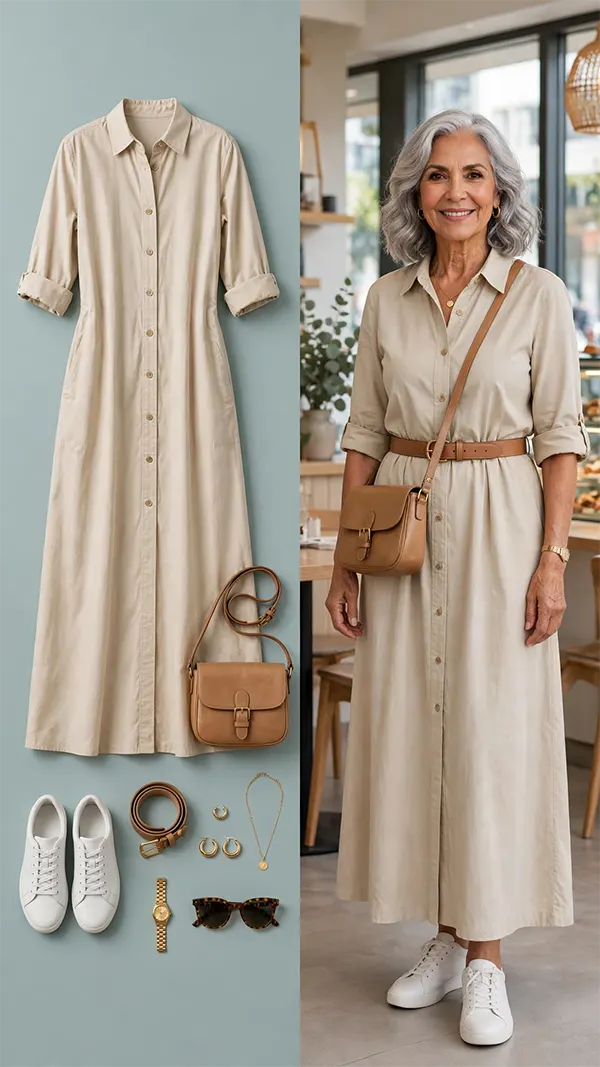
A shirt-style maxi has a collar, a button-front, and a long skirt, giving it a tailored, crisp feel. The bodice’s structure balances the skirt’s flow, and the belt defines the waist. It looks smart enough for a work lunch and relaxed enough for weekend errands, which makes it very useful.
Choose a maxi shirt in cotton poplin, Tencel, or lightweight twill in navy, stone, olive, or a fine stripe. Wear it with a tan or black belt, and add loafers, sneakers, or flat sandals. Roll the sleeves for a casual look, and leave the bottom buttons open if you want to walk comfortably. A scarf or a thin necklace adds polish.
How to Wear It: Open the Skirt Buttons for Ease
With a button-front maxi, you can leave the bottom few buttons undone to let the skirt open as you walk. This gives you freedom of movement and creates a slim vertical slit that looks stylish. Check that the buttons stay closed higher up, and wear a slip underneath if you prefer more coverage.
The chest buttons should lie flat without pulling. If they strain, go up a size and have the waist taken in by a tailor, which is usually easier than altering the bust. A matching leather belt finishes the dress, and a crossbody bag pairs well with it. Iron or steam the placket, since a crisp front makes the whole dress look more expensive.
5. Column Knit Maxi Dress for a Clean Line
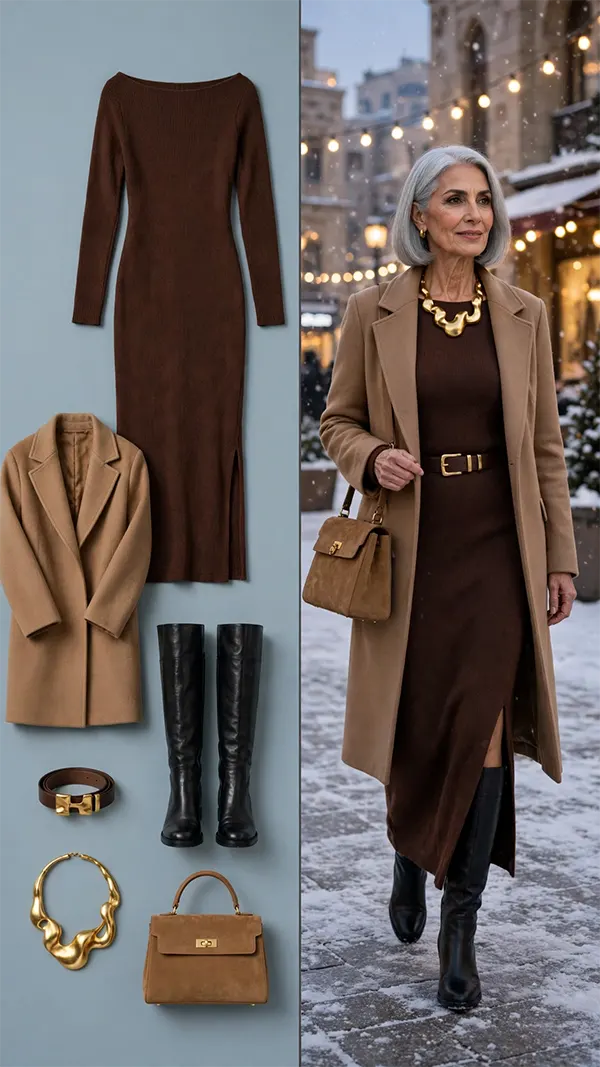
A column-knit maxi is a slim, straight dress in fine jersey or knit that falls from the shoulders to the ankle. It creates a long, uninterrupted line, and the stretch fabric makes it comfortable. It is an elegant choice for cooler months, and it looks very modern with minimal accessories.
Choose a column dress in a dense knit with some weight in black, chocolate, charcoal, or deep green, with a crew neck, boat neck, or turtleneck. A slit at the back or the side allows you to walk easily. Pair it with ankle boots, a long coat, and a scarf, and add a statement necklace or a pair of statement earrings to break the line.
Modern Update: Add a Bold Accessory
Because the column dress is simple, one bold accessory looks striking. A sculptural necklace, a wide belt in a contrasting color, or a bright silk scarf gives the dress personality. Choose one only, so the clean line stays intact.
Check the knit for opacity and smoothness. A thin knit can show lines from underwear, so wear a smooth slip and seamless layers. Make sure you can walk comfortably, and ask for a slit if the dress doesn’t have one. A long coat in camel or gray, worn open, creates a beautiful vertical line, and tall boots finish the look. Hang the dress carefully to avoid stretching the shoulders.
Discover More: How to Layer Clothes After 50 for an Effortlessly Polished Look
Fabric, Print, and Color Decisions That Make a Maxi Dress Look Expensive
Two dresses with the same shape can look completely different depending on what they are made of and how they are colored. Fabric determines how the dress falls, print determines how it photographs, and color determines how it makes you look. If you only have time to be picky about one thing, I would be picky about fabric.
These five ideas cover the material, pattern, and color choices I find most useful. Try holding a dress up to your face in daylight before you buy it, and notice how it affects your skin, hair, and eyes. A color that makes you look rested is worth more than any trend.
6. Fluid Crepe or Viscose for a Dress That Moves
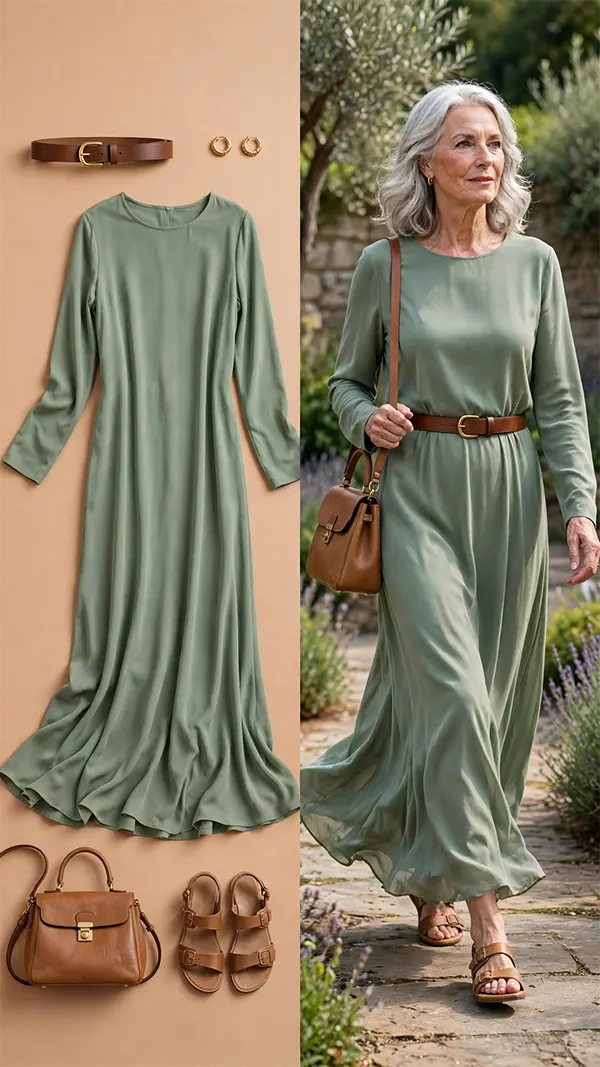
The most flattering maxi dresses are often made from fabrics that move. A fluid crepe or viscose drapes over the body without clinging, and the skirt swings with each step. This movement makes people turn their heads and turns a simple silhouette into something luxurious.
When you shop, hold the fabric in your hand and let it fall. It should feel smooth and have some weight—not paper-thin or stiff. Check that you cannot see your hand through a single layer, and look for neat seams. A dress with a lining feels better against the skin and hangs better. Choose a solid color or a subtle print to let the fabric speak for itself.
Fabric Insight: Test the Fabric Before You Commit
Crush a small piece of the fabric in your hand for five seconds and let go. If the creases fall out quickly, the dress will survive a day of sitting and travel. If it stays wrinkled, you might prefer to save it for short events. Viscose and crepe blends with a bit of elastane usually recover well.
Also, check how the fabric behaves in static. Some synthetic materials cling to tights and legs, and a lining or an anti-static spray helps. Read the care label for washing instructions, since some viscose dresses need a gentle wash or dry cleaning. A dress that you can care for easily is a dress you will wear more often.
7. Soft Floral Print in a Muted Palette
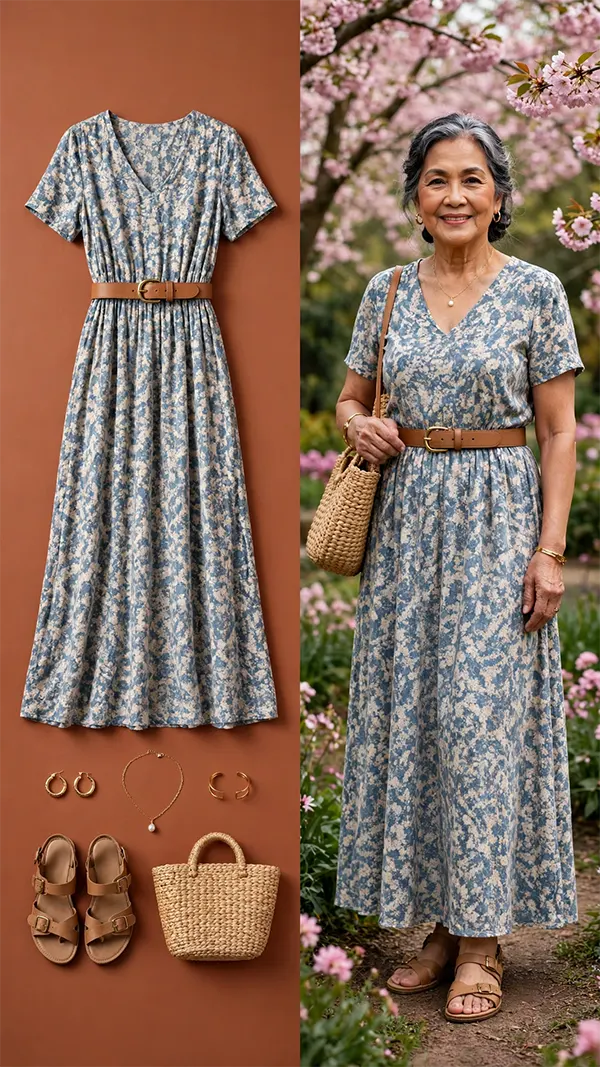
A floral maxi dress is the classic answer for spring and summer, and it can be very elegant when the print is chosen carefully. Muted colors such as dusty blue, sage, cream, and soft rose look sophisticated, while very bright or large prints can feel overwhelming. A small-to-medium floral also hides creases and marks, which helps on the road.
Pay attention to the background color of the print. A dark background, such as navy or deep green, looks more refined and is more forgiving. A light background feels fresh and summery. Choose a print with evenly spaced flowers, and avoid designs with very large, unevenly placed motifs. Keep your shoes, bag, and accessories solid and simple so the dress remains the focus.
Color Pairing: Pull One Shade From the Print
The easiest way to coordinate a printed maxi is to pick one color from the pattern and echo it in an accessory. A navy floral looks lovely with a navy cardigan, and a cream floral works with tan sandals and a cream bag. You do not need to match every color, and a single echo ties the outfit together.
If you wear a layer over the dress, choose a solid piece in a neutral shade, such as denim, cream, or soft gray. Avoid layering a printed cardigan over a print. A thin belt in a color from the dress can define the waist without adding another pattern. When in doubt, keep the jewelry small and delicate, since the dress already has plenty of interest.
8. Solid Jewel-Tone Maxi for Instant Polish
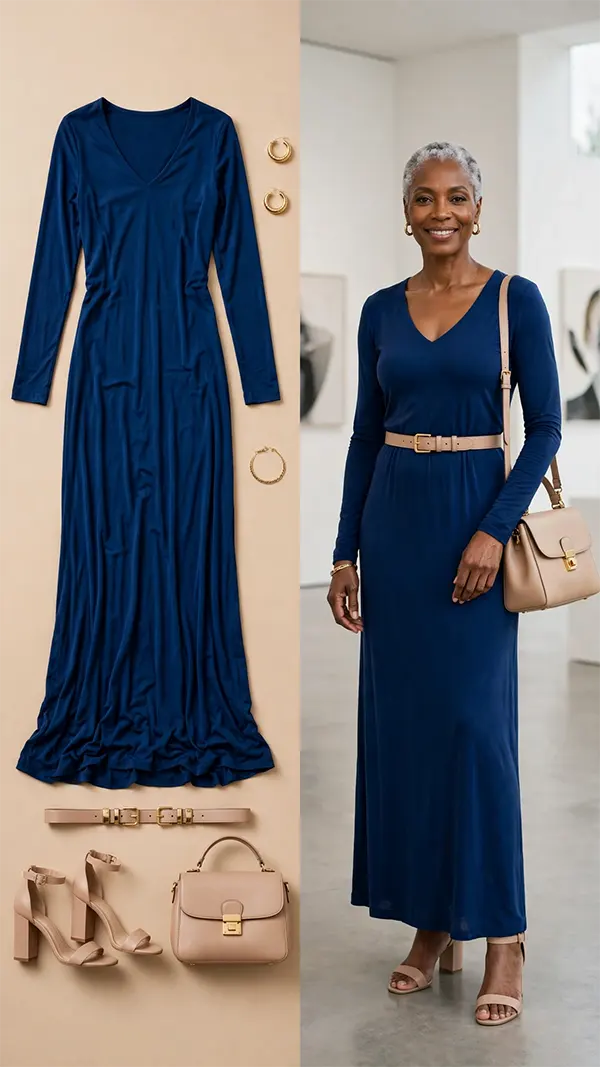
A maxi dress in a rich jewel tone looks elegant with almost no effort. Emerald, sapphire, ruby, plum, and deep teal are colors that look expensive on camera, and they make silver, gray, and white hair look luminous. A solid color also gives the dress a clean line, which helps with the visual length.
Choose a shade that makes your skin glow, and check it in daylight rather than only under shop lights. A deep color in a matte fabric feels sophisticated, and a color with a slight sheen feels dressier. Pair the dress with neutral shoes, gold or silver jewelry, and a simple bag. The color does the talking, so keep everything else quiet.
Why It Feels Chic: One Strong Color Looks Intentional
Wearing one strong color from neckline to hem makes the outfit look deliberate. There is nothing to compete with the dress, and the eye follows one smooth line. Adding a belt in a neutral shade or a cream scarf can introduce contrast without breaking the effect.
If you are nervous about color, start with a deep teal or navy, which feels gentler than bright red or electric blue. Hold a few shades near your face and see which one brightens you. A solid jewel-tone dress also works across seasons: add a coat and boots in winter, a denim jacket in spring, and sandals in summer. This makes it a very efficient wardrobe piece.
9. Fine Stripes in a Maxi Dress
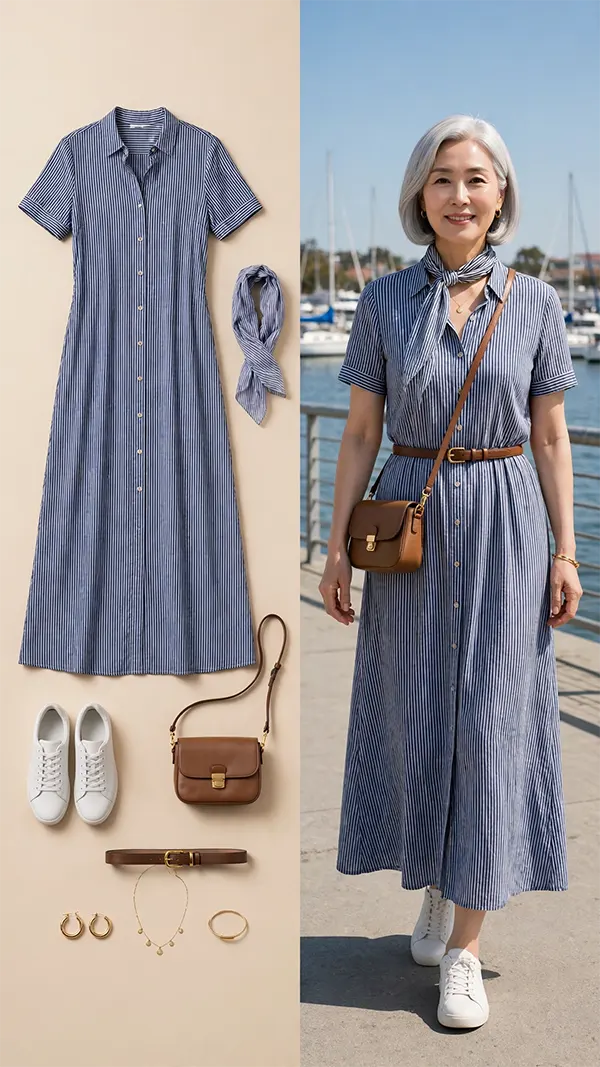
Stripes can be wonderful on a maxi dress when the lines are fine and well spaced. Vertical or slightly diagonal stripes create a sense of length, and a classic navy-and-white stripe looks crisp and nautical. Horizontal stripes in a soft knit can also look fresh when they are narrow and the fabric drapes well.
When choosing how to wear a striped maxi dress after 50, I would look for medium-to-thin stripes and a pattern that matches at the seams. Check that the stripes line up at the center front and at the side seams; this is a sign of good quality. Pair the dress with a solid cardigan, flat sandals, or white sneakers and a straw bag. Keep accessories simple, since the stripes already add interest.
Style Tip: Match the Stripe Direction to Your Goal
Vertical stripes emphasize height and create a long, streamlined line. Diagonal stripes add movement and a modern look. Horizontal stripes add width, so choose a thin line and a fabric with drape. Think about which effect you want, and choose the direction that supports it.
A stripe in two close shades, such as navy and soft blue or camel and cream, looks quieter and more sophisticated than a strong contrast. If you wear a belt, choose one in a solid color rather than a striped one. Avoid pairing the dress with a printed scarf or bag, as too many patterns can look busy. A simple white or navy cardigan completes the outfit and handles cool evenings.
10. Tonal Neutral Maxi in a Linen Blend
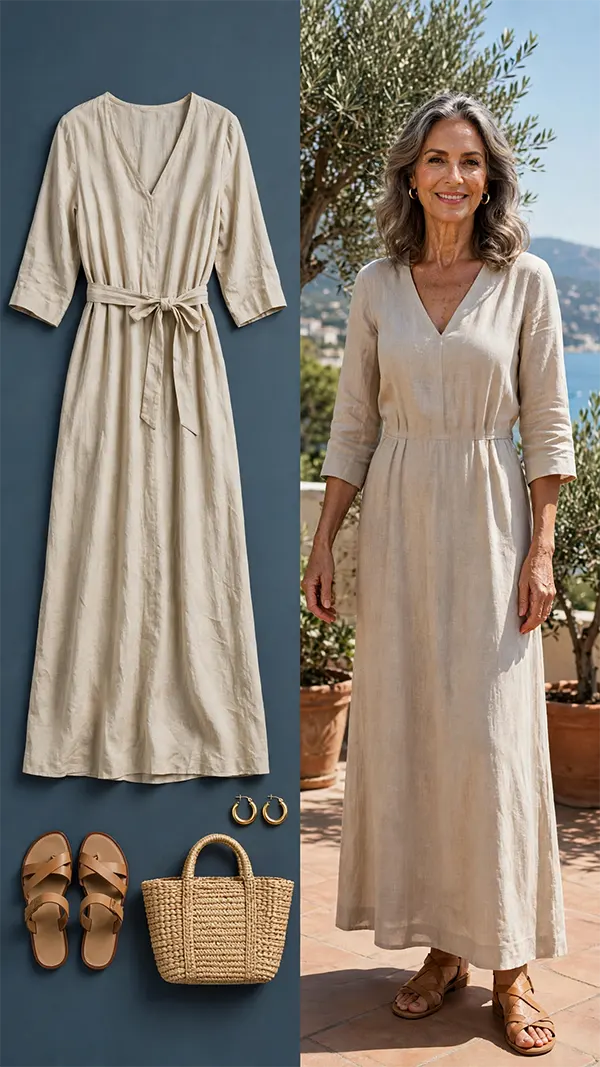
A maxi dress in a soft neutral, such as oatmeal, sand, stone, or ivory, feels calm and elegant. In a linen blend, it also feels cool and breathable, which makes it ideal for hot weather. The natural color pairs with every accessory, and you can completely change the look with a scarf or a pair of earrings.
Choose a linen-viscose or linen-cotton blend, which wrinkles less than pure linen, and a relaxed shape with a tie waist or a belt. A V-neck or a square neck frames the face, and sleeves in a short or three-quarter length add comfort. Wear it with tan leather sandals, a woven bag, and gold jewelry. The result is relaxed, polished, and very easy to repeat.
Maintenance Tip: Treat Light Neutrals Gently
Light neutrals show marks, so carry a stain pen and treat spots quickly. Steam the dress rather than ironing it, and hang it on a wide hanger to keep the shoulders smooth. Linen blends soften with washing, so follow the care label and avoid harsh detergents.
If you worry about transparency, check the dress in daylight and wear a nude slip. A lining in the bodice and the skirt solves the problem. Keep the dress away from sunscreen and oils where possible, since they can leave marks. A tonal neutral dress is a smart investment because it pairs well with so many other pieces in your wardrobe.
Layers That Make a Maxi Dress Work in Every Season
A maxi dress does not have to stay in the summer section of your closet. With the right layer, it works in spring, autumn, and winter, and it handles cool restaurants and breezy evenings. The layer also adds structure, which helps balance the flow of a long skirt.
The rule I follow is simple: the layer should be shorter than the dress and more structured. A cropped jacket or a hip-length cardigan lets the skirt show and keeps the proportions neat. These five ideas show how to do it without any complicated styling.
11. Denim Jacket Over a Maxi Dress
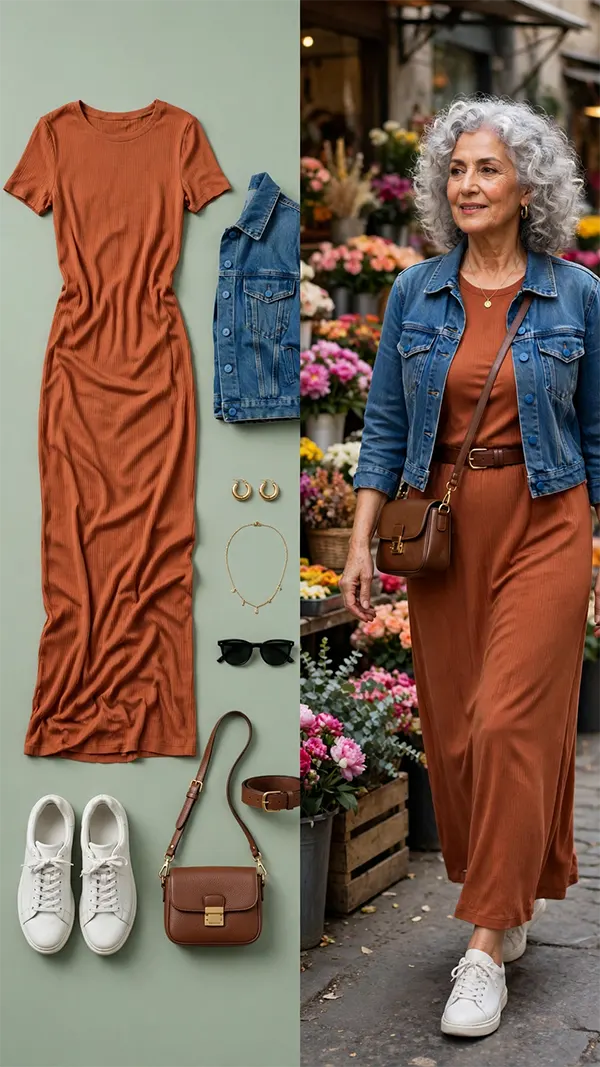
A denim jacket and a maxi dress are among the easiest pairings in fashion. The structured, casual jacket balances the dress’s soft flow, and the blue pairs with almost every color. It is a relaxed look that suits weekends, travel, and casual lunches, making the dress feel less formal.
Choose a jacket in a mid- or light-wash that is cropped or hip-length, and wear it open or buttoned. A fitted shape looks neater than a boxy one, and a slight stretch makes it comfortable. Wear the dress with sandals or sneakers, and add a scarf or a straw bag. In cooler weather, tights and ankle boots keep the outfit going.
Styling Tip: Keep the Jacket Short
A jacket that ends at the waist or just below it keeps the dress waistline visible and the skirt free. A longer jacket can cut the dress in half and make the outfit look heavy. Try the jacket with the dress and check the proportions in a mirror.
Rolling the sleeves to three-quarter length gives the outfit a relaxed feeling and shows off bracelets or a watch. If the dress is printed, choose a jacket in a plain wash. If the dress is solid, a jacket with a little character—such as white stitching or a vintage wash—adds interest. A denim jacket can also be tied around the waist when the day warms up.
12. Cropped Cardigan with a Maxi Dress
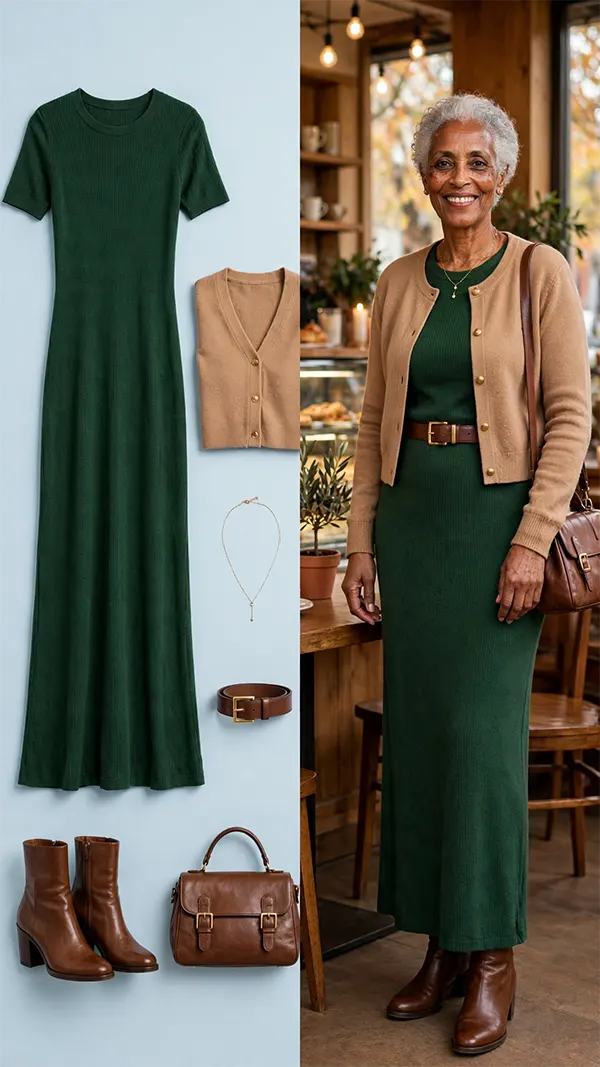
A cropped cardigan is a soft, comfortable layer that sits at the waist and keeps the dress shape visible. It adds warmth without bulk, and it works with almost every maxi dress silhouette. The combination looks gentle and feminine, and it is easy to wear for lunches, church, and gatherings.
Choose a fine-knit cardigan that ends at the waist or just below it, in a neutral such as cream, gray, navy, or camel. Button the top button for a neat look, or wear it open. A fitted cardigan looks tidier than a loose one, and a good knit holds its shape. Add flat sandals, loafers, or ankle boots, and a thin necklace.
Layering Idea: Match the Cardigan to a Color in the Dress
If your dress has a print, choose a cardigan in one of its background colors. A navy floral looks lovely with a navy cardigan, and a cream print goes with a cream knit. This creates a harmonious look without extra effort.
For solid dresses, a contrasting cardigan adds interest. A camel cardigan over a deep green dress, or a pale pink cardigan over a navy dress, looks fresh. Keep the cardigan thin enough to sit neatly over the bodice. If the dress has sleeves, check that the cardigan sleeves do not bunch. A cropped cardigan also looks pretty when worn draped over the shoulders in warm weather.
13. Tailored Blazer Over a Maxi Dress
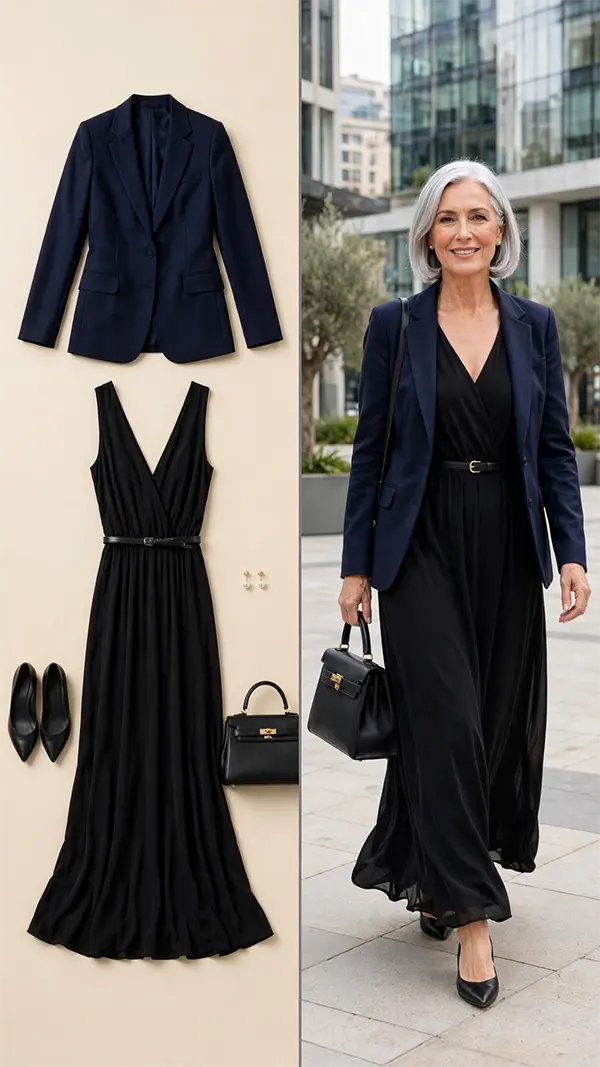
A tailored blazer over a maxi dress is a more formal way to wear a long dress, and it works surprisingly well. The structured shoulders balance the skirt’s flow, and the blazer gives the outfit a polished, professional feel. It is a good option for work, meetings, and elegant dinners.
If you want to know how to wear a maxi dress after 50 in a professional setting, this is the combination I would choose. Pick a blazer that ends at the hip in black, navy, camel, or gray, and a dress in a solid color or a subtle print with sleeves or straps. Wear the blazer open, and add pointed flats, loafers, or ankle boots. A thin belt over the dress can define the waist.
Fit Guide: Check Shoulders and Sleeve Length
A blazer should fit across the shoulders and close comfortably, or look good open. The sleeves should end near the wrist bone, and the hem should sit at the hip so it does not hide the dress waist. Try it over the dress, and raise your arms to check the movement.
Choose a blazer in a fabric with some stretch, since it feels more comfortable over a dress. A smooth lining helps it glide over the bodice. If the dress is slim, a slightly oversized blazer can look modern, and if the dress is full, a fitted blazer keeps the lines balanced. A scarf or a necklace can fill the neckline, and a structured bag completes the look.
14. Long Duster or Trench Over a Maxi Dress
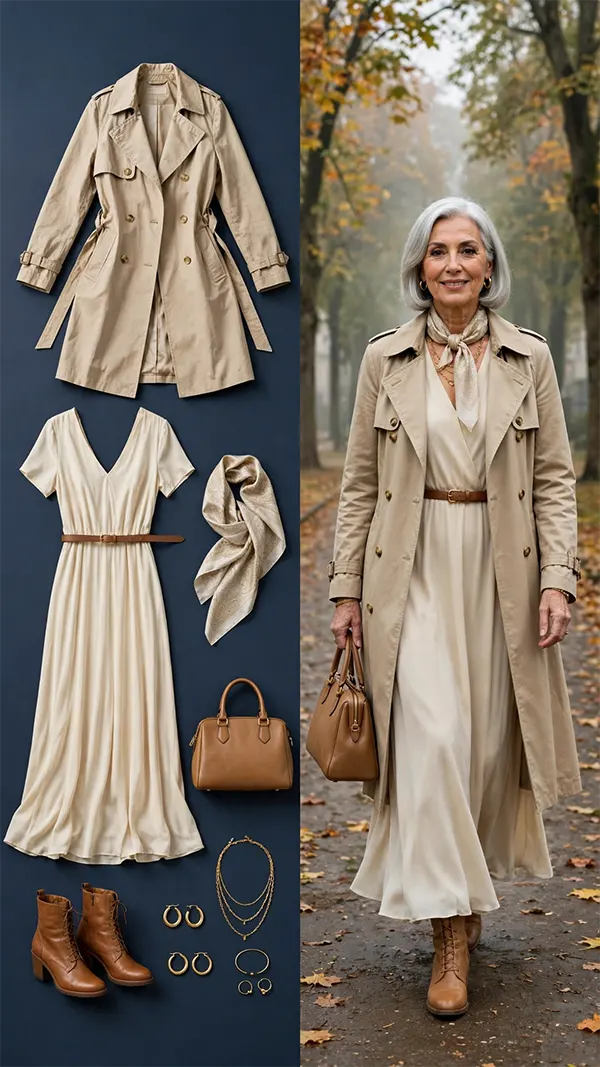
A long duster coat or a trench worn open over a maxi dress creates a dramatic, elegant column. The two layers share a vertical line, and the outer layer adds structure and movement. It is a stylish option for transitional weather and travel days, and it looks effortlessly put together.
Choose a trench in beige, stone, or navy, or a lightweight duster in camel or gray, that ends a few inches above or at the same length as the dress. Keep the dress slim in a solid color, and wear the coat open. Ankle boots, loafers, or sneakers complete the outfit, and a scarf adds warmth and color. A belt can be added over the coat for shape.
Layering Idea: Let the Dress Hem Show
The most flattering way to wear a long coat over a maxi dress is to let a few inches of the dress show beneath the coat. This creates a layered effect and prevents the outfit from becoming one solid block. If the coat is longer than the dress, choose a slim dress to keep the lines clean.
Check that the coat fits over the dress comfortably, with room to move your arms. A lightweight fabric drapes better than a heavy one, and an open front creates a graceful line. A tonal palette, such as a beige trench over an ivory dress, looks especially polished. Add a silk scarf and a structured bag, and you have an outfit that works for travel and city days.
15. Knit Maxi with Tall Boots and a Wool Coat for Winter
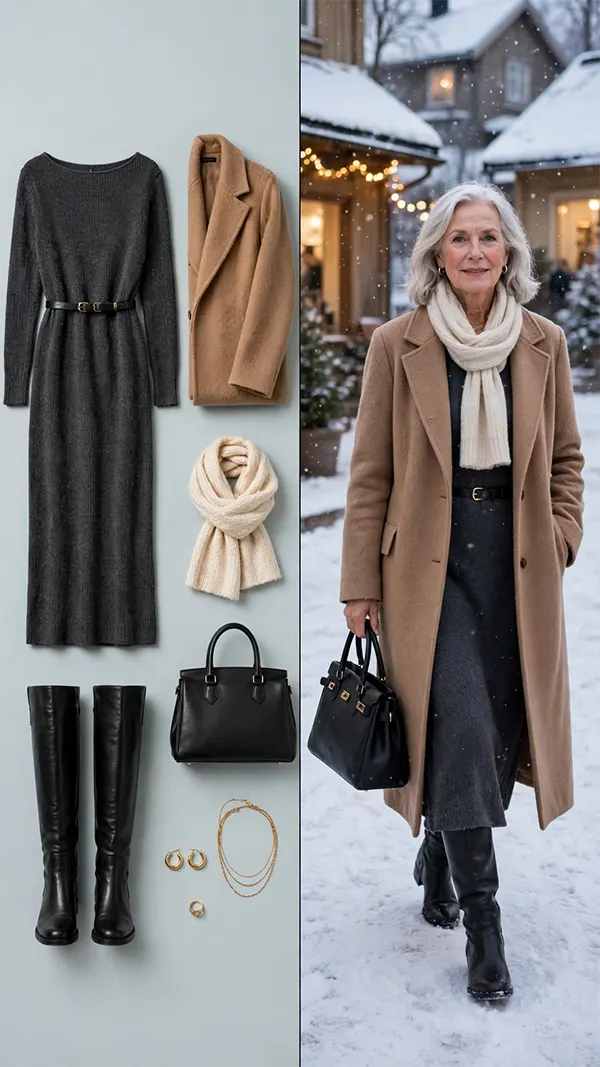
A knit maxi dress is one of the warmest and most comfortable winter outfits. The soft knit skims the body, the long length covers the legs, and tall boots complete the line. With a wool coat over the top, you have a complete cold-weather look that feels graceful and practical.
For how to wear a maxi dress after 50 in winter, this is the formula I trust. Choose a knit dress in a dense merino blend in charcoal, camel, forest green, or burgundy, and wear it with fleece-lined tights and boots with good grip. A long wool coat, gloves, and a scarf complete the outfit. A belt over the dress adds shape beneath the coat.
Comfort Tip: Layer Thin Underneath
A thin thermal layer or fleece-lined tights keeps you warm without adding bulk. A smooth slip prevents the knit from clinging to the legs, and a seamless base layer avoids lines. Choose layers in a color close to your skin or the dress, so they do not show.
Check that the boots fit comfortably around the calf, since many women find this tricky. Boots with a stretch panel or an adjustable gusset help, and wide-calf styles are widely available. If the knit is heavy, choose a coat with enough room in the shoulders. A scarf in a contrasting color adds a touch of brightness to the outfit, and warm gloves complete the look.
Shoes, Bags and Accessories That Finish the Look
The shoes you choose decide the mood of a maxi dress. Sandals make it breezy, sneakers make it casual, and heels make it dressy—the same dress can look like three different outfits. I think this is the best part of owning a few good maxi dresses.
Accessories add the final detail. A belt, a necklace, a hat, or a bag can turn a simple dress into a complete look, but too many can overwhelm the line. I keep to a simple rule: choose one statement item and let everything else be quiet.
16. Flat Leather Sandals for Warm Days
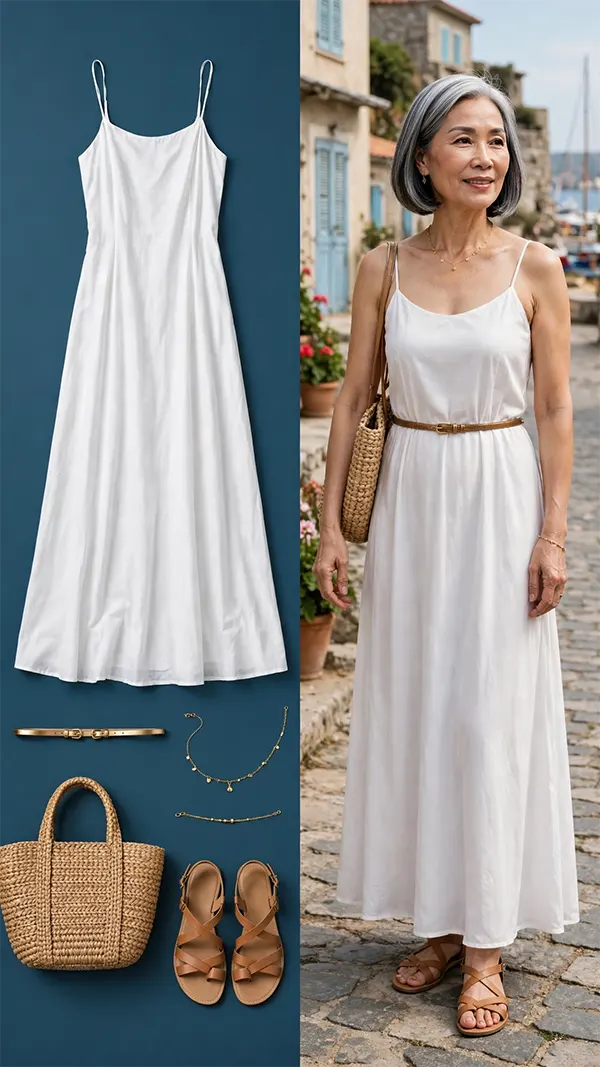
Flat leather sandals are the simplest way to finish a maxi dress in warm weather. They keep the look relaxed and comfortable, and the open toe shows off a neat pedicure. A good pair of sandals with arch support carries you through long walks, markets, and lunches without any trouble.
Choose sandals in tan, nude, black, or metallic gold with a thin strap or a cross-over design. A slim, simple style looks more elegant than a chunky one with a flowing maxi hem. Make sure the hem of the dress clears the ground, and consider a small heel or a platform sole if you want extra height. Pair with a woven bag and delicate jewelry.
Accessory Advice: Match the Sandal to the Metal
A gold buckle or a gold metallic sandal looks lovely with gold jewelry, and silver detailing pairs with silver earrings. This small coordination makes the outfit look intentional. If the dress is printed, choose a neutral sandal that blends with the base color.
Check the comfort of the footbed before buying, and break the sandals in before a trip. A soft leather strap is kinder to the feet than a stiff one, and an adjustable buckle lets you fine-tune the fit. Keep the sandals clean and polished, since worn straps can make an elegant dress look tired. A tidy pedicure completes the look.
Need More Ideas? How to Wear Monochrome Outfits Over 50 for a Chic and Confident Look
17. Clean White Sneakers for Casual Days
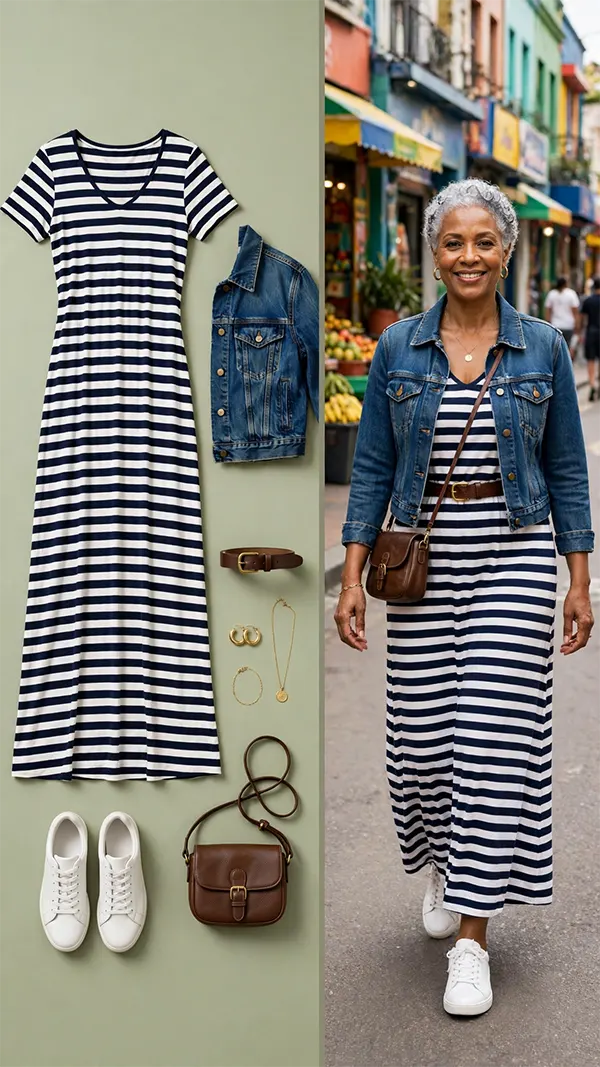
White sneakers make a maxi dress look modern and relaxed. The sporty shoe contrasts with the feminine dress, creating a look that feels fresh and comfortable. It is a favorite pairing for errands, travel, and city walks, and it is far more comfortable than it looks.
If you want to know how to wear a maxi dress after 50 without looking too casual, choose slim leather sneakers with a clean sole and no loud logos. Keep the dress simple, and add a denim jacket or a cardigan for polish. A crossbody bag and a scarf complete the outfit. Make sure the dress hem skims the top of the shoe, so it does not drag.
Styling Tip: Keep Sneakers Spotless
A clean sneaker makes the outfit look intentional, while a scuffed one can make it look careless. Wipe the soles regularly and use a gentle cleaner on the leather. If the shoes are white, carry a small cleaning wipe for travel days.
A slim silhouette suits long dresses better than a chunky one, and a low-profile sole keeps the line smooth. If you want a bit of variety, try cream, tan, or silver leather sneakers, which look softer than stark white. The outfit works best when the dress has a bit of structure, such as a shirt dress or a belted style, so the whole look feels balanced.
18. Block Heels or Wedges for Dinner
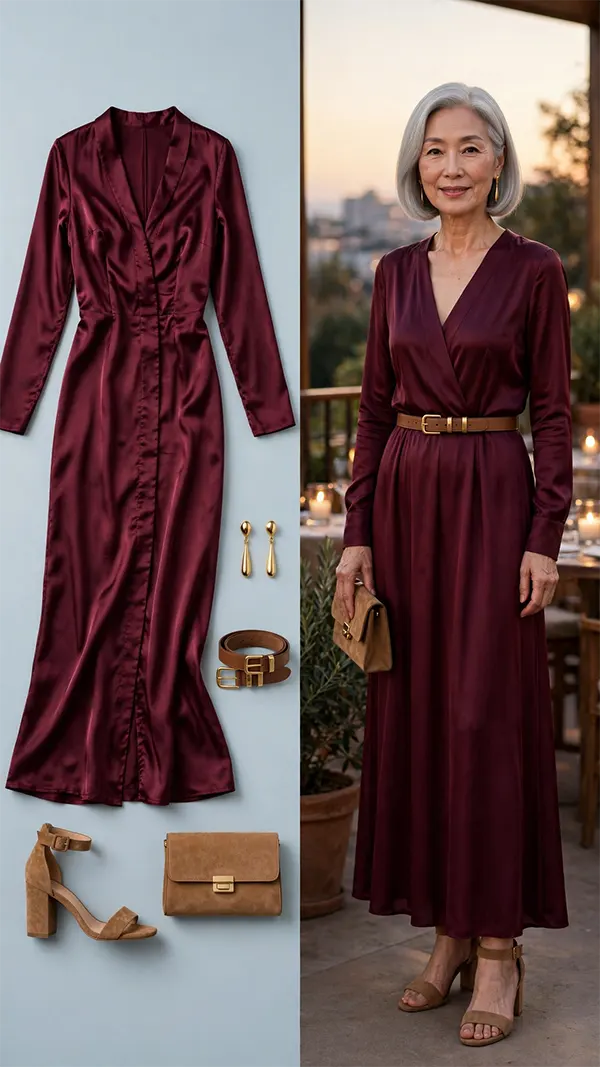
A block heel or a wedge turns a maxi dress into a dinner outfit. The extra height lifts the hem and lengthens the line, and the stable base keeps you comfortable. Wedges are ideal for summer terraces, while block heels in leather or suede work in autumn and winter.
Choose a heel of two to three inches with a cushioned footbed and a secure strap, since you will be walking and standing for a while. A tan, nude, or black shoe works with most dresses, and a metallic finish adds a hint of glamour. Pair the outfit with drop earrings and a small clutch, and a wrap or a light jacket handles cool evenings.
Comfort Tip: Test the Shoes on a Flat and a Step
Walk around your home in the shoes before you wear them out. Check that your heels do not slip and that the ball of your foot has enough cushioning. A strap around the ankle adds security on cobblestones and stairs.
Wedges can feel heavy, so choose a lightweight material such as cork or a rope sole. If you are not used to heels, start with a low block heel and gradually increase the height. Keep a pair of foldable flats in your bag for long evenings. The dress hem should skim the top of the shoe, and a hem that is slightly too long can be adjusted by a tailor.
19. A Belt and a Long Necklace to Define the Line
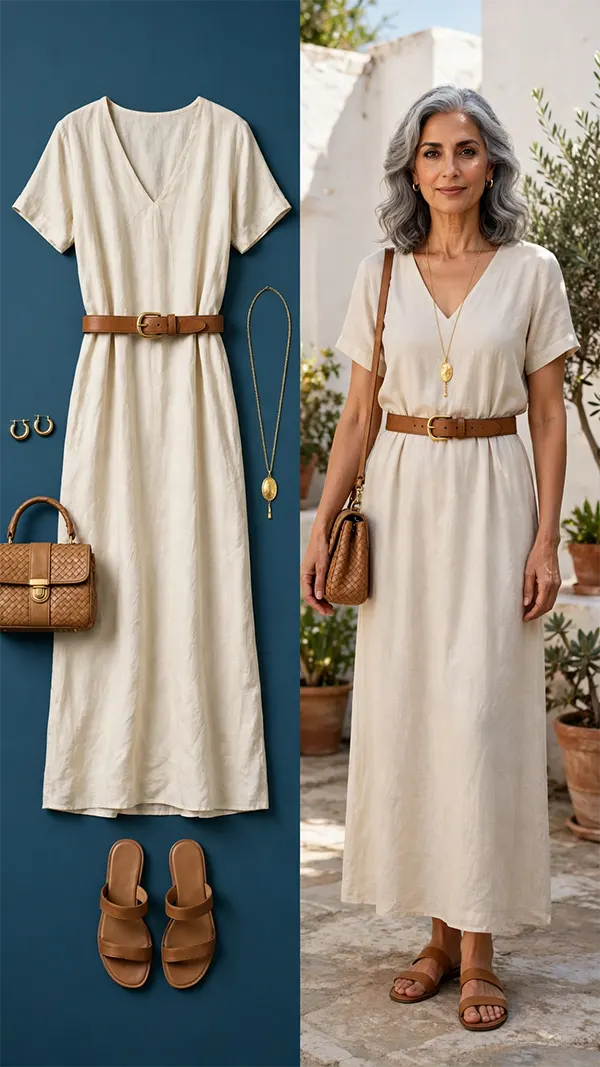
A maxi dress can look like one long column, and a belt or a necklace breaks it up in a flattering way. A belt at the natural waist creates shape, and a long pendant draws the eye down the front in a graceful line. Both are small items that make a big difference.
When thinking about how to wear a maxi dress after 50 with accessories, I prefer a thin or medium leather belt in a color that matches my shoes. Add a long pendant necklace in gold or silver, and keep earrings small. If the dress is printed, choose a solid belt in one of the print colors. If the dress is solid, a belt in a contrasting shade adds interest.
Accessory Advice: Choose One Focal Point
If you wear a statement belt, keep the necklace delicate. If you wear a bold necklace, skip the belt or choose a thin one. This keeps the outfit balanced and prevents it from looking crowded.
Check that the belt sits at your natural waist or just above it and fastens comfortably. An elastic belt is comfortable for dinners, and a leather belt looks more polished. A long necklace should end near the waistline to echo the dress’s vertical line. Keep metals consistent, and choose jewelry that does not tangle with the neckline.
20. A Wide-Brim Hat and Woven Bag for Sunny Days
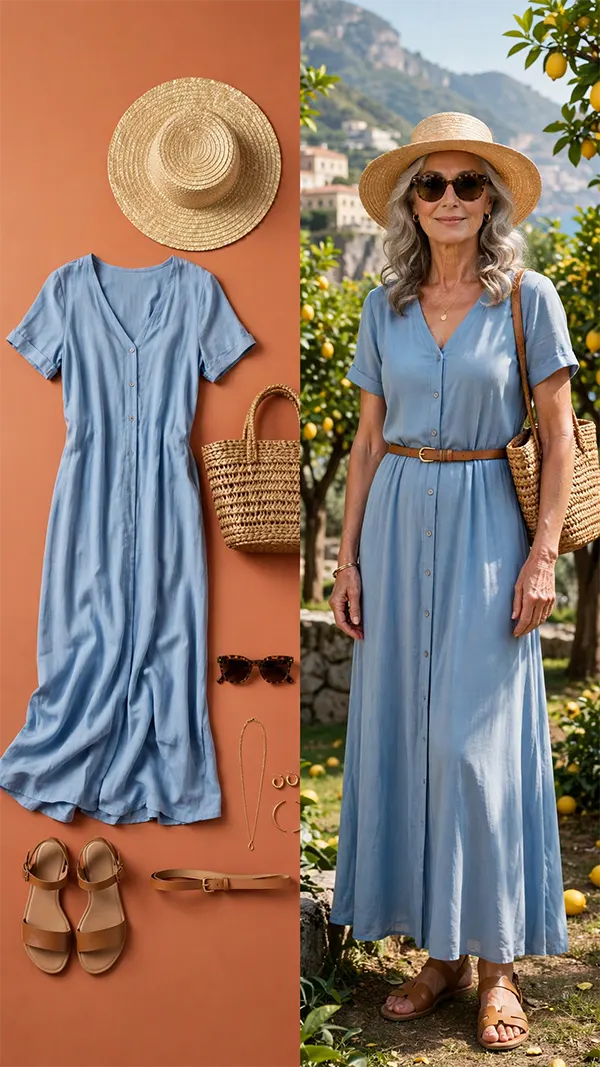
A wide-brim hat and a woven bag add holiday charm to a maxi dress. The hat provides sun protection and a touch of drama, and the bag adds natural texture. Together, they create a relaxed, elegant look that suits beach towns, gardens, and summer lunches.
Choose a straw hat with a brim wide enough to shade your face but not so wide that it feels awkward. A woven tote or a small basket bag in a neutral shade completes the outfit. Keep the dress in a solid or a light print, and add flat sandals and sunglasses. A thin scarf tied around the hat adds an extra detail.
Style Tip: Match the Hat Ribbon to the Dress
A hat with a ribbon in a color from your dress looks coordinated. A navy ribbon with a navy dress, or a cream ribbon with a cream dress, ties the outfit together. If the hat is plain, you can add a scarf in a print that echoes the dress.
Check that the hat fits snugly enough to stay on in the wind and does not crush your hair. A packable straw hat is practical for travel. Woven bags can be heavy when full, so choose a lightweight one. Keep jewelry minimal, and let the hat and bag be the accessories. This look is also pretty in photos, since the hat frames the face.
Where to Wear It: Maxi Dresses for Real Occasions
The question I hear most is not about shape or fabric. It is about whether a maxi dress is appropriate for a particular event. The short answer is that almost any occasion works if you choose the right fabric, layer, and shoe. A cotton maxi with sneakers is for errands, while a satin maxi with heels is for a wedding.
These four examples show how one garment can change character from place to place. Use them as templates, and adjust the details to your own events and climate.
21. Maxi Dress for Church and Family Gatherings
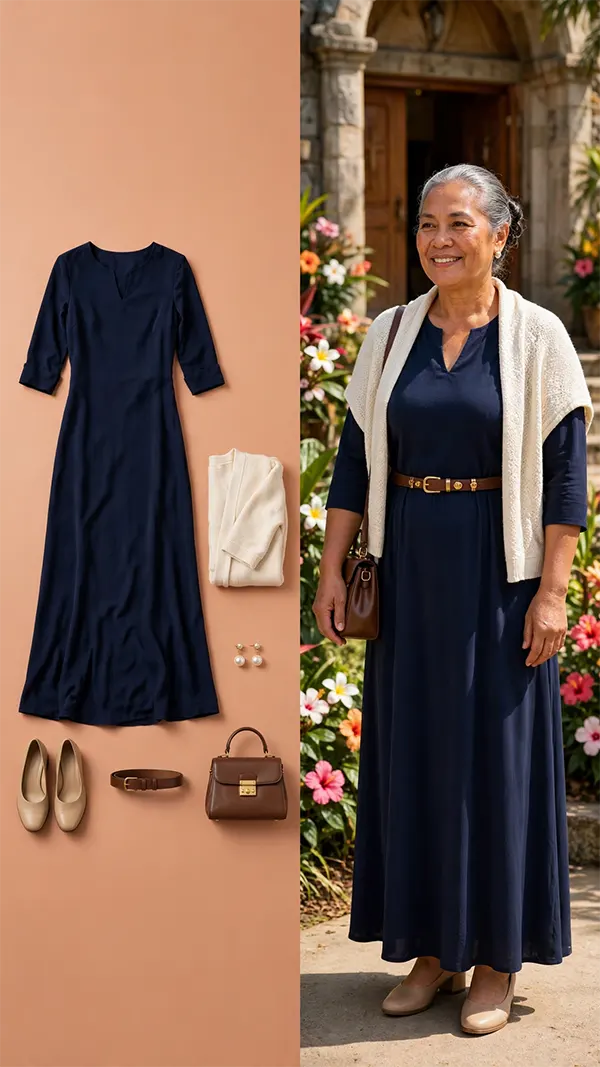
For church, family dinners, and holiday gatherings, a maxi dress offers coverage, comfort, and elegance. A dress with sleeves and a modest neckline feels respectful and relaxed, and a long skirt moves gracefully through a crowded room. It is one of the most useful dresses you can own.
When planning how to wear a maxi dress after 50 for these occasions, I would choose a solid or subtle print in a mid-weight crepe or jersey with three-quarter or long sleeves. Add a cardigan, a wrap, or a lightweight jacket for extra coverage, and wear flats or low block heels. Pearl earrings, a thin necklace, and a small bag complete the look.
How to Wear It: Choose Comfort for a Long Day
Family events can last for hours, with sitting, standing, cooking, and hugging. Choose a dress with an easy waist, stretch fabric, and a hem that does not drag. Wear shoes you can stand in, and keep a light wrap in case the room is cool.
For evening gatherings, a deeper color such as navy, burgundy, or emerald looks more formal, and a soft print is nice for daytime. Add a brooch or a scarf for a personal touch, and keep the jewelry modest. If the dress has a slit, check that it is comfortable for sitting. Steam the dress before the event, and hang it so it arrives crisp.
22. Maxi Dress for a Beach Vacation
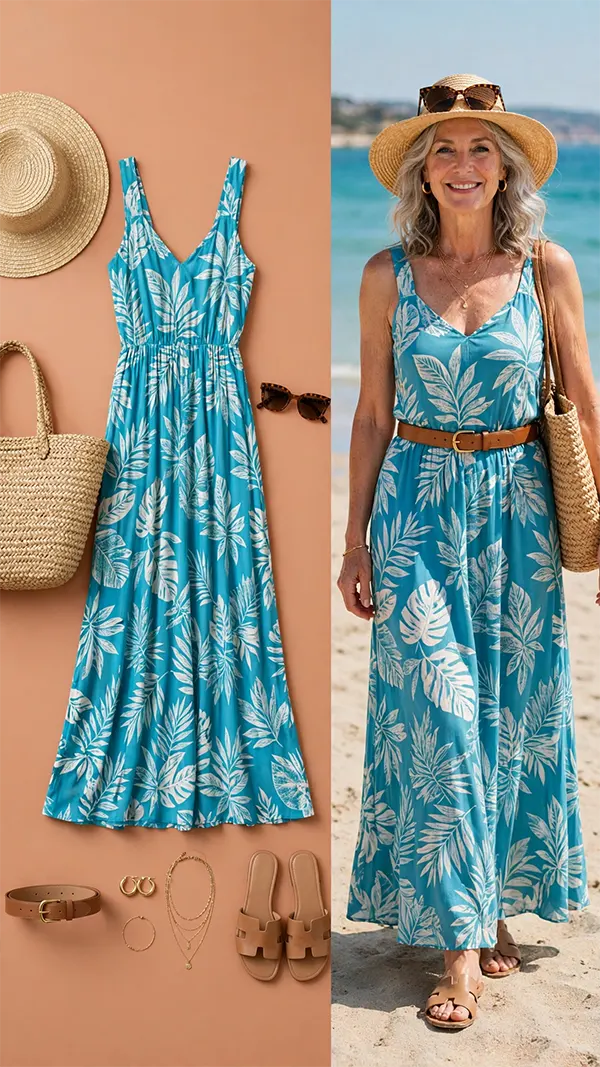
A maxi dress is almost a uniform for a beach vacation—and for good reason. It covers the skin from the sun, moves with the breeze, and looks relaxed from breakfast to sunset. With a swimsuit underneath, it also works as a cover-up that you can wear straight to lunch.
Choose a cotton, viscose, or linen-blend maxi in a light color or a soft print, with wide straps or short sleeves and a relaxed fit. Flat sandals, a wide-brim hat, and sunglasses complete the look, and a large woven tote holds your essentials. A light cardigan or a sarong handles cool evenings. A dress with pockets is a very welcome extra.
Comfort Tip: Pick Fabric That Dries and Breathes
Sand, salt water, and sunscreen are hard on clothes, so choose a fabric that dries quickly and does not show marks easily. Small print hides stains, and a mid-tone dress looks better than a very light one after a few days. Cotton voile and viscose feel cool in the heat.
Rinse the dress in fresh water after wearing it near the sea, and hang it in the shade to dry. Avoid very long hems that can drag in wet sand, and consider a dress with a slit or a high-low hem. A tie waist lets you adjust the fit after a large lunch, and a loose silhouette stays comfortable in the heat.
23. Maxi Dress for a Garden Party or Wedding Guest
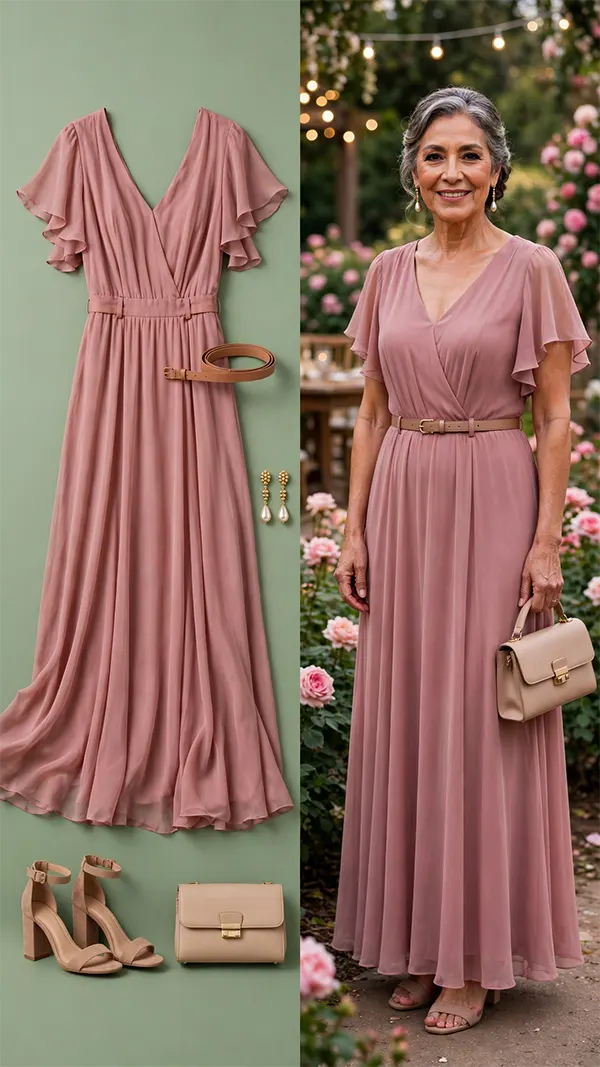
A maxi dress is a graceful choice for a garden party or a wedding, since the long line looks dressy and the flowing fabric is comfortable for sitting and standing. In a soft color or an elegant print, it suits daytime celebrations and outdoor settings, and it photographs beautifully.
If you are wondering how to wear a maxi dress after 50 to a wedding, choose a dress in chiffon, crepe, or satin with sleeves or a pashmina to cover your shoulders. A defined waist, a slit for walking, and a hem that skims the shoes look refined. Add block heels or wedges that will not sink into grass, and a small clutch. Drop earrings and a hairpiece add finishing touches.
Fit Guide: Protect the Hem Outdoors
Outdoor events can be hard on a long hem. Choose a length that skims the top of your shoes, and avoid heels that sink into lawns. A wedge or a block heel keeps you stable and the hem clean, and a slight slit helps you step over uneven ground.
Check the dress in different light, since a color that looks soft indoors may look different in the sun. A lining prevents transparency, and a fabric that does not crease is ideal for sitting during a long ceremony. Carry a light wrap for cooler evenings, and a small stain pen for emergencies. Ask yourself whether you can dance in the dress, and choose accordingly.
24. Maxi Dress for an Evening Out with Statement Earrings
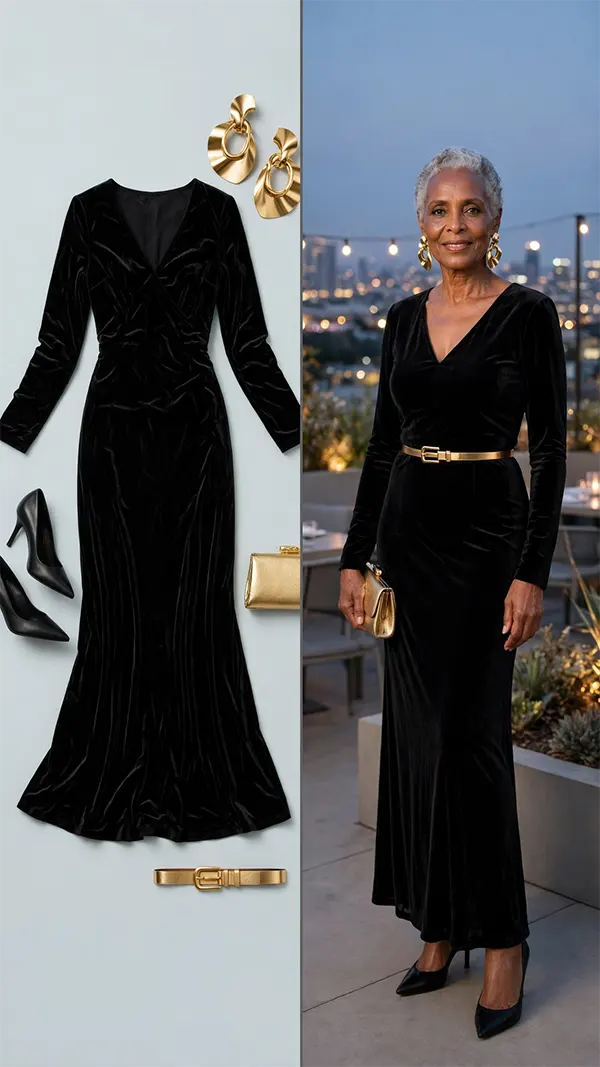
For an evening out, a maxi dress in a rich fabric looks dramatic and comfortable. A satin, velvet, or crepe dress in a deep color moves beautifully under restaurant lights, and one pair of statement earrings is enough to finish the outfit. It is the easiest way to look elegant when you do not want to think about coordination.
Choose a dress with a V-neck or square neck, long or three-quarter sleeves, and a defined waist, in black, emerald, burgundy, or navy. Add pointed flats, block heels, or sleek ankle boots, a small clutch, and bold earrings in gold, pearl, or colored stone. A wrap or a long coat covers you when you step outside.
Why It Feels Chic: One Dramatic Detail
With a long dress, the neckline and the ears are the places where jewelry shows. Large earrings frame the face and draw attention upward, which balances the length of the skirt. Keep your necklace simple or skip it so the earrings can shine.
Choose earrings that feel comfortable for several hours, since heavy styles can pull on your ears. Lightweight designs in resin, acrylic, or hollow metal look dramatic without the weight. A bold lip color or a polished hairstyle completes the look. If the dress has a slit, check how it looks when you sit. A satin dress benefits from a smooth slip, and a velvet dress is warm enough for cold evenings.
Common Maxi Dress Mistakes and How to Avoid Them
Most problems with a maxi dress are small and easy to fix. When I look at an outfit that does not work, the issue is usually one of the same few things, and none of them require a new wardrobe. Check this list before you leave the house.
| Common Mistake | What Happens | How to Fix It |
| Hem that drags on the ground | The dress looks messy, and you risk tripping | Hem the dress with your chosen shoes on, or wear a small heel |
| No waist definition at all | The dress looks like a long tube | Add a belt, a wrap tie, or choose an empire seam |
| Thin, clingy fabric | Every line shows, and the dress sticks to tights | Choose crepe, viscose, or jersey with weight, and add a slip |
| Layer that is as long as the dress | The outfit looks heavy and shapeless | Choose a cropped jacket or a cardigan that ends at the hip |
| Too many accessories | The outfit feels crowded | Pick one statement item, such as a necklace or earrings |
| Shoes that do not match the mood | The outfit feels confused | Match sandals to casual, sneakers to relaxed, and heels to dressy |
| Wrong size at the shoulders | The dress slips or pulls | Fit the shoulders and bust first, and tailor the rest |
One more mistake I see often is buying a dress because it looks good on a hanger or on a model. Try it on, sit down, walk, raise your arms, and decide based on how it feels. How to wear a maxi dress after 50 is really a question of comfort and confidence, and a dress that restricts you will never look right.
Turning Fashion Inspiration Into Your Own Personal Style
You do not need to copy any of these ideas exactly. Each one is built on a principle, and the principle is what you can take into your own wardrobe. Ask yourself what the dress does for the line of your body, what the layer adds, and which accessory finishes the look, and then choose the version that suits your life.
If your lifestyle is relaxed, lean on cotton, linen blends, and sneakers. If you work in an office, choose structured layers and polished shoes. If you travel, choose wrinkle-resistant knits and a light wrap. If you love color, begin with a jewel tone. If you prefer quiet dressing, choose tonal neutrals with texture. Your style is the sum of these decisions.
| Instead of Copying This | Try This Principle |
| A satin wedding-guest maxi | Choose any fluid fabric in a soft color with a defined waist and add a wrap |
| A cropped denim jacket over a printed dress | Choose a short, structured layer in a plain color that echoes the dress |
| A bold gold necklace with a column dress | Pick one statement accessory in a metal you already wear |
| A beach hat and woven bag | Add natural texture with a bag or a hat to any casual dress |
| A velvet evening dress | Use a rich fabric in a deep color and add large earrings |
| Tall boots with a knit maxi | Wear a boot that fits your calf and matches the dress hem |
Building a More Versatile and Confident Maxi Dress Wardrobe
You do not need ten maxi dresses. Three or four well-chosen pieces can cover most occasions and seasons, especially when you combine them with layers and accessories you already own. The goal is to create a small collection that you reach for without thinking.
- Choose a base color and a shape you love. Pick a color that suits you, such as navy, olive, or deep teal, and a shape that feels comfortable, such as a wrap or an A-line. This is your anchor dress.
- Add a print or a pattern in a muted palette. A soft floral or a fine stripe gives you a second dress that feels different, and it works with the same shoes and layers.
- Add a dressy dress in a rich fabric. A satin, velvet, or crepe maxi in a jewel tone covers weddings, dinners, and holidays.
- Build a layer kit. A denim jacket, a cropped cardigan, and a long coat or a trench make the dresses work in every season.
- Add three pairs of shoes. Flat sandals, white sneakers, and a pair of block heels or wedges give you casual, relaxed, and dressy options.
- Choose a small accessory set. A belt, a long necklace, a pair of statement earrings, and a scarf let you change the mood of any dress.
- Review once a season. Remove pieces you no longer wear, and add one new piece that fills a gap.
Before buying anything, check your list against what you already own. You may find that a single dress and a new layer are enough to create many new outfits.
Your Next Step: A Simple Checklist for Choosing Your First Maxi Dress
If you are standing in a shop or scrolling through an online store, this is the short list I would use. It takes a minute, and it saves a lot of returns.
- Does the shoulder seam sit at the edge of my shoulder?
- Can I sit, bend, and raise my arms comfortably?
- Does the fabric have weight and drape, and is it opaque?
- Is there some definition at the waist, even a soft one?
- Does the hem skim my shoes without dragging?
- Can I wear it with at least three outfits I already own?
- Do I feel like myself when I look in the mirror?
If you can answer yes to most of these, buy it. If you hesitate on more than two, keep looking. A maxi dress should feel like a gift to your wardrobe, not a project. Start with a wrap or an A-line in a color you love, add a layer and a pair of shoes, and you will already know how to wear a maxi dress after 50 with ease.
Frequently Asked Questions
Is a maxi dress suitable for women over 50?
Yes. A maxi dress is comfortable, elegant, and easy to style, and many women find it more flattering than shorter lengths. The key is a good fit at the shoulders, a defined or soft waist, and a fabric that drapes. Choose the sleeve length and neckline that make you feel confident.
What length should a maxi dress be?
The hem should skim the top of your shoes or sit about an inch above the floor, so you can walk without tripping. If you are wearing flats, the dress should be slightly shorter than it would be with heels. A tailor can adjust the hem, and it is worth doing, since a perfect hem makes the whole dress look better.
How can I stop a maxi dress from looking shapeless?
Add definition at the waist with a belt, a wrap tie, or an empire seam, and choose a neckline that opens the face. A cropped jacket or cardigan that ends at the waist or hips keeps proportions balanced. A fabric with some weight and drape also helps the dress hold a clean line.
What shoes look best with a maxi dress?
Flat leather sandals, slim white sneakers, block heels, wedges, and ankle boots all work, depending on the occasion. The shoe should be visible beneath the hem and suit the mood of the dress. Choose comfortable styles that you can walk in, and keep them clean and polished.
Can I wear a maxi dress in winter?
Absolutely. Choose a knit or a heavier crepe maxi, and add fleece-lined tights, tall boots, a long coat, and a scarf. A thin thermal layer under the dress adds warmth without bulk. Darker colors such as charcoal, burgundy, and forest green look rich in cold weather.
How do I know how to wear a maxi dress after 50 if I am short?
Choose a dress with a defined waist and a V-neck, keep the hem at the floor with a small heel or wedge, and avoid very wide skirts that overwhelm your frame. A single color from top to bottom creates a long line, and a cropped layer keeps the proportions neat. A tailor can shorten the hem precisely.
Are print maxi dresses a good idea?
Yes, when the print is small to medium, and the colors are muted. A soft floral, a fine stripe, or an abstract pattern hides creases and looks elegant. Keep the rest of the outfit plain, choose a layer in a color from the print, and avoid wearing more than one pattern at a time.