
Some hair colors look best in summer light. Burgundy is not one of them. When the days shorten and the sky turns gray, a deep wine shade picks up every bit of available light and turns it into a warm, jewel-like glow. It looks like a velvet coat, a glass of Merlot, or the last red leaf on a bare branch, and it makes a winter wardrobe of black, camel, and cream look richer.
Burgundy sits between red and purple, and that in-between position makes it easy to wear. Lean toward red, and you get a warm, cozy shade that flatters golden and olive skin. Lean toward violet, and you get a cool, moody wine that suits fair and pink undertones. You can also keep it close to brown, so the color shows up only when you step into sunlight. These burgundy hair color ideas cover that whole spectrum.
Color placement matters as much as shade. An all-over color gives you a bold, glossy finish. A balayage melts burgundy through brown, and a root melt keeps a dark base for a lived-in look. A money piece or a few peekaboo ribbons add wine tones to the frame of the face, without asking you to color every strand. Each approach suits a different hair history and a different level of upkeep.
Burgundy also behaves differently on different bases. Dark hair usually needs little or no lightening, which makes the process gentler on your strands. Light brown and blonde hair needs more depth added first, so the red does not turn out pink or patchy. I explain what each look requires, so you walk into the salon with realistic expectations.
Understanding Burgundy Undertones, Depth, and Dimension
Burgundy is a family of shades, and the differences between them are subtle but visible. Knowing how undertone, depth, and placement work will help you ask for exactly what you want instead of pointing at a photo and hoping for the best.
- Warm burgundy: It carries a hint of red, copper, or mahogany. It glows on golden, olive, and deep skin tones, and it looks especially rich on brown-based hair.
- Cool burgundy: It leans toward plum or violet. It flatters fair, pink, and neutral complexions, and it looks striking on black or dark brown hair.
- Depth: Deep burgundy sits close to black cherry and shows its color mainly in light. Medium burgundy reads as wine red indoors. Bright burgundy leans toward ruby and needs more upkeep.
- Root color: A natural dark root adds dimension and softens regrowth. A fully matched root looks polished and uniform but needs touch-ups every four to six weeks.
- Highlights and lowlights: Wine-toned highlights add movement, while chocolate lowlights deepen the shade and add contrast.
- Finish: A glossy finish makes burgundy look expensive because shine makes dark red appear deeper and more reflective. Matte finishes can make it look flat.
- Transitions: Balayage, sombre, and melted roots blend burgundy into the natural color for an effortless gradient with no hard lines.
Burgundy Hair Color Reference Table
Use this table to compare the shades before you read the full breakdowns.
| Hair Color Shade | Undertone | Color Depth | Overall Effect |
| Classic deep burgundy | Neutral-warm | Deep | Rich and polished |
| Black cherry burgundy | Cool | Very deep | Moody and glossy |
| Burgundy balayage on chestnut | Warm | Medium | Soft and dimensional |
| Burgundy root melt | Neutral | Deep to medium | Lived-in and modern |
| Mahogany burgundy | Warm | Medium-deep | Cozy and earthy |
| Plum burgundy | Cool | Deep | Dramatic and jewel-like |
| Burgundy money piece | Neutral | Medium | Face-framing and bold |
| Burgundy ombre on black | Cool | Deep to medium | Striking and gradual |
| Wine red highlights on brunette | Neutral | Medium | Dimensional and warm |
| Copper burgundy blend | Warm | Medium | Fiery and autumnal |
| Burgundy with chocolate lowlights | Neutral-warm | Deep | Multi-tonal and rich |
| Burgundy peekaboo highlights | Neutral | Deep with accents | Playful and subtle |
| Rosy burgundy | Cool-pink | Medium | Romantic and soft |
| Cherry cola burgundy | Warm-neutral | Medium-deep | Sweet and glossy |
| Burgundy glaze on natural black | Cool | Very deep | Understated and shiny |
| Burgundy auburn blend | Warm | Medium | Fiery and rich |
| Soft burgundy sombre on light brown | Neutral | Light to medium | Gentle and sunlit |
Soft and Subtle Ways to Try Burgundy Without Full Commitment
If you have never colored your hair red, or you work in an environment that prefers natural shades, begin with a glaze or a few ribbons of wine near the face. Peekaboo highlights, cherry cola tones, a burgundy glaze, and a soft sombre all show color in sunlight and fade into brown in shadow. They also grow out gracefully. Shades 12, 14, 15, and 17 take this approach.
Rich All-Over Burgundy That Glows in Low Winter Light
Winter light is flat and gray, so deep, saturated color looks its best. An all-over burgundy gives you an even, glossy finish that reflects what little sun you get. Choose it when you want a clear change and you are ready for a regular gloss routine. Shades 1 and 2 show the classic and the darkest versions.
Warm-Toned Burgundy for Golden, Olive, and Deep Complexions
Warm burgundy leans toward mahogany, copper, and auburn, and it brings out the warmth in golden, olive, and deep skin. It also suits natural brown and dark blonde hair, since the red pigments build on existing warmth instead of fighting it. Shades 5, 10, and 16 are the warm group.
Cool Plum and Rosy Burgundy for Fair and Neutral Skin
Cool burgundy shifts toward violet or pink, making pale and neutral complexions look luminous. It also looks beautiful against black, navy, and gray clothing, which dominate winter wardrobes. Shades 6 and 13 explore these cooler tones.
Dimensional Burgundy Through Balayage, Melts, and Highlights
If you want movement and softer regrowth, ask for color that varies across the hair. Balayage, root melts, highlights, and lowlights layer different depths of wine and brown, so the color looks natural and photographs well from every angle. Shades 3, 4, 9, and 11 use these techniques.
Bold Burgundy Placements That Make the Color the Statement
For a dramatic look without a full transformation, focus on burgundy where it’s most noticeable. A money piece frames the face, and an ombre pulls the eye toward the ends. These looks show off the color while leaving your natural base mostly intact. Shades 7 and 8 lead this direction.
The Complete Burgundy Hair Color Inspiration Collection
1. Classic Deep Burgundy All-Over Color
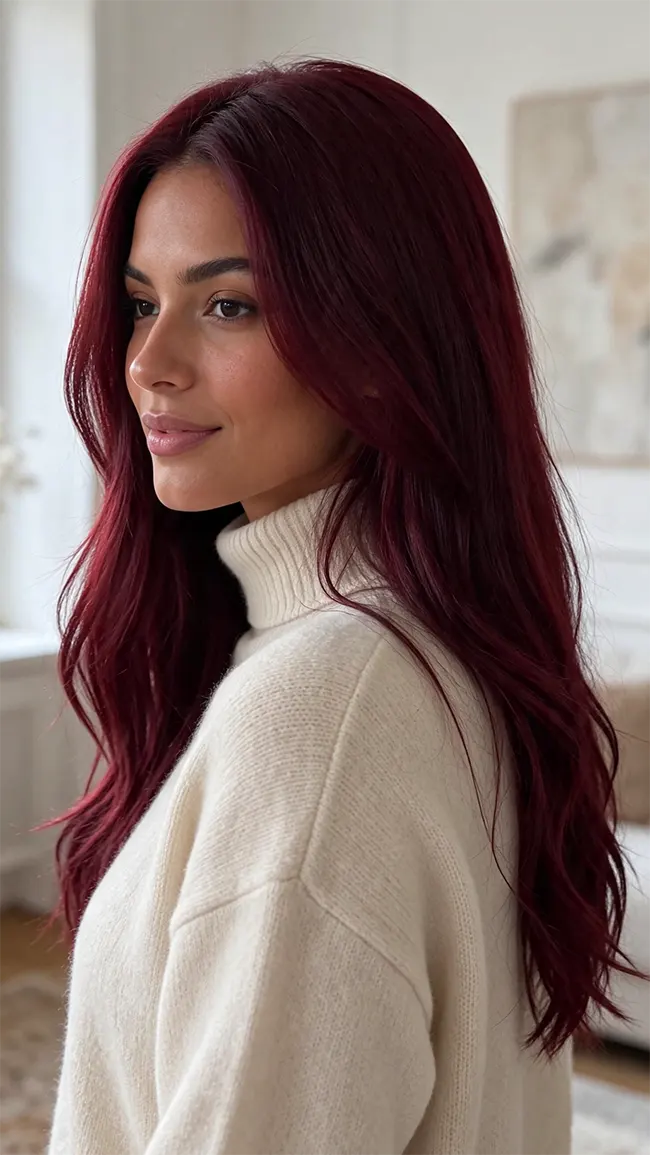
Classic deep burgundy is the shade most people picture when they search for burgundy hair color ideas. It sits at a medium-deep level, with a balanced mix of red and violet that reads as wine in sunlight and almost black cherry in shadow. The color is even from root to tip, giving the hair a sleek, saturated finish. It suits long, healthy hair particularly well, because the shine shows off every smooth strand.
The undertone is neutral to slightly warm, so the shade works across a wide range of skin tones. Fair skin gains a rosy glow, olive skin looks warm and sun-kissed, and deep skin tones look rich against the jewel-like depth. Brunettes can usually reach this shade with a single color service and little or no lightening, which keeps the hair healthier than a full lift would.
At the salon, ask for a deep burgundy with a neutral base, and request a gloss to seal the pigment. Say that you want an even finish with no visible highlights. Expect to return every four to six weeks for a root touch-up, and a gloss refresh every six to eight weeks keeps the shine. The shade fits anyone who wants a clear, confident winter change.
Color Care
Wash with cool water and a sulfate-free shampoo, since red pigments are the first to wash out. Limit shampooing to two or three times a week, and use dry shampoo between washes to stretch the color.
Add a red-depositing conditioner once a week. It refreshes the pigment without a salon visit, and it keeps the burgundy from fading into a dull brownish red after a few weeks.
2. Black Cherry Burgundy
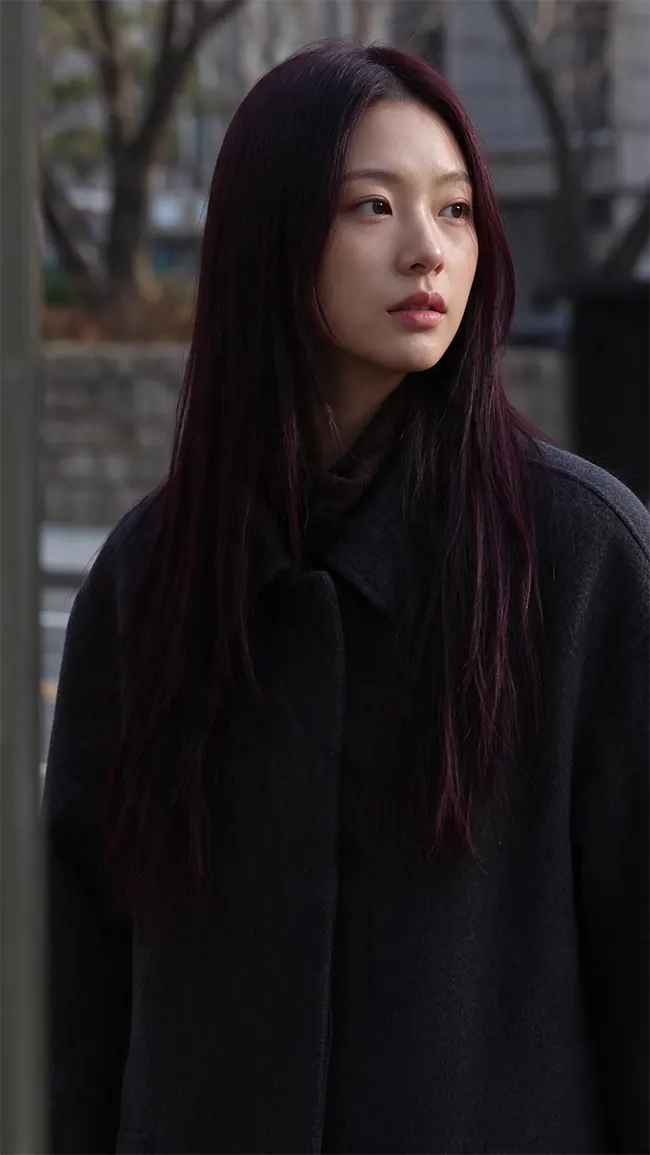
Black cherry burgundy is the darkest member of the family, and it plays a game of hide-and-seek with light. In the shade or at night, it looks like soft black. Step into sunlight or under a bright lamp, and deep red-violet flashes appear through the strands. The shade sits at a very deep level, with a cool undertone that makes the red look more like dark fruit than bright wine.
This color works wonders for natural black and dark brown hair because it needs almost no lightening. A colorist applies a red-violet pigment directly to the dark base, so the process stays gentle and the hair keeps its strength. It suits people who want a noticeable shift without giving up the polished look of dark hair, and it is easy to wear to work, school, and formal events.
When you ask for it at the salon, use the phrase black cherry and show a photo in daylight, because indoor photos hide the red. Ask for a gloss with cool-toned red pigment. Maintenance is lighter than for brighter reds, since the color fades from violet-red to a warm brown that still looks natural. A touch-up every eight weeks is usually enough.
Undertone Guide
Cool-skinned people, such as those with pink or blue undertones, look best in black cherry because the shade’s violet undertone matches the coolness of their complexion. Warm skin can also wear it if the red stays dark.
If you have a golden or olive complexion and want a warmer version, ask for a touch of mahogany in the gloss. This shifts the shade from cool cherry to warm wine without lightening it.
3. Burgundy Balayage on Chestnut Brown Hair
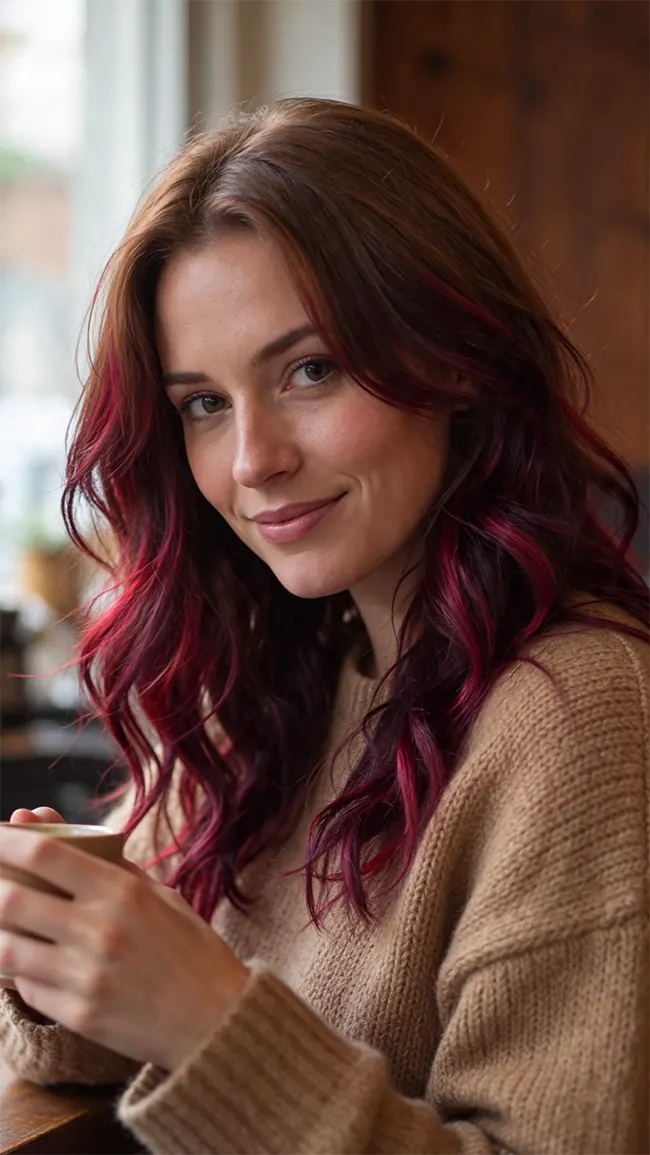
Burgundy balayage lets the red grow out naturally instead of replacing it. The roots stay a warm chestnut brown, and hand-painted ribbons of wine and burgundy start around the mid-lengths and become stronger toward the ends. The result looks like autumn leaves caught in sunlight. The shade sits at a medium depth, with a warm undertone that suits golden skin and brown eyes.
The strength of this approach is movement. Because the color is painted freehand, each section has a slightly different tone, and the hair looks multi-dimensional even when it is tied back. Chestnut hair also has natural red pigments, so the burgundy blends without a harsh line. Most brunettes need light lifting only on the painted sections, which limits damage while giving the wine tones enough room to show.
Ask your colorist for a burgundy balayage with a soft, blended transition and no visible start line. Mention that you want to keep your natural root. This look is among the easiest burgundy hair color ideas to maintain, since regrowth is almost invisible. A gloss every eight weeks keeps the red vibrant, and a toning shampoo prevents the ends from turning orange.
Dimension Detail
The best balayage has a mix of two or three burgundy tones, such as a darker wine at the mid-lengths and a brighter ruby at the ends. This layering creates depth and prevents a flat, painted look.
Ask the colorist to place the brightest pieces around the face and the underside, where hair moves most. The color catches the light with every turn of the head, which is where balayage earns its reputation.
4. Burgundy Root Melt with Dark Shadow Roots
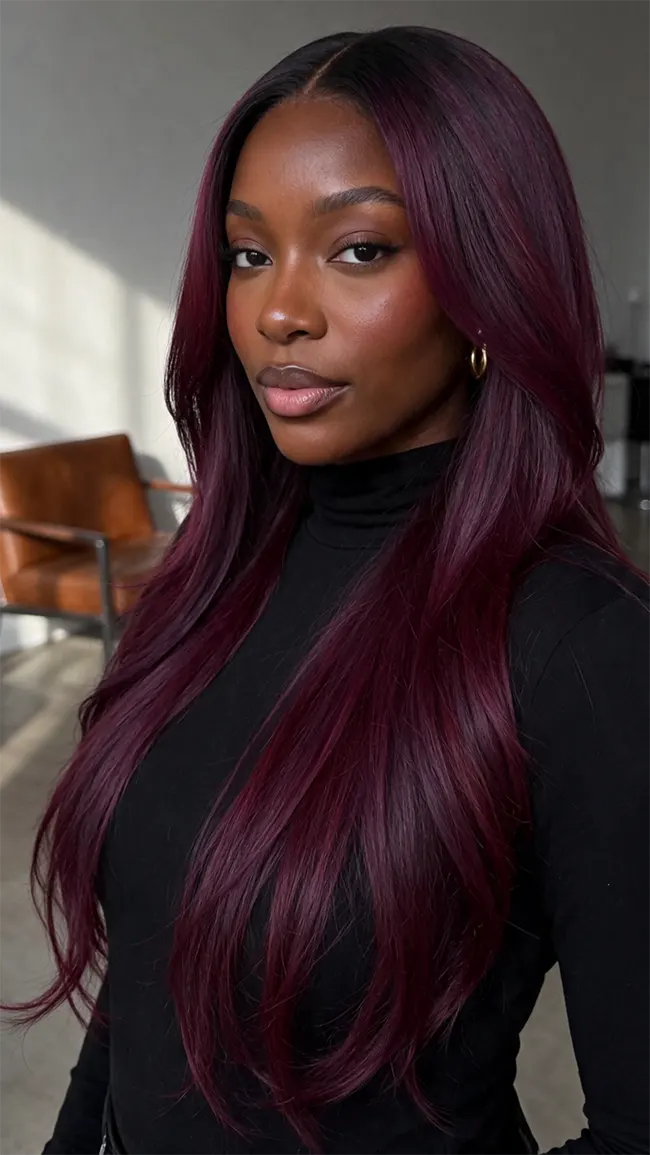
A root melt keeps the top of the hair dark and gradually lets burgundy take over, with no visible line between the two. The roots stay a deep espresso or black-brown, then the color warms through plum and wine before reaching a rich burgundy at the ends. The overall depth ranges from deep to medium, and the undertone sits in a neutral zone, making the look versatile across skin tones.
This technique is a favorite because it removes the pressure of regrowth. Dark roots grow out looking like an intentional design, so you can wait ten to twelve weeks between salon visits. It also adds dimension in a way that an all-over color cannot. The hair looks deeper at the crown and brighter at the ends, which gives it a sense of volume even in fine hair.
At the salon, ask for a burgundy root melt with a shadow root, and specify how far down you want the dark section to go. A longer dark area, around three inches, looks moodier and lasts longer. A shorter one looks brighter. Bring a photo to show the exact level of contrast, and ask for a gloss to blend the transition. This look suits anyone who values low maintenance.
Root Blend
Ask your colorist to smudge the root with a color one shade darker than your natural level. A smudge softens the boundary, ensuring that new growth blends with the dark top rather than appearing as a stripe.
If your natural hair is light, have the roots tinted to a soft brown instead of black. Pure black on a light-haired person grows out with a harsh line, while a soft brown keeps the transition gentle.
5. Mahogany Burgundy
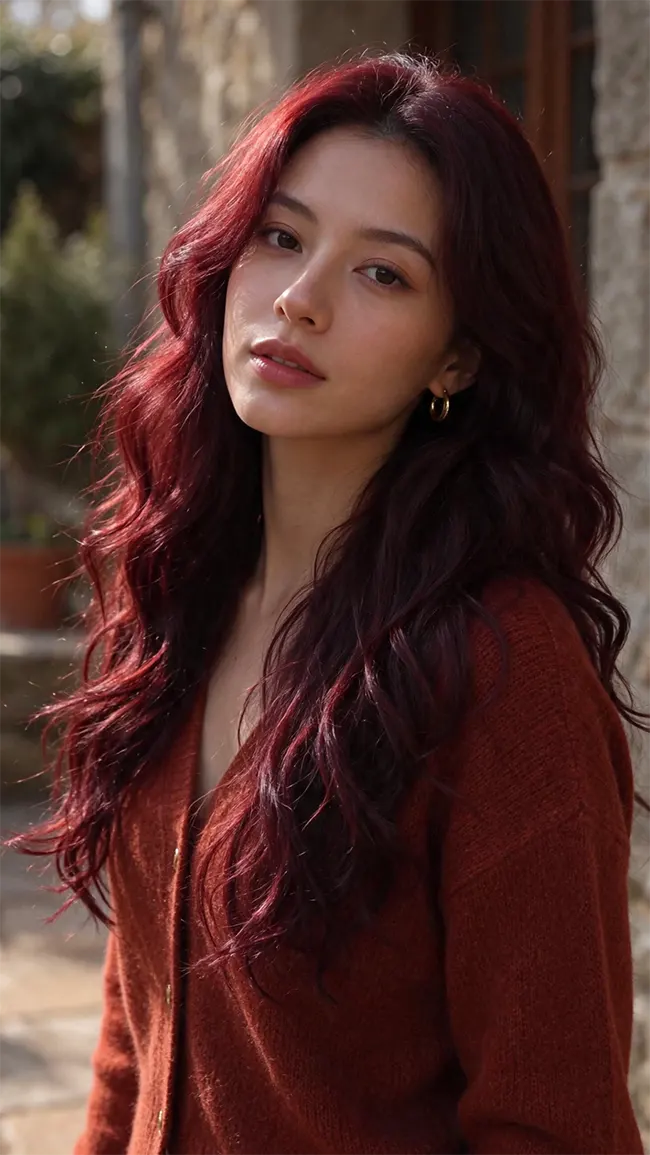
Mahogany burgundy blends the red of wine with the brown of polished wood, and the result looks warm and grounded. The shade sits at a medium-deep level with a warm undertone, so it appears reddish-brown in low light and glows a rich ruby in sunshine. It lacks the violet cast of cooler burgundies, which makes it feel earthier and more natural, almost like a deepened version of a brunette’s own tones.
Warm skin tones, including golden, olive, tan, and deep brown, look especially beautiful with mahogany burgundy. The shade also pairs well with hazel and brown eyes, which pick up the warm reflections. If your natural hair is dark brown, the color applies easily, and the finish looks like a high-end brunette rather than an obvious red. Many people choose it as a first step into burgundy.
To request it, ask for a mahogany-burgundy with a warm base and a high-gloss finish, and show a photo that matches the amount of red you like. The tone fades gracefully into a warm brown, which makes it forgiving between appointments. A color-depositing conditioner in a copper or red shade keeps the warmth alive, and a gloss every eight weeks maintains the richness.
Color Note
Mahogany looks best against warm winter clothing, such as camel, olive, rust, and cream. Cool grays and icy blues can compete with the warmth, so you may want to add brighter accessories to balance.
If your hair has gray strands, tell your colorist. Mahogany covers gray gently, but the first few washes can leave the gray pieces a bit brighter, and a quick gloss usually evens them out.
6. Plum Burgundy with Violet Undertones
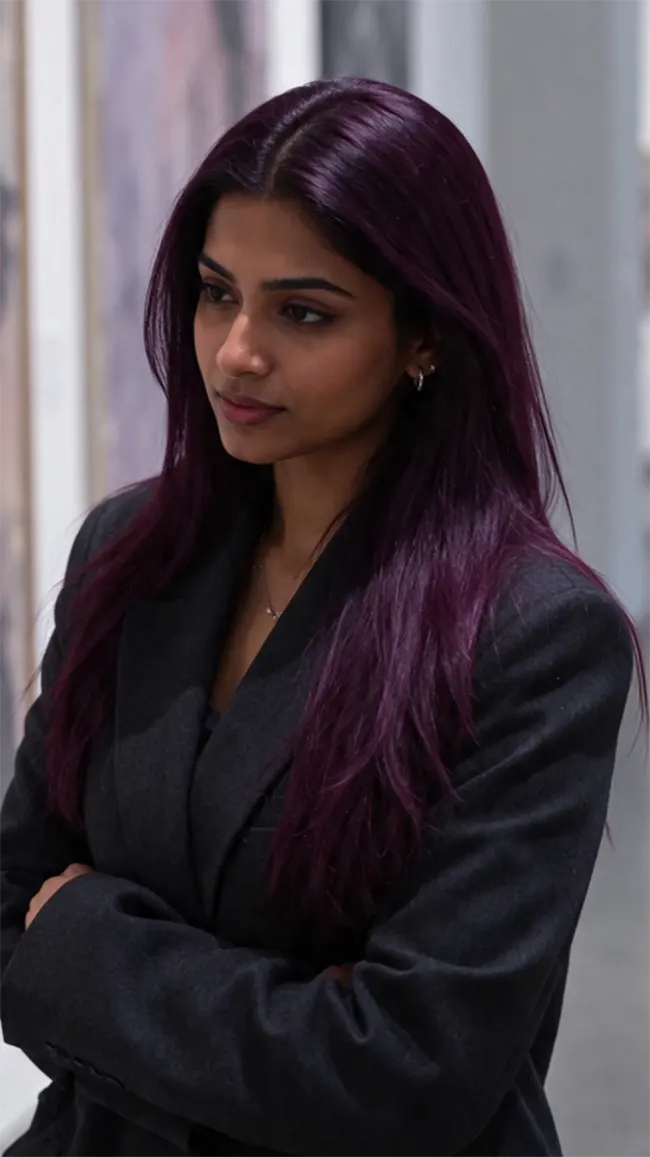
Plum burgundy moves toward the purple side of the family. The shade has a deep violet undertone, so it looks like ripe plums or dark grapes, with burgundy red peeking through in the light. It is cooler and more dramatic than the classic version. The depth runs from deep to very deep, so it can look nearly black indoors and richly colored outdoors.
Cool and neutral complexions look luminous with plum burgundy. Fair skin gains a porcelain quality, and olive skin gains contrast and polish. The shade also looks striking against dark clothing, silver jewelry, and gray winter skies. Natural black and dark brown hair takes it well because the violet pigments sit smoothly on top of the dark base, and the color has a natural, jewel-toned finish.
Ask for plum burgundy and be specific that you want a violet base, not a red base. A photo helps a great deal, because the line between plum and wine can be thin. Cool shades fade faster, so plan a gloss every six weeks and use a purple-toned conditioner at home. Cold water and a heat protectant reduce fading, and a sulfate-free shampoo helps keep the violet pigment in the hair longer.
Why It Works
Violet reflects light differently from red, so plum burgundy gives hair a luminous, almost metallic shine. The shade looks glossy in photographs, even in flat winter light.
It also flatters people who find bright red overwhelming. The cooler tone feels softer and more sophisticated, and it blends well with a natural dark base.
7. Burgundy Money Piece on Dark Brown Hair
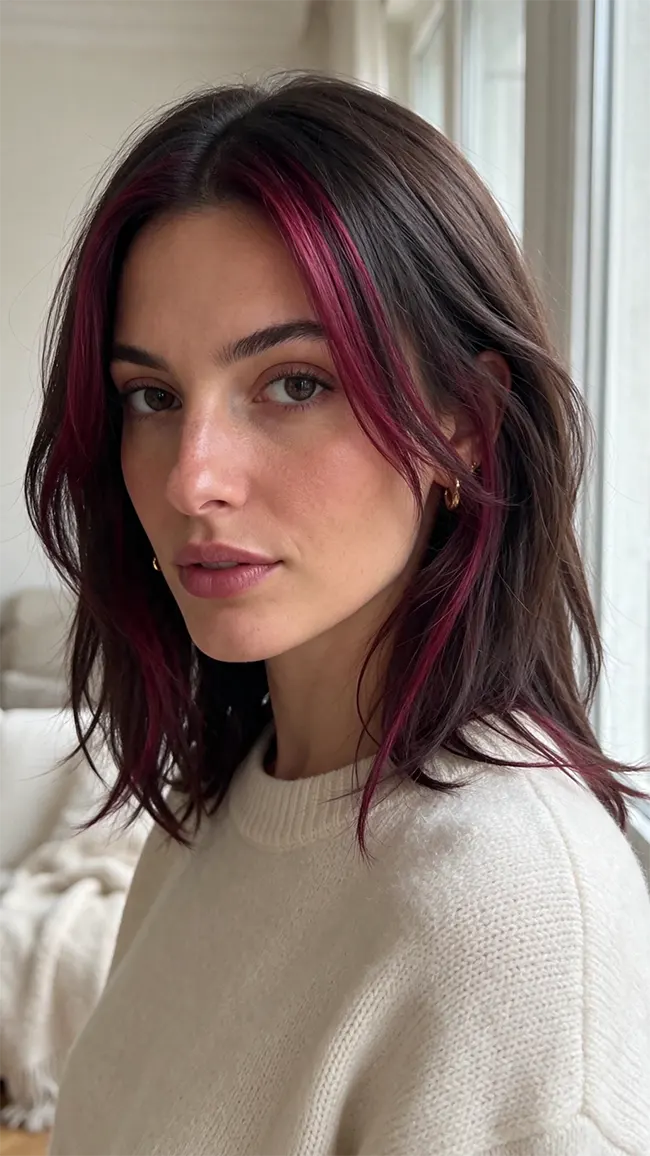
A money piece puts the color exactly where people look first. Two bright burgundy ribbons frame the face, while the rest of the hair remains a natural dark brown. The framing sections sit at a medium depth with a neutral undertone, so they brighten the complexion like a built-in highlighter. It is one of the smartest burgundy hair color ideas for anyone who wants impact without coloring every strand.
Because the color covers only a small portion of the hair, the process is quick and gentle. Your colorist lightens the front sections just enough for the wine tone to show, then applies burgundy and glosses it. The remaining hair stays untouched. The contrast between chocolate brown and bright wine makes the face look defined, and it adds interest even when the hair is worn straight, with no styling at all.
Ask for a burgundy money piece about one to two inches wide on each side, starting at the part. Mention whether you are in the middle or on the side, since the placement changes. You can usually go ten to twelve weeks between visits, because regrowth near the part is easy to blend. A color-depositing mask on the front sections keeps the red from fading faster than the rest.
Salon Tip
Show your colorist how you normally wear your hair, because a money piece that looks perfect with a center part can disappear under a side part. A quick photo of your everyday style saves a second appointment.
Ask for a slightly darker burgundy at the root of the money piece. The deeper start prevents a stark line and makes the brighter color appear to glow outward as it moves toward the ends.
8. Burgundy Ombre on Black Hair
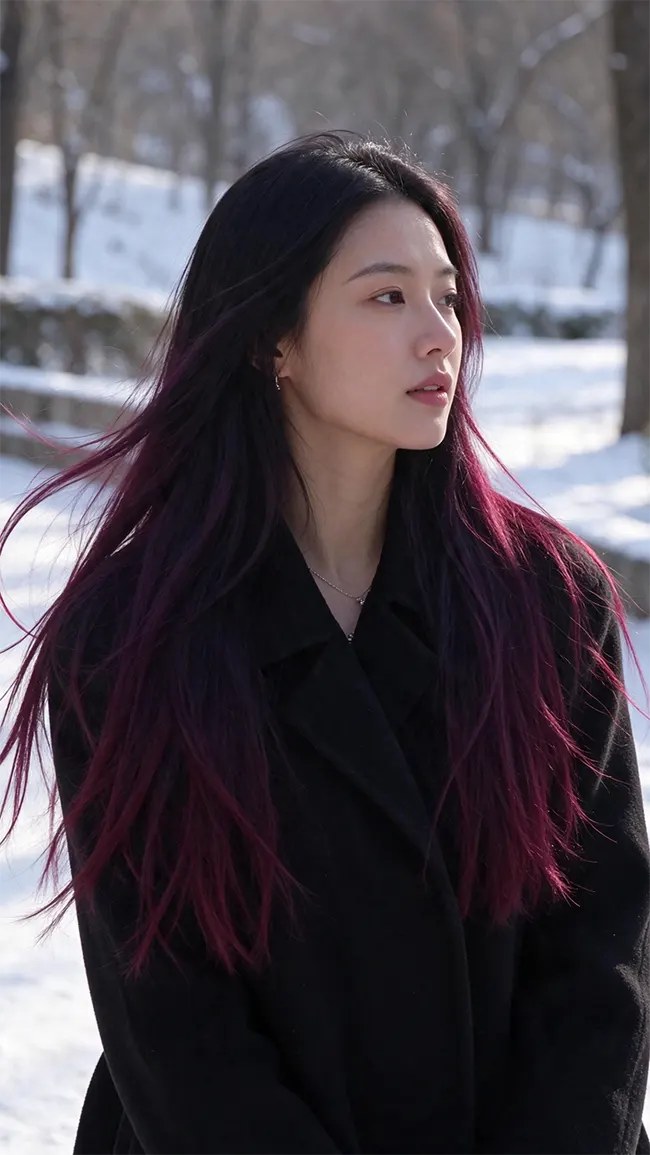
Ombre transitions from dark roots to a bright burgundy finish, creating a striking gradient on black hair. The top half remains natural black, and the color shifts from deep plum to a vivid wine red near the ends. The undertone is cool, which makes the red look like a jewel against the dark base. Overall depth runs from deep at the top to medium at the tips.
This look suits people who want a dramatic statement with a low-risk root. Because the roots stay natural, you never face a harsh regrowth line, and the gradient continues to look intentional as the hair grows. Long hair shows the effect best, since the transition has room to unfold. On shorter lengths, the shift happens faster, so the color reads as a bolder contrast.
Request a smooth burgundy ombre with a long, seamless transition, and ask your colorist to avoid any visible banding. Black hair needs lightening on the ends before the burgundy can show, so expect a longer appointment and a strong aftercare routine. Use a bond-repair treatment before and after, and book a gloss every six weeks. Deep conditioning once a week keeps the lightened ends soft and shiny.
Maintenance Tip
Lightened black hair is more fragile at the ends, so trim a half inch every ten to twelve weeks. Fresh ends hold color better, and they prevent the gradient from looking frayed.
Rinse with cool water and finish with a cold blast to close the cuticle. Sealed cuticles reflect light and keep red pigment locked in, which keeps the ombre vibrant longer.
9. Wine Red Highlights on Brunette Hair
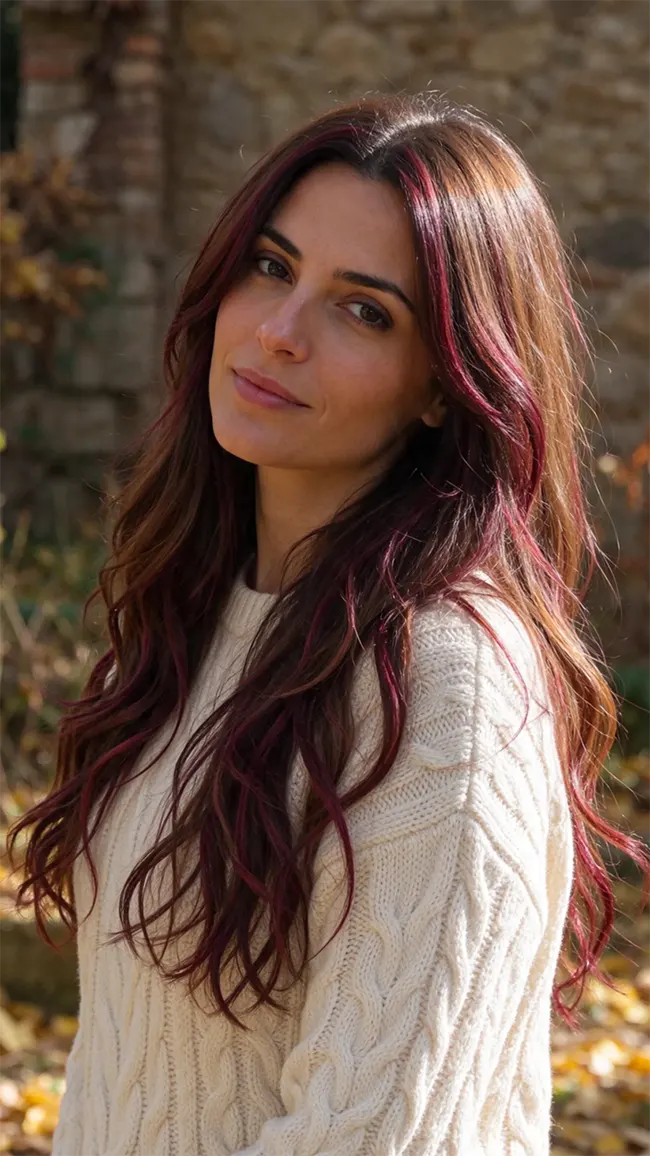
Wine red highlights add flashes of color to a brunette base without changing the overall impression. The base remains a medium brown, with fine ribbons of burgundy woven through, so the red appears when the hair moves or catches the light. The undertone is neutral, with a depth that sits between medium and deep. The effect is subtle in the shade and rich in the sun, like a cozy sweater with a thread of red running through it.
Highlights give this shade its dimension. A colorist weaves thin sections throughout the hair, concentrating more around the face and the top layers, which gives the hair a soft, lived-in look. The base color shows between the ribbons, so regrowth blends naturally. It is a good option for people who want to experiment with burgundy while keeping their brown base for the rest of the year.
At the salon, ask for fine wine red highlights—not chunky stripes—and mention that you want a natural-looking blend. Request a brown-red gloss to unify the tones. The highlights need a light lift before they take color, so your colorist may use a gentle lightener. Plan a visit every ten to twelve weeks, and use a color-safe conditioner to keep the red from fading.
Dimension Detail
Ask for a mix of two highlight tones, a deeper wine near the roots and a lighter ruby at the ends. Two tones create movement and prevent the highlights from looking like uniform stripes.
Request baby lights near the hairline. These fine, delicate strands brighten the face and blend with the brown base, avoiding the harsh outline that thicker highlights can leave.
10. Copper Burgundy Blend
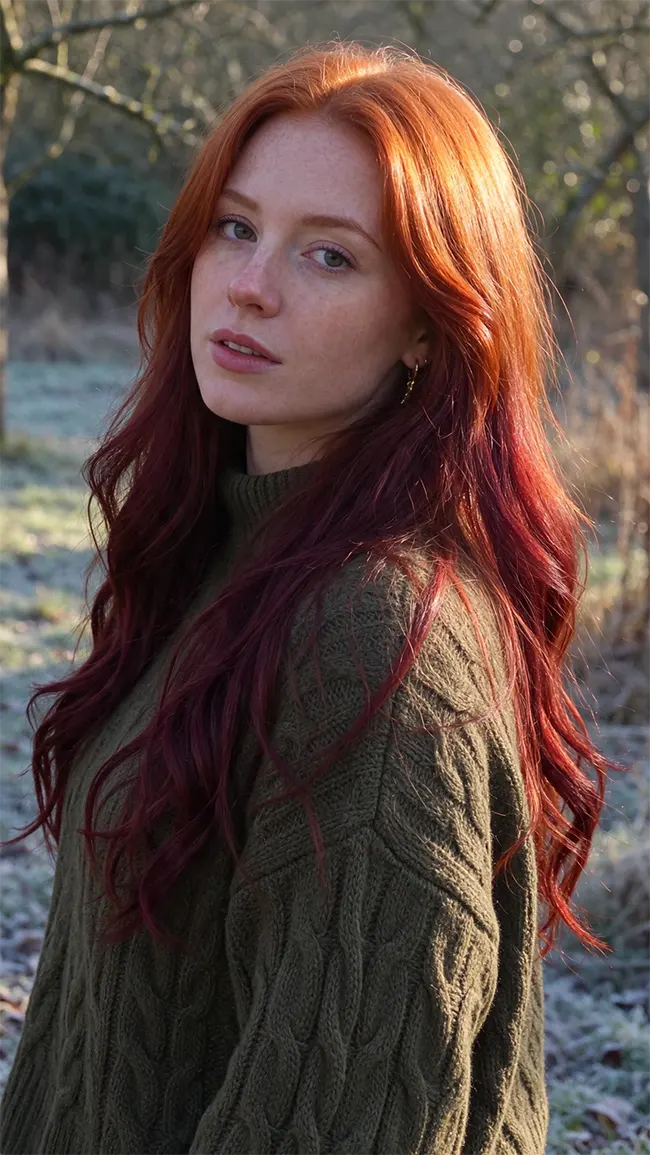
Copper burgundy combines the fire of copper with the depth of wine. The shade starts with a warm, orange-red base and deepens into burgundy through the mid-lengths and ends. The overall effect is a glowing, autumnal red with a medium depth and a strongly warm undertone. It looks vivid in sunlight and settles into a rich auburn-wine in softer light, which makes it a good choice for early winter.
Warm and golden skin tones, as well as freckles, look beautiful against copper burgundy. Green and hazel eyes also stand out, since red and green sit opposite each other on the color wheel. The shade works well on natural light brown, dark blonde, and auburn hair because the base already carries warmth. If your hair is very dark, the colorist will need to lift it more to show the copper.
Ask your colorist for a copper-to-burgundy blend with warm tones at the roots and deeper wine tones toward the ends. Copper pigments are among the first to fade, so this shade needs a regular gloss every four to six weeks. Use a copper-depositing conditioner at home, and avoid hot showers, which strip warmth faster than any other habit. A UV-protecting spray also helps in bright winter sun.
Undertone Guide
Copper burgundy flatters warm skin best, but cool or pink skin can wear it by choosing a slightly cooler burgundy and keeping the copper restricted to the front pieces. This keeps the red from clashing with pink undertones.
Look at the veins on your wrist in daylight. Greenish veins suggest warm skin, which looks better with more copper, while bluish veins suggest cool skin, which looks better with more plum and less orange.
11. Burgundy with Chocolate Lowlights
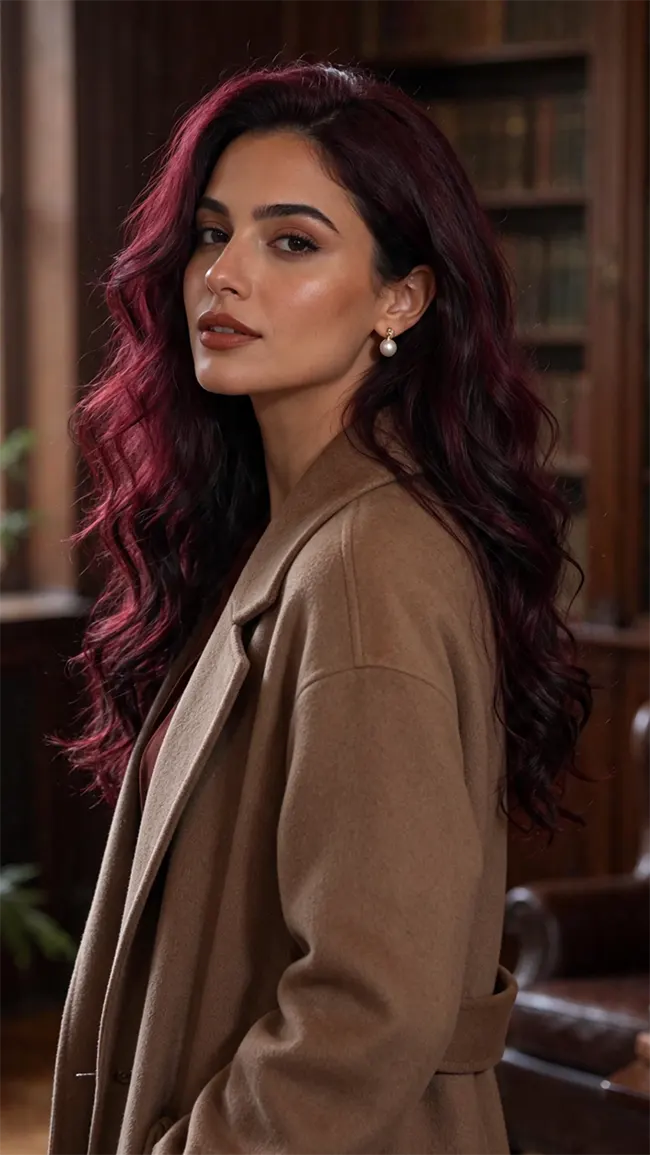
Chocolate lowlights give burgundy a deep, expensive look. The base is a rich wine red, and thin ribbons of dark chocolate brown run underneath and through the mid-lengths, adding shadow and depth. The overall shade sits at a deep level with a neutral-warm undertone. Instead of a flat red, the hair looks layered, like velvet with a visible pile, which gives the color a three-dimensional quality.
Lowlights are the secret to making red hair look natural. Solid red can read as artificial under bright light, while a mix of burgundy and brown looks closer to a high-end brunette with a red cast. This approach suits people who want the richness of burgundy with a more subdued effect. It also hides fading better because the brown ribbons stay stable while the red softens.
At the salon, ask for a burgundy base with chocolate lowlights placed underneath and around the nape, and request that they blend into the red without hard stripes. Mention that you want depth, not contrast. The lowlights reduce the need for touch-ups, so a visit every ten to twelve weeks usually works. A gloss between appointments keeps the red looking fresh, and a weekly deep conditioner preserves softness.
Why It Works
Contrast in depth creates the illusion of thickness. Darker ribbons sit under lighter ones, making the hair appear fuller and denser and helping fine hair look more substantial.
The brown also anchors the red and keeps the shade from looking too bright in daylight. It is a quiet way to wear a bold color to professional or conservative settings.
12. Burgundy Peekaboo Highlights on Dark Hair
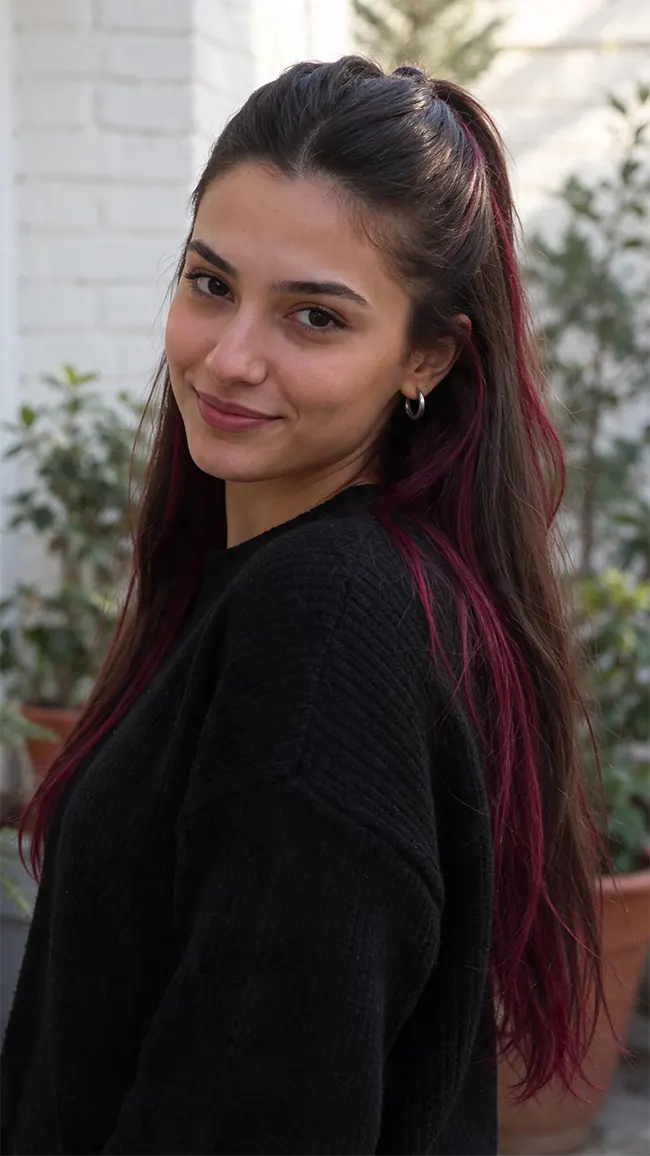
Peekaboo highlights hide a pop of burgundy beneath the top layer of hair, so the color appears only when the hair moves. The top stays a natural dark brown or black, and the underside carries ribbons of bright wine. The shade has a neutral undertone and a deep base with vivid accents. It feels playful and personal, like a secret you can show off or hide whenever you wish.
This technique suits workplaces and schools with conservative appearance rules, since a ponytail or tucked hair reveals the color, and loose hair conceals it. It also keeps the process light. Your colorist lifts only a few underlying sections, which protects the surface hair that everyone sees. The contrast between the dark top and the red underlayer adds depth to the whole head, even when the color is barely visible.
Ask for burgundy peekaboo highlights placed in the underlayer and around the nape, and mention how much color you want visible when your hair is down. A thin line near the front can show through, while a thick panel at the back appears only in updos. Touch-ups are rarely needed more than twice a year, since regrowth hides under the top layer. A gloss on the colored sections keeps them lively.
Styling Note
Half-up styles, braids, and high ponytails show peekaboo color best. A simple half-up pull reveals the underlayer, and the hair around it keeps its natural look.
When you wear your hair down, a deep side part or a flip of the hair behind the ear reveals a small flash of wine. These small gestures make the color feel personal and playful.
13. Rosy Burgundy with Soft Pink Undertones
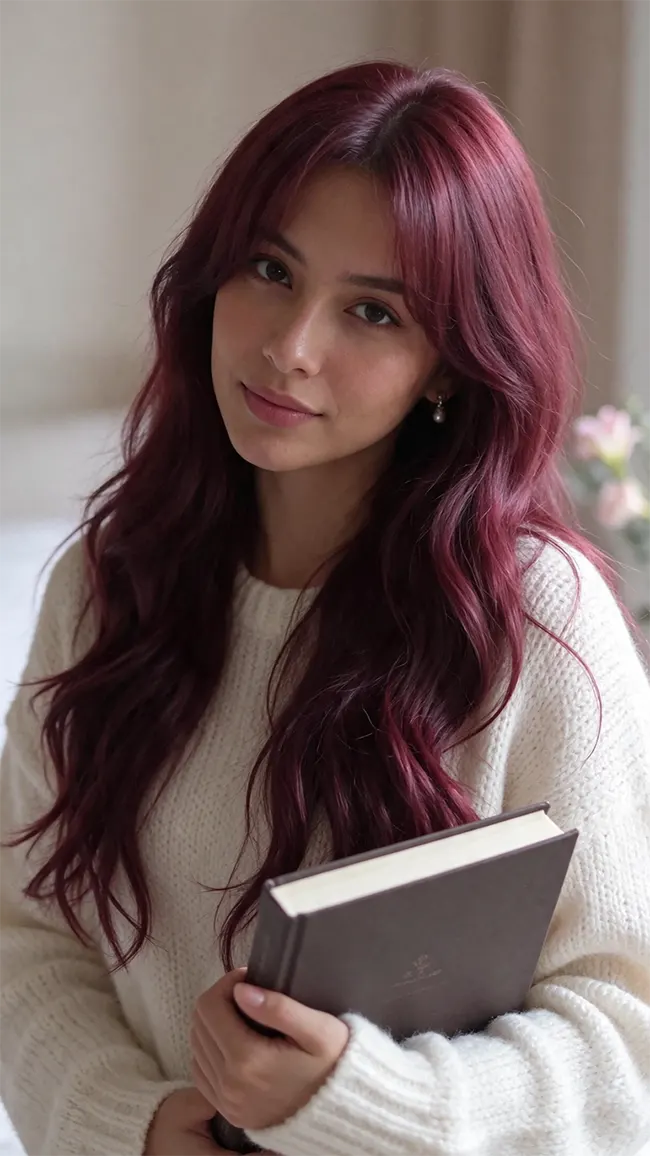
Rosy burgundy softens the family with a drop of pink. The base is a medium wine with a cool-pink undertone, so the color reads like crushed raspberries or a blush-toned Merlot instead of a heavy, dark red. In daylight, the pink glints through the strands. Indoors, it settles into a gentle, romantic wine. It is one of the friendliest cool burgundy hair color ideas for anyone who finds darker shades severe.
Fair and light-neutral complexions look luminous with this shade because the pink picks up the natural flush in the cheeks and lips. Light brown and dark blonde hair can reach it without dramatic lightening, as the pigment sits on top of a base that already has some lift. On very dark hair, your colorist will need to lighten first, or the pink will barely show.
Ask for a rosy burgundy with a cool-pink base, and bring a photo taken in daylight. Say clearly that you want pink in the undertone, not brown. Pink pigments fade faster than most reds, so book a gloss every four to six weeks and use a pink or rose-depositing conditioner once a week at home. Cool water and a sulfate-free shampoo make the biggest difference in how long the color holds.
Color Note
Rosy burgundy pairs beautifully with soft winter neutrals such as oatmeal, ivory, and dove gray. Strong orange-reds and rust tones in clothing can fight the cool pink, so lean on creams and charcoals when you want the hair to take center stage.
If the pink fades faster than you like, ask your colorist for a custom gloss to take home, or buy a pigmented mask in a rose shade. A ten-minute treatment every other week refreshes the tone without another trip to the salon.
14. Cherry Cola Burgundy
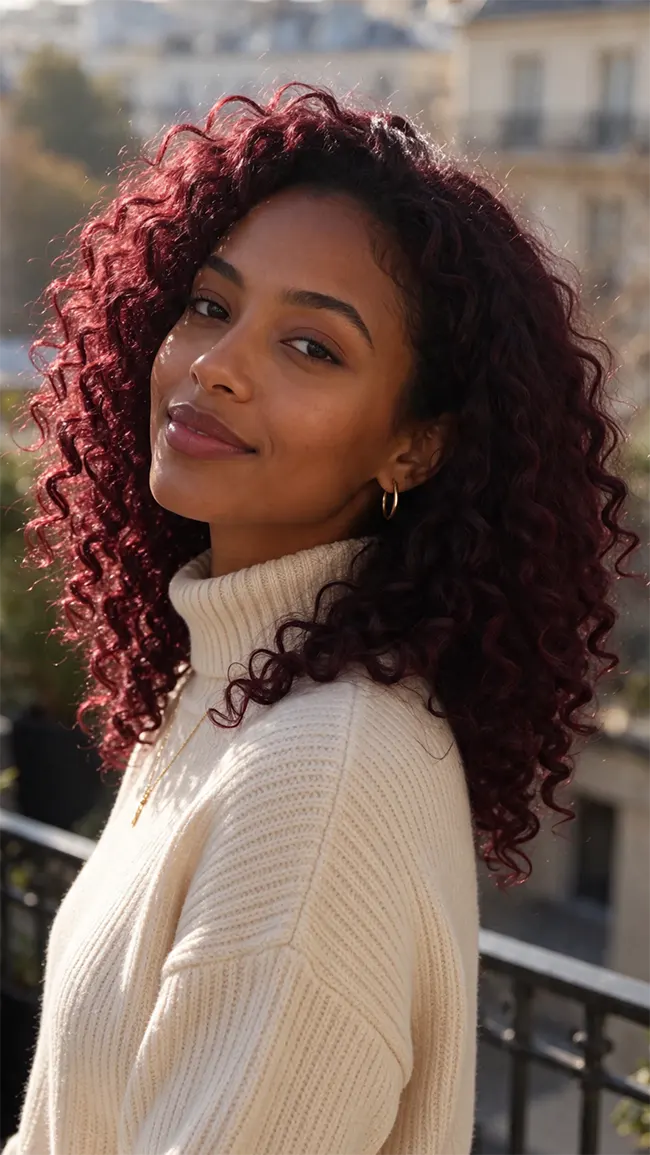
Cherry cola sits where dark brown meets red, and the name describes it well. The shade looks like a glass of cola held up to the light: nearly brown at a glance, then warm with a red-black shimmer. It has a warm-neutral undertone and a medium-deep level, making it sweeter and less formal than classic wine. It is a popular choice for readers who want a hint of red that still looks like natural hair.
The shade works on most skin tones. Warm complexions look extra glowy, neutral skin looks balanced, and cool skin looks polished, as long as the red stays on the dark side. Brunettes can reach it in one service with minimal lightening, because the colorist deposits red directly over the existing brown. The finish is usually glossy, with a smooth, uniform look that suits both straight and curly textures.
At the salon, ask for cherry cola, and clarify that you want brown with red, not red with brown. A photo makes this easy, since stylists often interpret the term differently. The color fades to a warm chocolate, which makes it forgiving between visits. A gloss every eight weeks and a red-depositing conditioner twice a month keep the shimmer alive. It is one of the easiest burgundy hair color ideas to maintain through the winter.
Best For
Cherry cola suits anyone moving from brown to red hair for the first time. It gives you a visible change without a dramatic lift, and if you decide you prefer brown, it grows out without any awkward lines.
It also works well for people with textured or curly hair, since the deep base keeps coils looking defined and healthy. The red shows most when light hits the curl pattern, which gives the color extra dimension.
15. Burgundy Glaze on Natural Black Hair
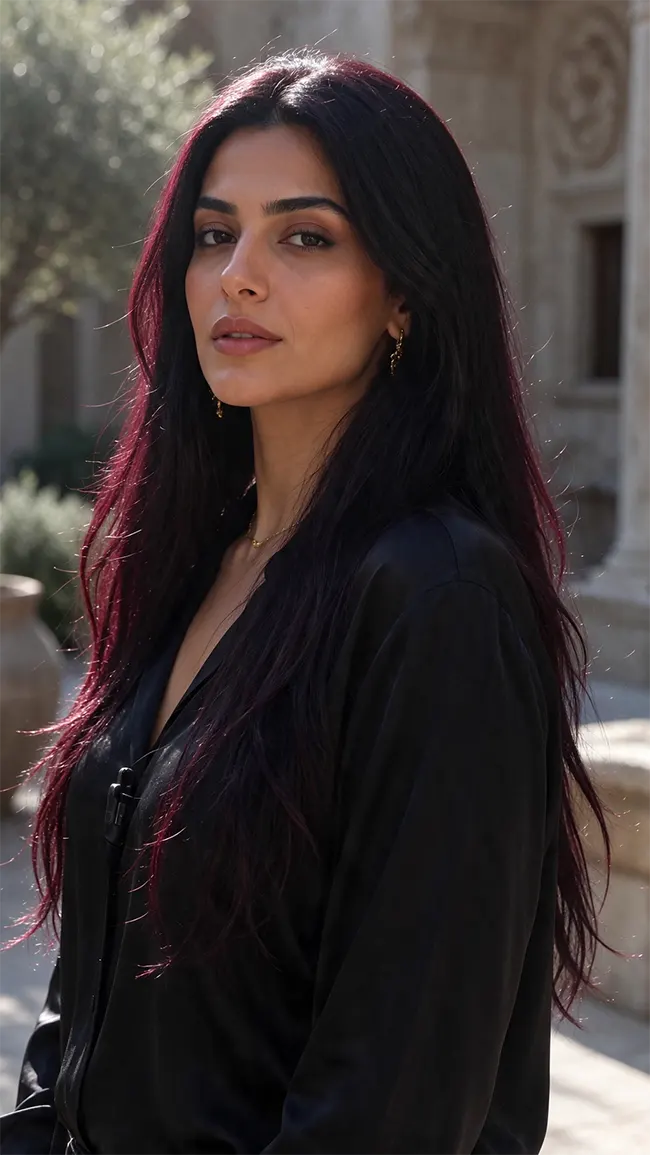
A glaze is the gentlest route to burgundy hair color. Instead of permanently changing the hair, the colorist applies a translucent red-violet gloss that coats the surface and tints it. On natural black hair, the result is a deep, shiny black that reveals burgundy in sunlight, like a secret kept for good lighting. The undertone is cool, and the depth stays very deep, so the effect remains refined.
This option suits people who want to test burgundy before committing or whose schools and workplaces prefer natural-looking hair. Because a glaze adds no lightener, it avoids damage and often improves shine and softness. It also serves as a refresher for existing burgundy, reviving faded tones in a single visit. The color fades gradually over four to six weeks, so there is no regrowth line to manage.
Ask for a burgundy or red-violet gloss on natural black hair, and say you want the effect to be most visible in sunlight. Because glazes are semi-permanent, you can repeat the service every month if you want the color to remain vivid. At home, use a burgundy-depositing conditioner between visits. Lukewarm water and a sulfate-free shampoo help the glaze last, and a heat protectant keeps styling tools from dulling the tint.
Salon Tip
Ask for a clear gloss over the burgundy tint to boost shine. The added layer smooths the cuticle and makes black hair look like polished glass, which also makes the red appear deeper.
If your hair is already color-treated, mention it at the start. The colorist can adjust the formula to avoid uneven absorption, since previously dyed sections often grab pigment faster than virgin hair.
16. Burgundy Auburn Blend
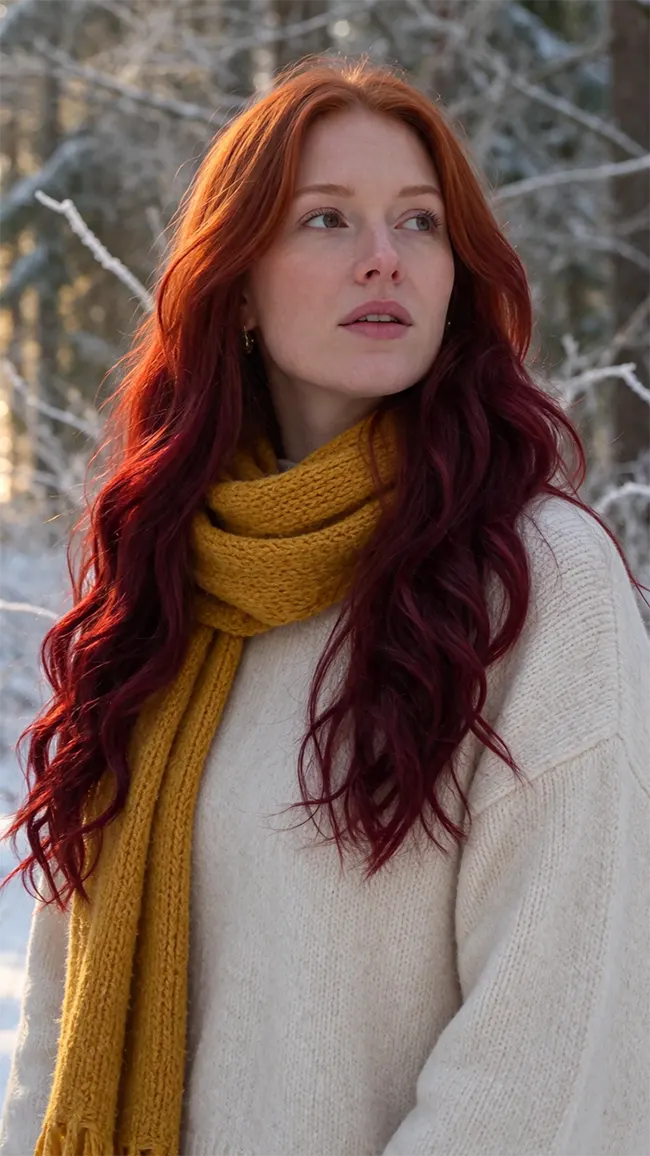
Burgundy auburn blends the warm, orange-tinged red of auburn with the deeper wine of burgundy. The roots lean into a rich auburn, and the lengths deepen into burgundy, so the color moves between fire and velvet as you turn your head. The depth sits at medium, and the undertone is warm. It looks like a copper kettle in firelight, with enough depth to feel at home in January.
Warm and golden complexions look striking with this blend, and the shade flatters green, hazel, and light brown eyes. It also suits freckles, which pick up the auburn tones. Natural red, light brown, and dark blonde hair takes the color easily because it already holds warm pigments. Darker bases need a little lift to show the auburn glow, but the burgundy at the ends can sit directly on the natural tone.
To ask for this look, describe it as an auburn root blending into burgundy, and specify that the warmth should be strongest near the face. A photo avoids confusion between copper, auburn, and wine, which can look similar on a screen. Warm reds fade quickly, so schedule a gloss every four to six weeks, and wash with cool water. A copper-toned conditioner at home keeps the auburn side vibrant.
Undertone Guide
Auburn burgundy suits warm and neutral undertones. If your skin looks pink or flushed, ask your colorist to move the shade slightly cooler by adding a touch more violet to the burgundy, and keep the auburn restricted to a few face-framing pieces.
Check the color against your wardrobe, too. Olive, forest green, mustard, and cream flatter the warmth, while bright fuchsia and cool blue may clash. A quick test with a scarf near the face tells you which direction to go.
17. Soft Burgundy Sombre on Light Brown Hair
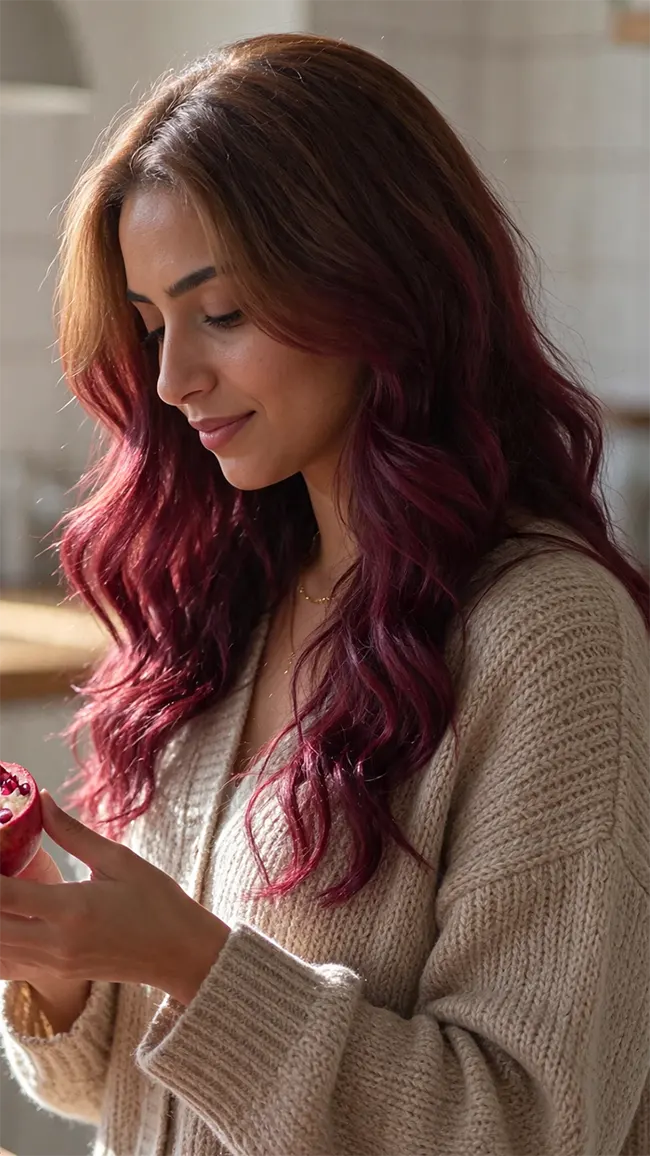
A sombre is a softer ombre, and on light brown hair, it gives burgundy a sunlit, delicate quality. The roots stay in a natural light brown, and the color slowly warms into a muted wine through the lengths, reaching a soft burgundy at the ends. The overall depth is light to medium, with a neutral undertone. The gradient is gentle enough to look natural, and it photographs well in winter light.
This is the lightest touch on the list, and it fits people who prefer subtle change. Light brown hair already has enough lift for the pigment to show, so the colorist can often apply burgundy without heavy bleaching. That keeps strands healthier and the color softer. The sombre also grows out beautifully, since the top remains your natural shade.
Ask for a soft burgundy sombre with a long, blended transition, and request that the color stay muted instead of bright. A photo helps your colorist match the saturation level. Expect a visit every twelve weeks, and a gloss halfway through to refresh the ends. Because this version fades toward a warm rose-brown, it never looks harsh. A color-safe conditioner and a weekly mask keep the lengths soft and glossy.
Dimension Detail
Ask for the burgundy to appear first around the face and at the mid-lengths, with the strongest tone saved for the last two inches. This placement draws light to the places where the hair moves most.
Request a soft shadow at the top of the transition to avoid a visible start line. A blurred junction means the color looks grown in, not painted on, which is the whole appeal of a sombre.
Finding the Right Burgundy Shade for Your Features and Hair Type
The best shade is the one that flatters your skin, suits your hair’s condition, and matches the amount of upkeep you want. Start with undertone, then consider your natural color and any previous treatments.
Look at your skin in natural light. Gold, peach, or olive tones lean warm, and pink, rosy, or bluish tones lean cool. Warm skin loves mahogany, copper, and auburn burgundy. Cool skin shines in plum, rosy, and black cherry. Neutral skin can wear nearly anything, so choose based on mood and maintenance.
Your hair’s starting point matters as much. Dark hair reaches deep burgundy easily and needs little lightening. Light brown and blonde hair accepts brighter and rosier shades, though it may need a depth-building step first. Hair that has been bleached or relaxed needs extra care, so ask for a bond-repair treatment and a patch test. Texture counts too: curly hair shows dimension through lowlights and balayage, while straight hair shows off glossy solid shades.
| Situation | Recommended Choice | Why It Works |
| Natural black or dark brown hair | Black cherry, glaze, or plum burgundy | Needs little or no lightening, so the hair stays healthier |
| Light brown or dark blonde hair | Rosy burgundy, sombre, or copper blend | Existing lift lets softer reds show without heavy bleach |
| Warm or olive skin | Mahogany, auburn blend, or cherry cola | Warm reds echo the skin’s natural glow |
| Cool or fair skin | Plum, rosy, or black cherry burgundy | Violet and pink tones flatter pale and cool complexions |
| Gray strands to cover | All-over deep burgundy or mahogany | Dense pigment blankets gray and blends it with the rest |
| Low-maintenance routine | Root melt, peekaboo, or lowlights | Dark roots and hidden color grow out without clear lines |
| Fine or thin hair | Burgundy with chocolate lowlights | Depth contrast makes the hair look fuller |
How to Ask Your Colorist for the Look
A clear conversation saves time, money, and disappointment. Colorists work from what they see and what you tell them, so the more specific you are, the closer the result will be to what you imagined.
- Bring three reference photos. Choose one that shows the shade you love, one that shows the placement, and one that shows what you do not want. Daylight photos are best, since indoor lighting changes how red looks.
- Describe the shade in your own words. Terms like wine, black cherry, and plum mean different things to different people. Say whether you want warm or cool, bright or deep, and glossy or soft.
- Discuss your undertone. Share which metals and colors flatter you. Your colorist can match the burgundy to your skin so the shade looks natural and bright, not sallow.
- Choose your placement. Decide between all-over color, balayage, a root melt, a money piece, or peekaboo highlights, and say how dark you want the root.
- Share your hair history. Tell your colorist about box dye, henna, bleach, relaxers, and any recent treatments. Past color affects how new pigment takes, and honesty prevents patchy results.
- Ask about timing and cost. Find out how many appointments the look needs, how long each one will take, and what the touch-up schedule looks like.
- Plan your aftercare before you leave. Ask which shampoo, conditioner, and gloss schedule they recommend, and buy what you need before you walk out.
Keeping Burgundy Beautiful Between Salon Visits
Red pigments are the largest molecules in the color world, and they wash out the fastest. A few small habits protect the shine and keep your burgundy rich through the winter.
- Use color-safe products. Choose sulfate-free shampoo and conditioner made for color-treated hair. Sulfates strip pigment with every wash.
- Wash less often. Two or three washes a week are plenty for most hair types. Dry shampoo handles oil in between.
- Rinse cool. Hot water opens the cuticle and lets red escape. A cool final rinse seals it and boosts shine.
- Protect from heat. Use a heat protectant spray every time you style, and keep tools at the lowest effective temperature. Heat dulls and browns red tones.
- Shield from UV. Winter sun still fades color. Use a UV-protecting hair spray or wear a hat on bright days.
- Gloss regularly. A salon gloss every four to eight weeks restores shine and refreshes tone, depending on the shade.
- Deposit color at home. A burgundy or red conditioning mask once a week keeps the pigment from dulling between appointments.
| Before | After | What Changed |
| Washing with hot water and regular shampoo | Cool water and sulfate-free shampoo | Pigment stays on the hair for weeks longer |
| Daily washing | Two or three washes a week | Less fading and less dryness |
| Styling without protection | Heat protectant plus lower temperatures | Red tones stay bright instead of turning brassy brown |
| Waiting until the color looks dull | Regular gloss appointments | Shine and tone are refreshed before fading shows |
Turning These Ideas into a Look That Fits Your Real Life
Inspiration works best when you adapt it. Think about your daily routine, your wardrobe, and how often you want to visit the salon, then choose the burgundy that fits the life you actually live.
If you want minimal upkeep, pick a root melt, peekaboo highlights, or lowlights, since dark roots hide regrowth for months. If you love a polished, uniform finish and do not mind regular visits, choose an all-over shade. If you work in a conservative setting, cherry cola, a glaze, or a sombre looks natural up close and rich in daylight. For a budget-friendly approach, start with a semi-permanent color or a glaze, which costs less and fades without commitment.
Your wardrobe matters too. Warm burgundies pair with camel, olive, and cream, while cool ones shine against black, gray, and navy. If you wear a lot of bright colors, choose a deeper shade so your clothes do not compete with your hair.
| Option | Works Best For | Key Tip |
| Glaze or semi-permanent color | First-timers and conservative workplaces | Repeat monthly for a stronger tone |
| Money piece or peekaboo | People who want a small, flexible change | Match placement to how you part your hair |
| Balayage, sombre, or root melt | Anyone who wants an easy grow-out | Book a gloss midway through the cycle |
| All-over burgundy | A confident, polished finish | Schedule root touch-ups every four to six weeks |
| Copper or auburn blend | Warm skin and fans of bright colors | Use a copper-depositing conditioner |
Your Burgundy Decision Formula
You can choose your shade with a simple three-step formula. First, match the undertone to your skin: warm for mahogany, copper, and auburn; cool for plum, rosy, and black cherry. Second, match the depth to your natural hair: the closer to your current color, the gentler and cheaper the change. Third, match the placement to your upkeep tolerance: all-over for a bold finish, dimensional for easy grow-out, and accents for flexibility.
Before you book, write your answers in one sentence for your colorist, such as “I want a cool-toned burgundy, close to my dark brown, with a dark root and a visit schedule of every twelve weeks.” That sentence covers undertone, depth, placement, and maintenance, giving your colorist everything they need to plan the service.
After the appointment, keep a small log. Note which shampoo you used, how often you washed, and how the color looked at weeks two, four, and six. Over time, you will learn what your hair needs, and you can fine-tune the shade, the gloss schedule, and the products so your burgundy keeps looking fresh from the first frost to the last.
Frequently Asked Questions
What are the best burgundy hair color ideas for winter?
Deep and dimensional shades suit winter best. Classic deep burgundy, black cherry, plum, and mahogany all look rich in gray light. For a softer approach, try a burgundy balayage, a money piece, or a glaze, which add warmth without a full transformation.
Does burgundy hair color suit all skin tones?
Yes, as long as you choose the right undertone. Warm and olive skin looks best in mahogany, copper, and auburn burgundy. Fair, cool skin glows in plum, rosy, and black cherry tones. Neutral skin can wear nearly any shade, so your hair color and maintenance preferences can guide the choice.
Do I need to bleach my hair to get burgundy?
Not always. Natural black and dark brown hair can take deep burgundy, black cherry, or a glaze with little or no lightening. Light brown and blonde hair can usually reach burgundy without bleach as well, but it may need a depth-building step. Very dark hair needs to be lightened for brighter, rosier shades.
How long does burgundy hair color last?
Permanent burgundy typically lasts four to eight weeks before fading becomes noticeable, depending on the shade and your routine. Cool and pink-toned burgundies fade faster. Glazes last about four to six weeks. Cool water, sulfate-free shampoo, and regular glosses extend the life of the color.
How often should I wash burgundy hair?
Two or three times a week is a good target for most people. Washing less often keeps the pigment on the hair longer. Use dry shampoo between washes, rinse with cool water, and condition with a color-safe or color-depositing formula.
How do I keep burgundy hair from turning brown or orange?
Use sulfate-free products, wash with cool water, and add a burgundy or red conditioning mask each week. Schedule a salon gloss every four to eight weeks. Protect hair from heat and sun, since both dull red tones and push them toward brown or brassy orange.
What is the lowest-maintenance burgundy hair color?
A root melt, peekaboo highlights, or burgundy with chocolate lowlights need the least upkeep. Dark roots and hidden color grow out without visible lines, so you can often wait ten to twelve weeks between visits. Cherry cola and a glaze are also gentle options, since they fade to a natural-looking brown.
Can I get burgundy hair if I have gray hair?
Yes. Deep all-over burgundy and mahogany cover gray well, since dense pigment blankets silver strands. Tell your colorist about your gray so they can adjust the formula, and expect a quick gloss after the first few washes to even out any brighter pieces.
I’m Maria Foster, a fashion and beauty writer with 15 years of experience in the fashion industry. Being in my mid-40s has given me a real appreciation for style that feels beautiful, practical, and true to me.
I love sharing outfit ideas, hairstyle inspiration, hair trends, and simple beauty looks that women can actually enjoy wearing in everyday life.