
Pixie haircuts for women over 50 have a reputation for being brave, and I think that is only half right. They are brave the way a great outfit is brave: people notice, you feel more like yourself, and you wonder why you waited so long. The bigger surprise is how soft and feminine a well-cut pixie can look.
Many of us reach this stage with the same hair complaints. Long hair feels heavy and flat by lunchtime. Fine strands look thinner than they used to. Gray is arriving in patches, and the daily blow-dry has started to feel like a chore. A short cut solves most of this at once because it removes tedious steps and puts the volume right where you want it.
A pixie also does quiet work on your face. Shorter hair opens up the eyes, shows the cheekbones, and gives the neck a long, graceful line. Gray and silver look especially good in short hair, because the shape makes the color look chosen. A pixie can also be as gentle or as edgy as you like, depending on how it is cut and styled.
The worries are real, though. Will it make me look older? Will it suit my face? What if my hair is curly, thick, or very fine? The honest answer is that the details of the cut matter far more than the length. Soft edges, smart layers, and the right fringe change everything.
Below are 32 pixie ideas with styling advice, salon notes, and a clear picture of who each one suits. Read through, save the ones that make you smile, and bring a photo to your stylist. A haircut feels easier when you already know what you want.
Why Pixie Haircuts for Women Over 50 Look So Polished and Light
A pixie works because it removes everything that does not help the hair. What is left is shape, texture, and movement—the three things that make hair look healthy at any age.
Here is what to think about as you browse:
- Texture: Fine hair gets lift from layers on top. Wavy and curly hair gets a neat, defined shape. Coarse or gray hair becomes softer when cut shorter.
- Density: Thick hair can be thinned from the inside, so it sits close. Thin hair is kept longer on top so the scalp stays covered.
- Face shape: Fringe and side lengths can balance round, square, long, and heart-shaped faces.
- Length: Pixies range from very cropped to a long, soft shape that almost touches the ears.
- Movement and volume: Layers on top create height, and tapered sides keep the outline slim.
- Styling flexibility: One cut can be sleek for dinner and tousled for the weekend.
- Everyday upkeep: Most pixies dry in minutes, though they do need regular trims to keep their shape.
If you have been wondering how to wear short layered pixie cuts for mature women without looking severe, the answer is almost always softness. Soft fringe, soft taper, and soft texture make the style gentle instead of sharp.
Quick Guide: Matching a Pixie to Your Hair and Face
Use this table to narrow down your favorites before reading the full descriptions.
| Pixie Group | Best Hair Type | Face Shape | Length | Styling Benefit |
| Classic and soft pixies (1, 2, 5, 17) | Fine to medium, straight or wavy | Oval, heart, long | Short to medium-short | Easy daily shape, gentle framing |
| Textured and shaggy pixies (3, 14, 19, 31) | Medium to thick, wavy | Oval, round, square | Short with longer top | Hides thin spots, relaxed finish |
| Curly and coily pixies (6, 15, 26) | Wavy to tightly coiled | Oval, round, heart | Very short to short | Defined shape, less frizz |
| Fine hair volume pixies (12, 13, 28) | Fine, thinning | Oval, round | Short | Lift at the crown, fuller look |
| Thick hair pixies (7, 25) | Thick, coarse | Oval, square | Short | Lighter weight, neat outline |
| Bangs and fringe pixies (5, 18, 27, 29) | Straight to wavy | Long, square, heart | Short | Softens the forehead, frames the eyes |
| Bold and modern pixies (8, 9, 16, 20) | Straight, medium | Oval, heart | Short to medium-short | Strong shape, fashion-forward |
| Silver and gray pixies (4, 21, 32) | Any texture | Most shapes | Short | Shows off natural color |
| Color-led pixies (10, 11, 22, 23, 30) | Any texture | Most shapes | Short | Adds brightness and dimension |
| Face-balancing pixies (24, 29) | Straight to wavy | Round, square | Short | Adds height or softens angles |
Find Your Mood: The 32 Pixies Grouped by Look
It helps to pick a feeling before you pick a cut. Here is how the ideas fall together.
Soft and feminine. The classic soft pixie (1), long pixie with side-swept bangs (2), wispy-bangs pixie (5), feathered pixie (17), and curtain-bangs pixie (18) have gentle edges. They suit you if you want a short cut that still feels romantic.
Relaxed and textured. The choppy pixie (3), shaggy pixie (14), spiky pixie (19), and grown-out messy pixie (31) look effortless and forgive a bad hair day. They are ideal if you prefer a lived-in finish.
Modern and bold. The bixie (8), soft undercut (9), asymmetrical pixie (16), sleek slicked-back pixie (20), and soft faux hawk (28) have clear shape and a confident feel.
Natural texture lovers. The curly pixie (6), wavy pixie (15), and tapered coily pixie (26) work with the hair you already have instead of against it.
Color-focused. The silver (4), platinum (10), honey blonde (11), salt-and-pepper (21), copper (22), caramel balayage (23), plum burgundy (30), and gray-blending (32) pixies show how color and shape work together.
The Complete Collection of Pixie Haircuts for Women Over 50
1. Classic Soft Pixie Cut
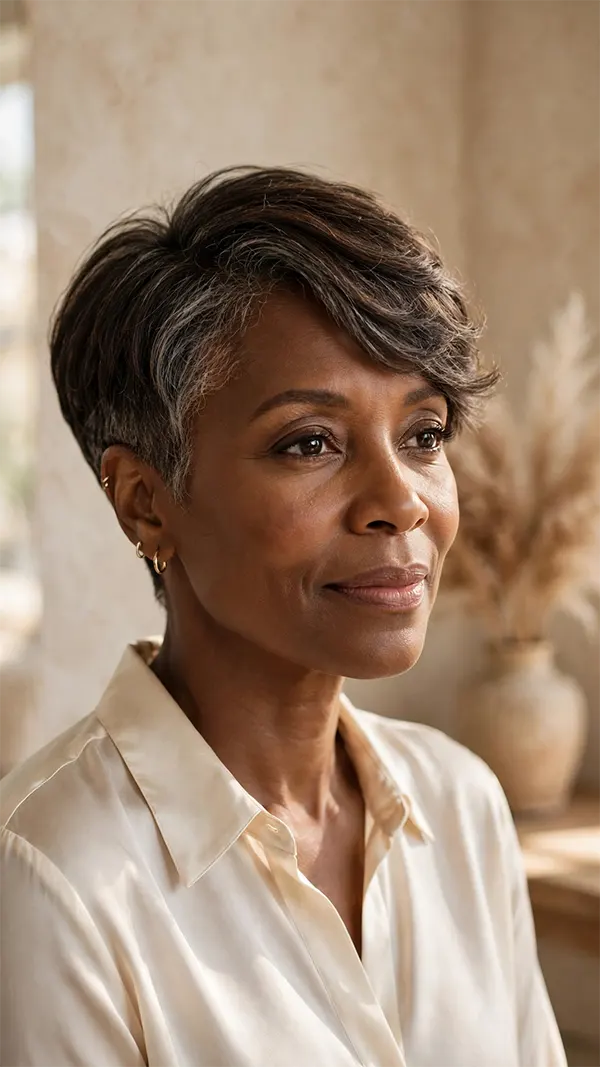
The classic soft pixie is the cut most people picture first when they think of short hair, and it earns that place. The sides and back are trimmed close but never harshly; the top stays a little longer, and every edge is softened so nothing looks severe. For anyone exploring pixie haircuts for women over 50 for the first time, this is the friendliest place to start. It gives you a clear, tidy shape and still leaves room to style it your own way.
The proportions are what make it flattering. Extra length on top draws the eye upward, while the short sides show off the cheekbones, jawline, and neck. Fine hair gains lift, medium hair gains a neat outline, and gray strands blend into the shape without special attention. Because the cut is not extreme, it suits women who want a fresh change but still want to recognize themselves in the mirror each morning.
Styling is quick. Work a small amount of light cream through damp hair, dry the top with your fingers, and nudge the front to one side. Plan a trim every five to six weeks, since a short shape loses its balance quickly. Ask your stylist to taper the neckline softly instead of cutting it square, because a soft edge grows out far more gracefully between appointments.
Face Shape Note
Oval and heart-shaped faces wear this cut most easily, since the lifted top balances a narrower chin. Round faces should ask for a little extra height on top to create length.
Square faces look best when the fringe is soft and swept to the side. A blunt, straight fringe would add width at the forehead, which works against the softness you are after.
2. Long Pixie with Side-Swept Bangs
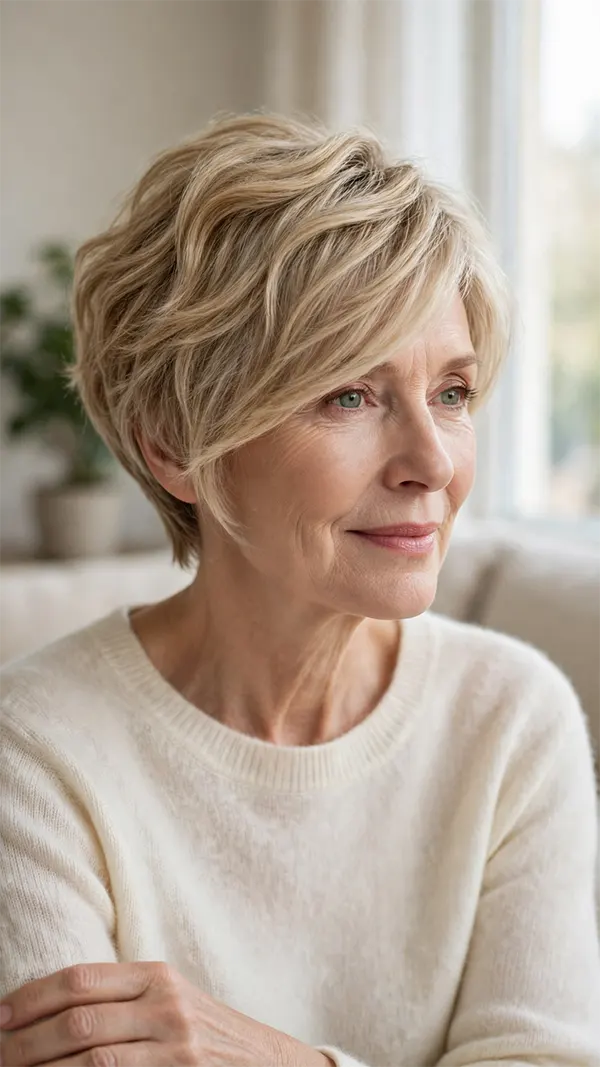
A long pixie keeps the pixie’s structure but leaves much more length on top and around the ears. The bangs are cut long and swept diagonally across the forehead, falling toward one cheekbone. The back and sides are still short and tapered, so the shape stays neat. It sits in a gentle middle ground—short enough to feel fresh and long enough to feel safe—which is why many women choose it when they are not ready for a cropped cut.
The extra length gives you more styling options than a classic pixie. You can sweep the bangs across, pin them back for a clean look, or tuck them behind one ear. Fine hair looks fuller because the longer top creates a soft, rounded silhouette. Thicker hair benefits too, since the weight is balanced between the sides and top. Straight and slightly wavy hair shows the sweep most clearly.
To style it, blow-dry the bangs first with a small round brush, pulling them across your forehead. Then lift the crown with your fingers and finish with a touch of flexible hairspray. This cut grows out more gracefully than a very short pixie, so you can stretch trims to every seven weeks. If you want extra softness, ask for a few wispy layers around the face.
Styling Tip
If your bangs keep falling flat, dry them while they are damp, then finish with a blast of cool air. The cool air sets the sweep and makes it last longer.
A little dry shampoo at the roots of the bangs refreshes them mid-day. Forehead oils collect there first, and a quick spray keeps the shape light.
3. Textured Choppy Pixie
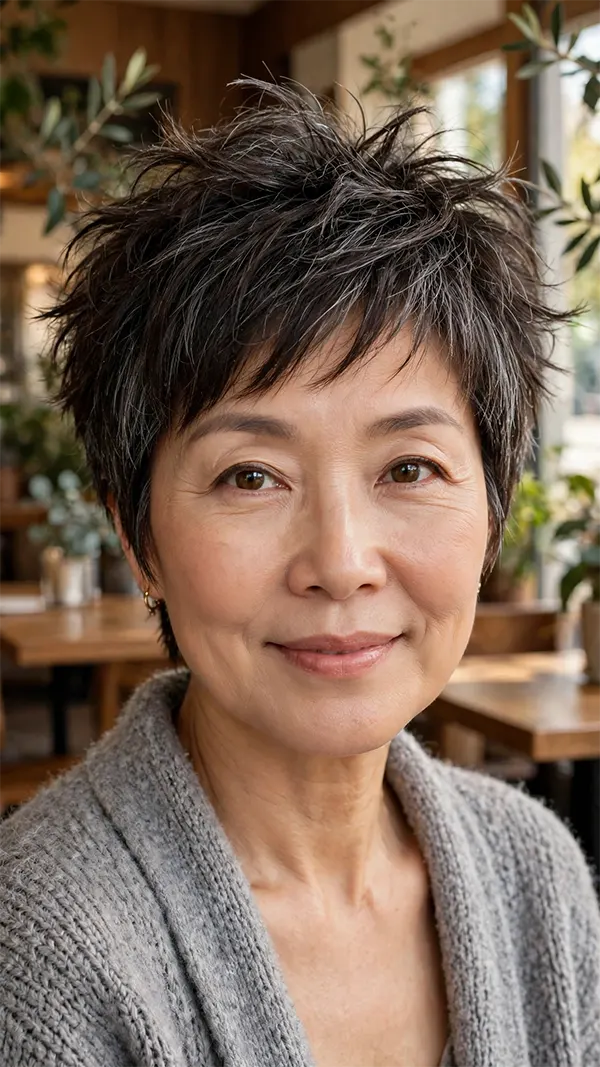
The textured choppy pixie is built from short, uneven pieces that point in different directions. The ends are cut with a razor or a point-cutting technique, so every strand looks slightly separated rather than smooth. The result is playful and full of movement, with a lived-in finish that never looks stiff. It is a cut for women who like their hair to look a little undone, in a way that still feels deliberate and stylish.
Texture is also a clever trick for mature hair. Choppy ends create the illusion of density, which helps fine or thinning hair look fuller. On medium hair, the pieces add shape and prevent the cut from looking flat. Gray hair responds well, too, because separated strands catch the light and show off the mix of silver and darker tones. Wavy hair gives the cut extra bounce, though straight hair works with a little product.
To get the look, rub a pea-sized amount of texturizing paste between your fingers and twist small sections upward from the roots. Avoid brushing, since it breaks up the choppiness. A dry texture spray at the crown adds grit and volume. Visit the salon every six weeks to keep the ends crisp, and ask your stylist to show you how the pieces are cut so you can recreate the look at home.
Texture Note
Matte products work better than shiny ones for this cut. Shine can make choppy pieces look greasy, while a matte paste keeps each strand defined and dry.
If your hair is very fine, use only a tiny amount of product. Too much weighs the ends down, and the choppiness disappears, leaving a flat, limp shape.
4. Silver Pixie
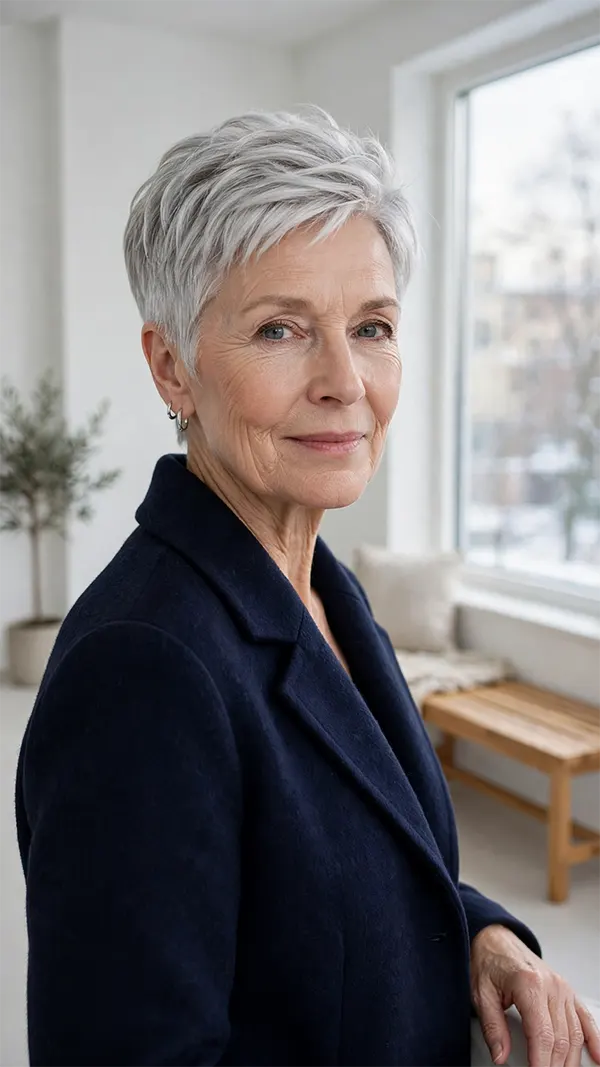
A silver pixie turns gray hair into the main feature rather than a problem to cover up. The cut is short and clean, with soft layers on top and a tapered nape, and the natural silver color is allowed to shine. In a short cut, silver looks bright and dimensional because the shorter length reflects light more evenly. The result looks confident and modern, like a deliberate decision, and it saves you from the cycle of constant root touch-ups.
Silver hair has its own personality. It is often coarser or drier than the color it replaces, so a short cut helps by removing dry ends and keeping the strands healthy. Soft layers add movement and stop the hair from looking wiry. Cool skin tones look especially striking with silver, while warmer skin tones glow with a slightly softer, pearl-toned silver. A little lip color and a clean brow bring the whole face forward.
Keep silver looking clear with a purple or blue-toned shampoo once every week or two, since yellow tones can creep in from sun, heat, and water. Use a heat protectant and a smoothing serum to add shine. Plan a trim every six weeks and a gloss treatment at the salon every couple of months to keep the surface glossy. A silver pixie is low maintenance in color but high in impact.
Color Note
If your gray has a yellow tint, ask your colorist for a gentle violet toner. It neutralizes warmth and makes the silver look brighter without covering a single natural strand.
Avoid heavy oils on silver hair, because they can dull the shine and attract dust. A light serum applied to the ends gives gloss without making the color look flat.
5. Wispy Bangs Pixie
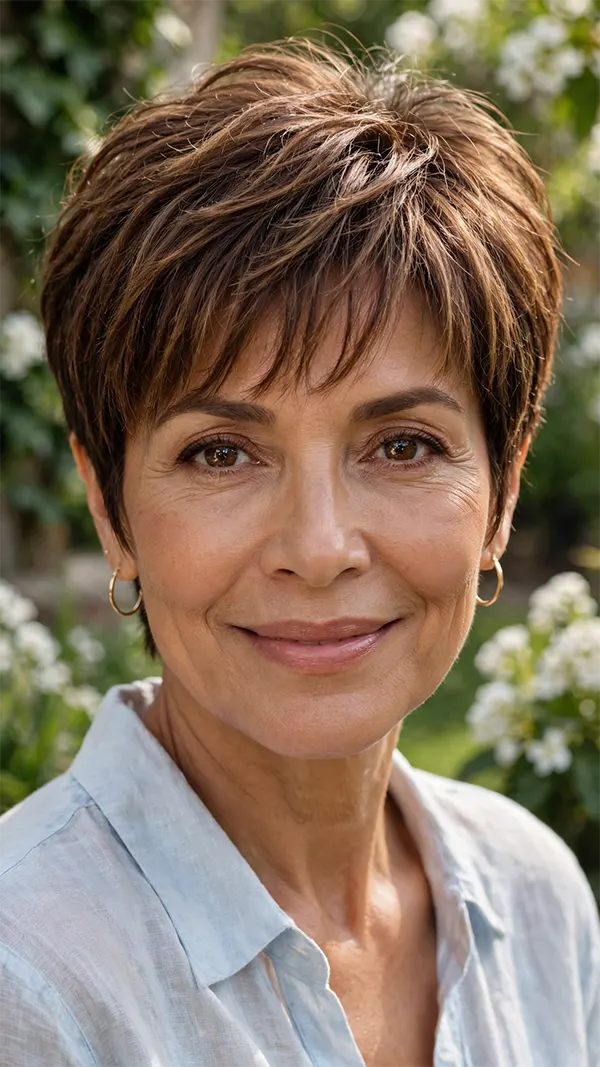
This pixie is defined by a light, feathery fringe that sits just above the eyebrows. The bangs are cut into thin, soft pieces rather than a solid line, so you can still see a little forehead through them. The rest of the cut is short, tapered, and lightly layered. The overall effect is delicate and youthful, with a touch of old-fashioned charm, and it frames the eyes in a way that makes them look larger and brighter.
Wispy bangs are popular among women who want the benefits of a fringe without the commitment. They soften lines across the forehead, and because they are sheer, they feel airy rather than heavy. They also grow out easily, since the pieces blend into the layers as they lengthen. The look works best on straight and slightly wavy hair. Very curly hair needs a different approach, since the fringe may spring up and lose its shape.
For styling, dry the bangs first while they are damp, using a small round brush on low heat. Brush them lightly across your forehead and set them with a flexible spray. The rest of the cut needs only a bit of cream. A quick bang trim between full haircuts is usually inexpensive, and many salons do it for free. Aim for a full visit every six weeks.
Everyday Styling
On humid days, pin the bangs to the side with a small clip in the morning and release them after your hair has settled. It stops them from separating before you leave.
If your bangs look too thin, ask your stylist to bring in a few extra strands from the crown. A slightly fuller fringe still looks wispy but covers more.
6. Curly Pixie
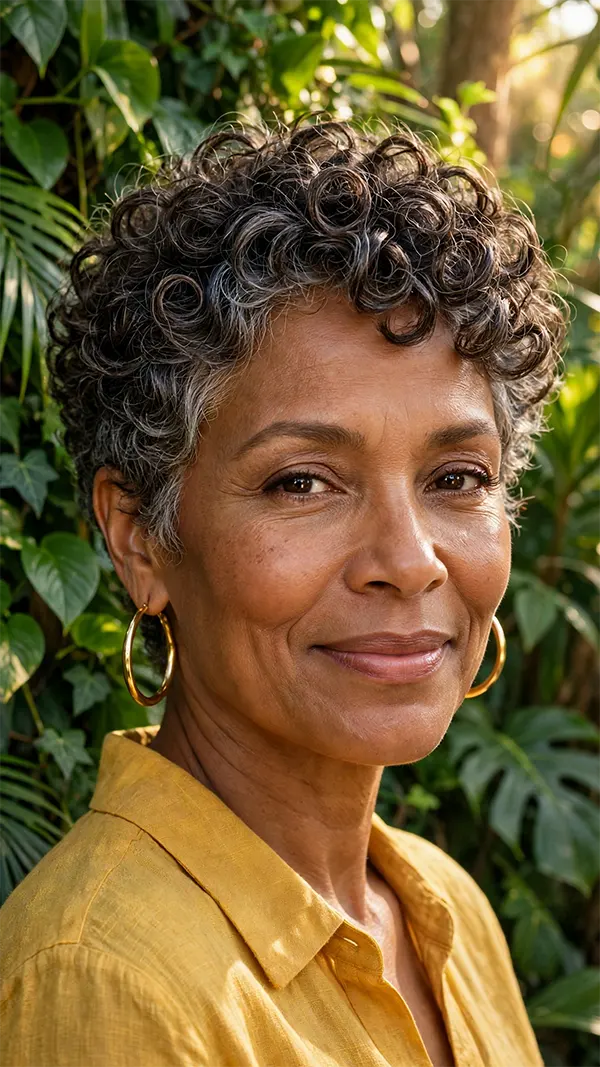
A curly pixie shows off natural curls in a short, rounded shape. The curls are cut slightly longer on top and shorter at the sides and back, so the outline stays balanced and the crown has plenty of bounce. Each curl has room to spring, and the shape looks full and playful. For many women, a curly pixie is the cut that finally makes their curls feel easy instead of something to tame, which is a real relief after years of fighting humidity.
Cutting curls short requires care because curly hair shrinks when dry, and the length can look very different from when it’s wet. A stylist who understands curl patterns will cut the shape dry or check the length as the curls fall. Mature curls are often drier and more delicate, so a short cut also removes damaged ends and encourages healthier definition. Silver curls can look especially striking, with a soft halo effect around the face.
Style with a moisturizing leave-in and a curl cream on damp hair. Scrunch upward, then air-dry or diffuse on low heat. Avoid brushing once dry, as it breaks up the curl pattern and causes frizz. A satin pillowcase or a loose bonnet at night protects the shape. Deep condition weekly, and plan a trim every eight to ten weeks to keep the outline round and neat.
Maintenance Tip
Refresh curls on the second day by misting them with water and a drop of leave-in conditioner, then scrunch gently. This revives the spring without adding weight.
If the top grows faster than the sides, ask your stylist to rebalance the shape instead of cutting everything. It keeps the curls rounded and stops the cut from looking top-heavy.
Discover More: 24 Best Short Wavy Haircuts for Women Over 50 That Are Flattering and Easy to Style
7. Tapered Nape Pixie
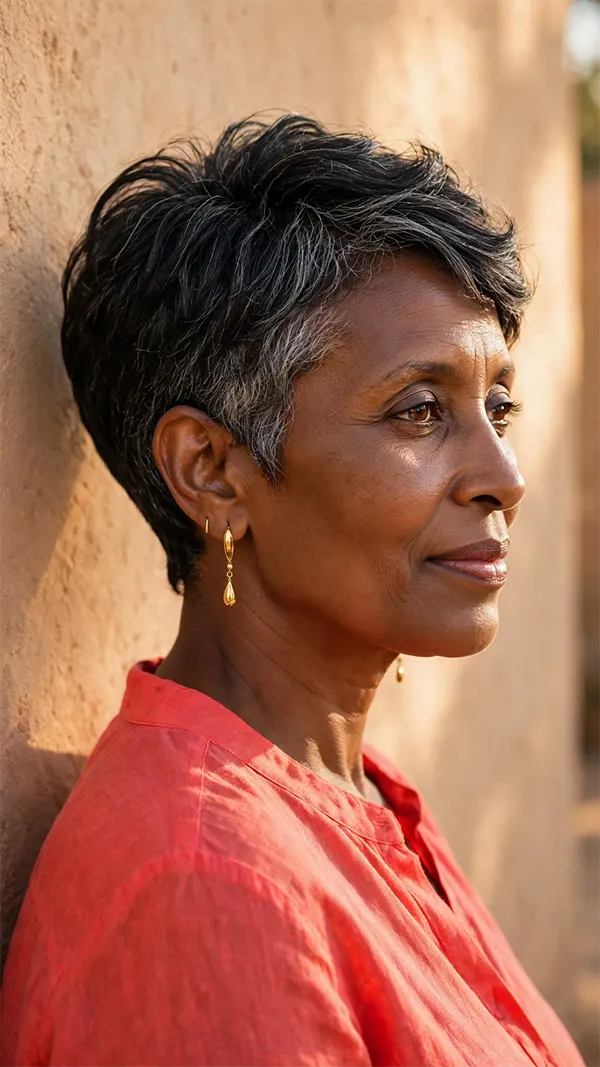
The tapered nape pixie is cut close at the back of the neck and gradually blends upward into longer hair at the crown. The taper creates a clean, curved line behind the ears and along the neckline, making the neck look longer and more elegant. The top is kept soft and slightly layered, so the cut feels polished without being harsh. It is a favorite among women who like a neat, tidy finish.
The close nape does useful work for thick hair. Hair at the back of the head is often the heaviest and hottest, and a taper removes that bulk without changing the look from the front. It also keeps the shape smooth around the ears, which helps if you wear glasses or earrings. Fine hair benefits from the clean line, since it keeps the nape from looking wispy. Dark hair shows the taper clearly, while silver hair shows it softly.
Styling is simple. A bit of smoothing cream and a quick blow-dry are enough for daily wear. Because the nape grows out visibly, plan a trim every four to five weeks if you like a crisp edge. If you cannot visit that often, ask for a softer taper that blends over a longer distance. It still keeps the shape neat but grows out much less obviously.
Salon Advice
Show your stylist exactly where you want the taper to end. A taper that stops at the ear looks classic, while one that rises higher looks bolder and more modern.
Ask whether your stylist uses clippers or shears. Shears give a softer, more feminine finish, while clippers give a crisper, sharper edge.
8. Bixie Cut (Bob and Pixie Blend)
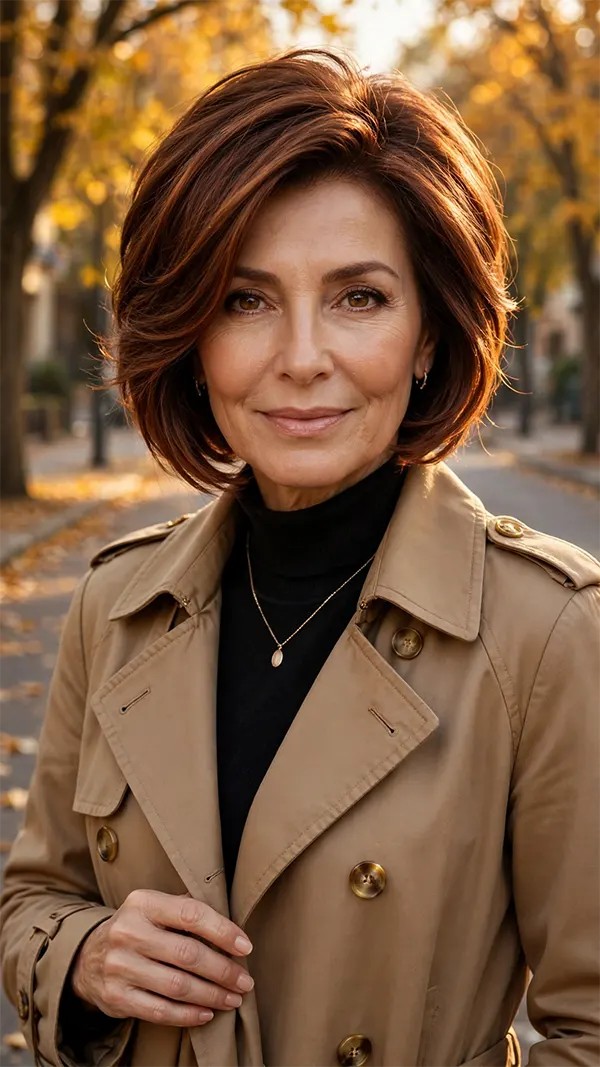
The bixie sits between a bob and a pixie, borrowing the best parts of each. The back is short and tapered like a pixie, while the front stays longer and falls around the face like a soft bob. Layers run through the whole cut, giving it a rounded outline and plenty of movement. It looks modern, and it suits women who want a change but cannot quite decide between short and shorter.
This hybrid is helpful for growing out a pixie or shortening a bob. The longer front gives you something to tuck behind the ears or sweep across the forehead, which makes the cut feel less exposed. Fine hair looks fuller thanks to the layered crown, and thicker hair benefits from the removed weight at the nape. Both straight and wavy hair work, and a little natural movement makes the layers look softer.
To style it, dry the front sections forward and slightly down, and lift the crown with a round brush. A smoothing balm on the front pieces keeps them sleek, while a texture spray at the back gives movement. For a romantic finish, curl the front lengths away from the face. Trim every six weeks to keep the line between the short back and longer front looking deliberate instead of accidental.
Layering Idea
Ask for long, wispy layers around the face and shorter layers at the crown. The contrast creates height and a soft frame without cutting the front too short.
Mention any cowlicks at the nape before the cut begins. The back of a bixie is short, so your stylist needs to work with the way your hair grows.
9. Soft Undercut Pixie
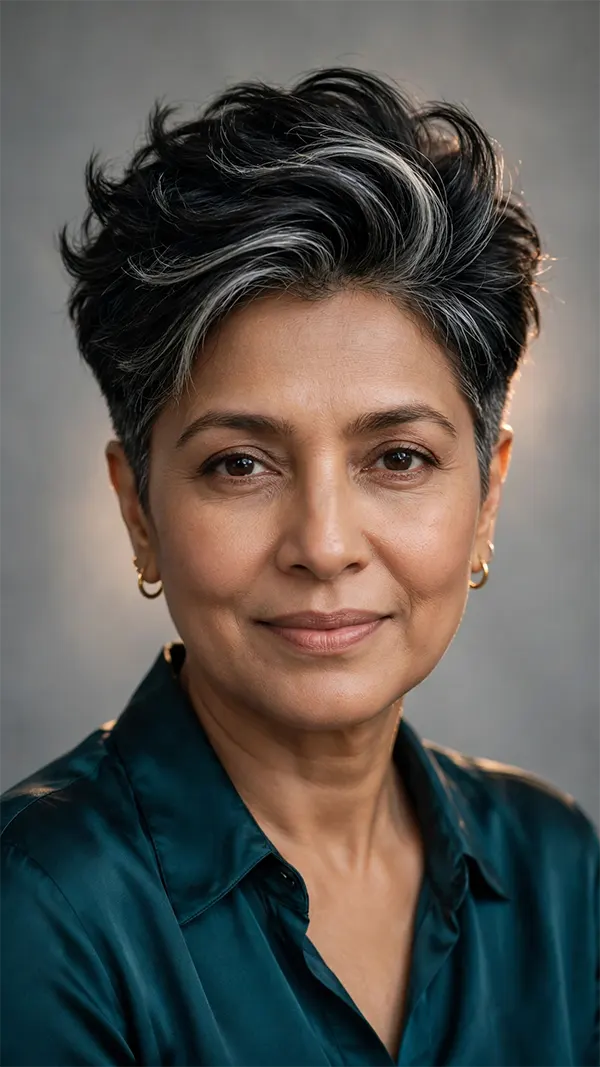
A soft undercut pixie keeps the sides and nape very short while leaving the top noticeably longer. The difference in length is the main feature, giving the cut a clean, graphic shape. For women over 50, the key word is soft. The short sides are blended with scissors rather than buzzed, so the transition looks gentle, and the overall result feels feminine rather than harsh. It is a confident choice that still reads as elegant.
The longer top is where all the styling happens. You can sweep it to one side, push it back for a dramatic look, or tousle it for texture. Fine hair gains height because the weight is concentrated at the top, and the short sides make the cheekbones and jawline look sharper. It works well on straight, wavy, and loosely curly hair. If you have a round face, the vertical lift adds length and balance.
Use a texturizing cream or a light pomade on the top section, then shape it with your fingers. A small amount of hairspray holds the direction in place. The shorter sides need more frequent maintenance, so plan a visit every four to five weeks. If you want to grow it out later, the longer top gives you plenty to work with, and the sides blend back in over a few months.
Style Tip
Keep the contrast gentle by asking for the sides to be blended rather than faded into the skin. A soft blend looks more flattering and grows out much more kindly.
For evening events, brush the top back with a little shine serum. The sleek finish looks polished, and the short sides keep the whole look clean.
10. Platinum Blonde Pixie
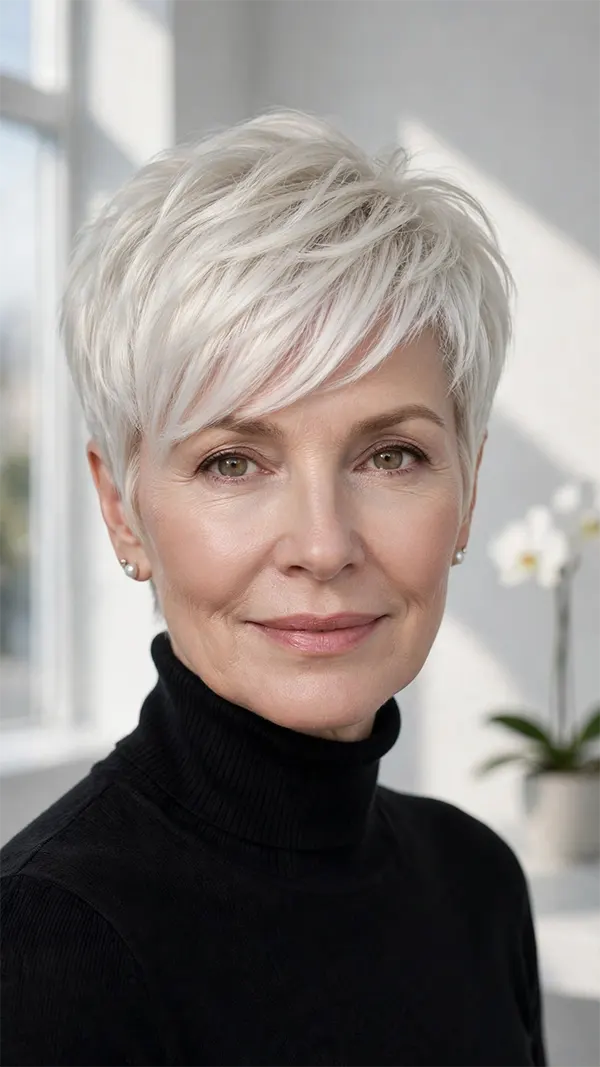
A platinum blonde pixie is bright, crisp, and unmistakably modern. The cut is short and neat, with soft texture on top, and the color is a pale, cool blonde that sits somewhere between silver and white. On a short shape, platinum looks luminous because there is less length to show uneven tones. It also blends beautifully with natural gray, so growth looks soft rather than stark, making it one of the more practical bold color choices.
This look suits women who want to stand out without cutting their hair any shorter. Platinum frames the face with light, and it can brighten skin tones that feel a little dull. Cool and neutral undertones look striking, while warmer skin tones may prefer a slightly softer, creamier platinum. Because the color is so light, texture matters. Choppy layers on top stop the blonde from looking flat, and a bit of shine keeps it glossy.
The upkeep is real, so plan for it. Platinum needs toning every four to six weeks and purple shampoo weekly to keep brassiness at bay. Use a bond-building treatment during coloring, because lightening can weaken mature hair. A deep conditioner once a week keeps the pixie soft. Style with a heat protectant and a light cream, and trim every five to six weeks to keep the shape fresh.
Color Note
Ask your colorist for a gentle lift rather than a quick bleach. A slower process protects mature hair, which tends to be drier and more fragile.
Leave a slightly darker shadow at the root for an easier grow-out. The soft blend looks stylish and means you can stretch color appointments to eight weeks.
11. Honey Blonde Highlighted Pixie
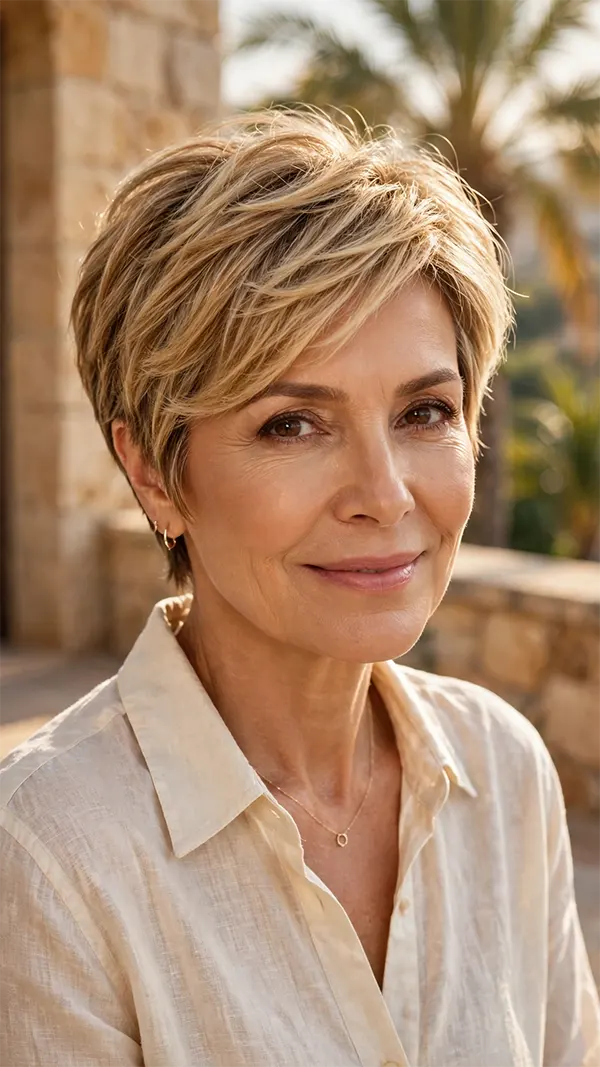
A honey blonde highlighted pixie adds warmth and dimension to a short cut. Soft golden highlights are placed through the top and around the face, over a natural brown or dark blonde base. The lighter pieces catch the light and make the layers look deeper, so the cut seems fuller and more textured. It is a friendly, sunny look that suits women who like a little brightness without dramatically changing their natural color.
Highlights are one of the smartest tricks for mature hair. They create contrast between strands, tricking the eye into perceiving greater density. They also blend gray hairs into the color story, so regrowth looks soft and intentional. Warm skin tones glow with honey and golden shades, and neutral tones look lovely with a slightly beige honey. The key is to keep the highlights fine and blended, with no harsh stripes.
At home, use a color-safe shampoo and a weekly conditioning mask to keep the tone rich. Style with a light cream and scrunch the top for movement. Highlights usually need refreshing every ten to twelve weeks, while the cut needs trimming every six weeks. If you want a more natural grow-out, ask for a hand-painted technique instead of traditional foils. It leaves no obvious line and keeps the shade looking soft as it lengthens.
Undertone Guide
Warm skin looks best with golden honey, while cooler skin looks best with beige or champagne honey. Hold swatches near your face in daylight before you decide.
If you are unsure, start with highlights only around the face. It brightens your complexion and lets you test the color before committing to more.
12. Layered Pixie for Fine Hair
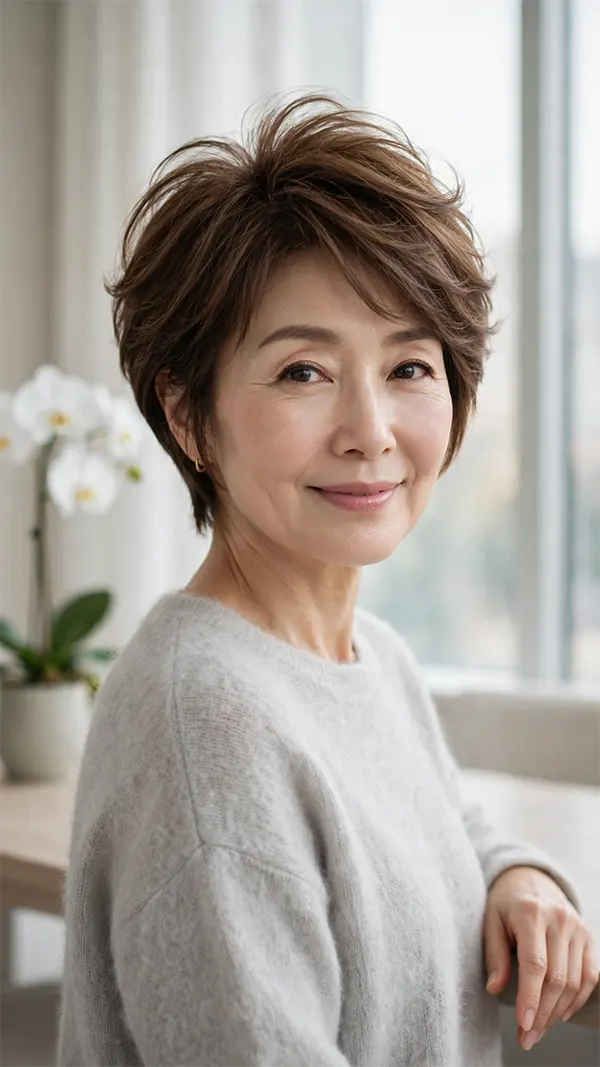
Fine hair can lose its shape quickly, and this layered pixie is designed to prevent that. The layers are cut carefully so the hair stands up on its own, with the shortest pieces at the crown and slightly longer pieces around the sides. The ends are kept soft and not too thin, so the cut looks full instead of wispy. For anyone searching for pixie haircuts for women over 50 with thin hair, this is one of the most reliable choices.
The secret is where the layers fall. Too many short layers can make fine hair look stringy, so a skilled stylist keeps most of the length at the perimeter and builds lift only at the top. This creates the impression of a body without sacrificing the coverage you need. Straight, fine hair benefits especially, because layers add the movement it often lacks. Light colors and highlights add even more visual density.
For styling, apply a volumizing mousse to damp roots and blow-dry upside down for a minute before finishing with a round brush. A light root-lift spray holds height throughout the day. Avoid heavy conditioners near the scalp, since fine hair collects weight easily and falls flat. Trim every five to six weeks, because even small amounts of regrowth can flatten the shape. Short and light is the rule here.
Volume Tip
Dry the roots against the direction you want them to lie, then switch direction as they cool. This sets the lift at the base and keeps it standing for hours.
Wash with a lightweight shampoo and condition only from the mid-lengths down. A clean, light scalp is what keeps fine hair full.
13. Crown Volume Pixie
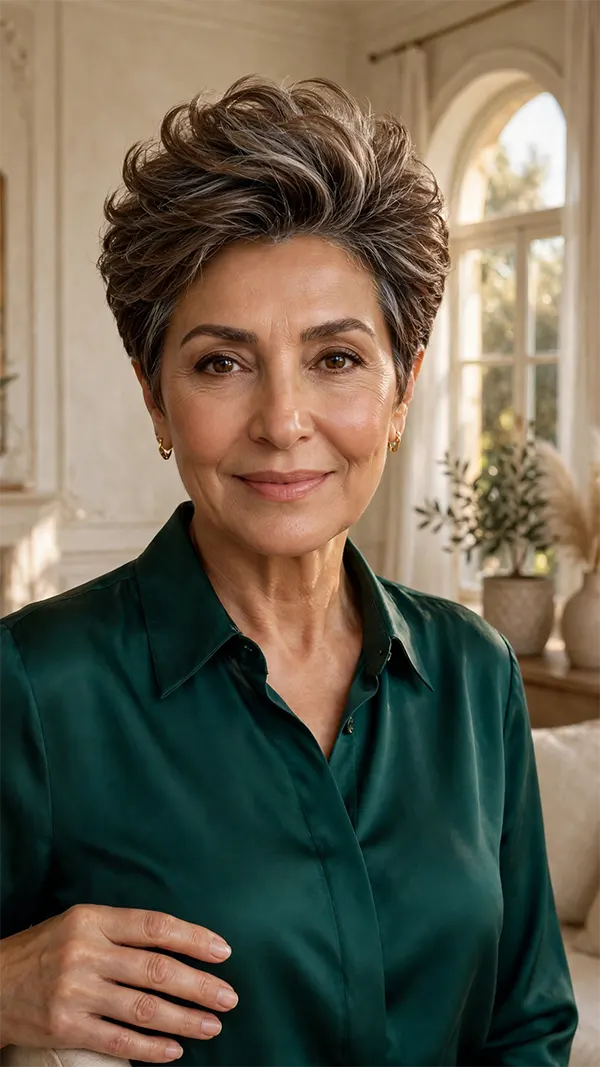
The crown volume pixie focuses on height at the top of the head. The hair on the crown is cut longer and layered so it can be lifted and styled upward, while the sides and back stay short and tidy. The result is a rounded, airy silhouette with a halo of volume that makes the face look lifted and bright. It is a flattering cut that takes advantage of the way gravity affects mature hair.
Many women notice that their hair loses volume at the crown, where hair is often thinner. This cut works with that by building lift into the shape itself. The longer top layers naturally stand away from the scalp and cover thin areas, while the short sides keep the head from looking top-heavy. It works on straight, wavy, and loosely curly hair. Round faces benefit particularly, since the added height creates length and balance.
To style it, roughly dry the hair with your fingers, then use a small round brush to lift the crown while directing warm air upward. A volumizing powder at the roots adds grip and height. Finish with a flexible hairspray. If your hair falls flat by afternoon, a quick pass with a dry shampoo brings it back. Keep trims at five to six weeks so the layers remain balanced.
Volume Tip
Place the powder directly at the roots in small sections rather than sprinkling over the whole head. Concentrated lift lasts longer and leaves no residue.
A Velcro roller set in the crown for five minutes while you finish your makeup is a surprisingly effective shortcut for extra height.
14. Shaggy Pixie
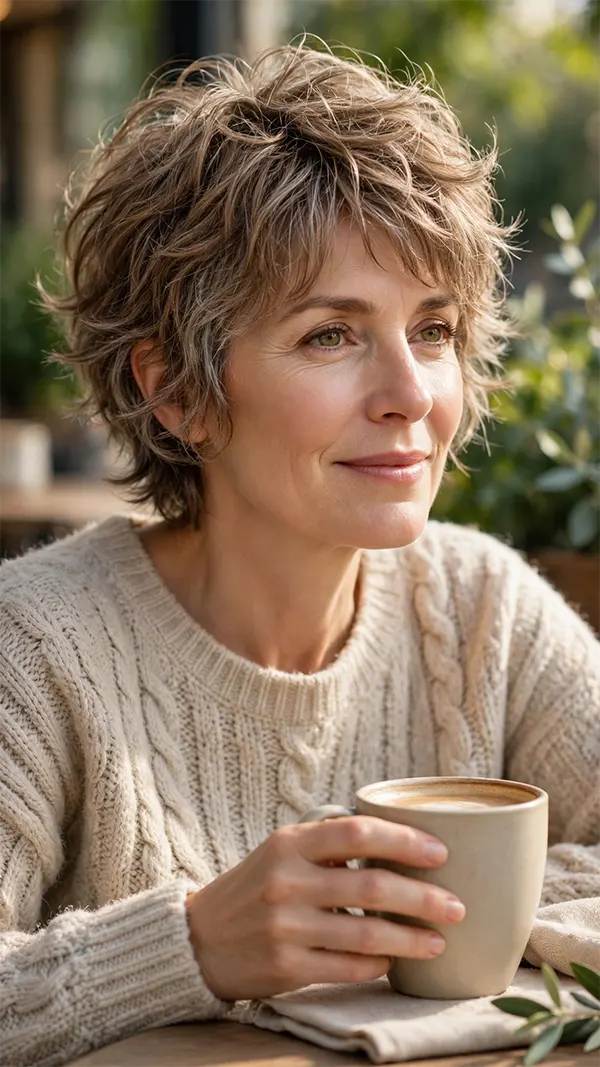
The shaggy pixie takes the casual spirit of a shag and shortens it into a pixie shape. The cut is built from many short layers that create a tousled, slightly messy outline, with wispy bits around the ears and nape. It looks soft, rock-and-roll, and a little bohemian at once. The overall mood is relaxed, and the cut feels like it was made for someone who does not want to spend long in front of the mirror.
This cut hides a lot. Thin spots, cowlicks, and uneven hair all disappear into the layered texture. Wavy hair makes the style look even more effortless, since the natural bends give the layers extra movement. Straight hair can wear it too, with a little help from a curling iron or sea salt spray. The wispy ends around the face soften the jawline and add a youthful touch that suits many face shapes.
Styling takes only a few minutes. Scrunch a small amount of texturizing cream or sea salt spray into damp hair, then let it air-dry or use a diffuser on low heat. Avoid combing it once dry, since that smooths the texture away. A trim every eight to ten weeks is enough, because the shaggy shape forgives some growth. Choose a stylist who is comfortable with razor cutting, since the technique matters here.
How to Wear It
Pair this cut with relaxed clothes like a denim jacket, a white tee, and small hoops. The tousled hair looks best against simple, comfortable pieces.
For dressier occasions, smooth the top slightly with a touch of serum, leaving the ends textured. You keep the shaggy character while looking more polished.
15. Wavy Pixie
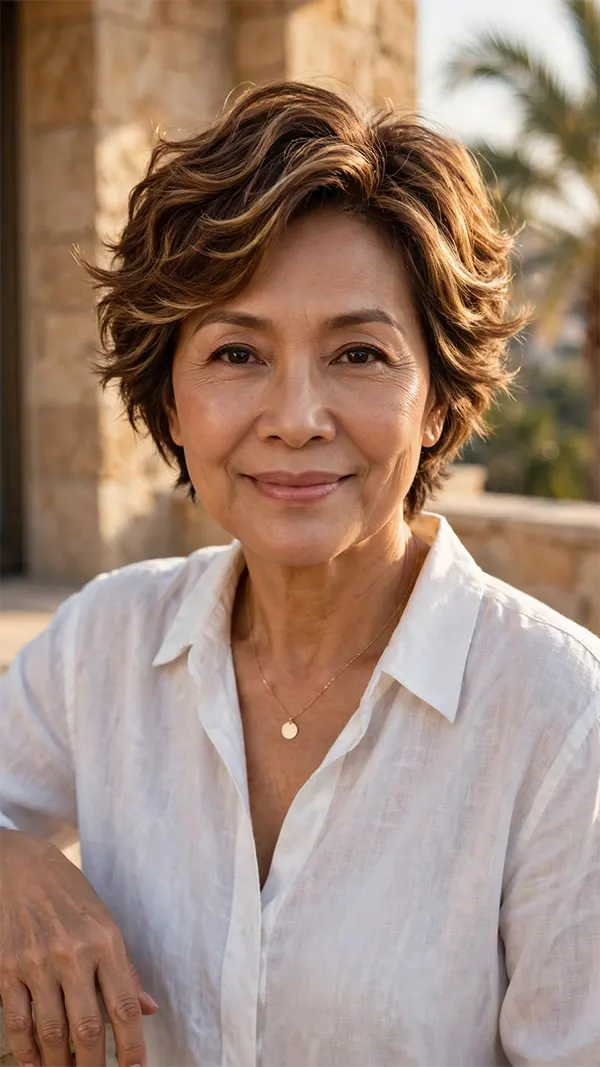
A wavy pixie lets natural bends and S-shaped waves show through in a short cut. The hair is cut a little longer on top so the waves have room to form, and the sides are shaped to follow the wave pattern instead of fighting it. The result is soft and romantic, with a gentle movement that blends the style gracefully. Look, it is one of the most naturally flattering pixie haircuts for women over 50 who already have some wave in their hair.
Wavy hair can be tricky in a short cut, because the waves may spring up unevenly and create a triangular shape. A well-planned pixie avoids this by removing weight in the right places and keeping the layers balanced. The waves then stack neatly, giving the cut an organic fullness. Fine, wavy hair looks thicker in this style because the waves add natural volume that straight hair lacks.
To style, apply a lightweight mousse or curl cream to damp hair, scrunch upward, then air-dry or diffuse. Do not touch it while it dries, since that causes frizz. Once dry, a drop of shine serum on the ends keeps the waves smooth. In humid weather, switch to a light gel for control. Trim every six to eight weeks to keep the waves in good proportion and to stop them from growing into a heavy shape.
Texture Note
If your waves are loose and soft, avoid heavy creams. They weigh down the pattern until the waves look limp and straight.
On days when waves refuse to behave, a slightly damp scrunch with a small amount of product usually revives them. Do not add more product to dry hair, as it can cause stiffness.
16. Asymmetrical Pixie
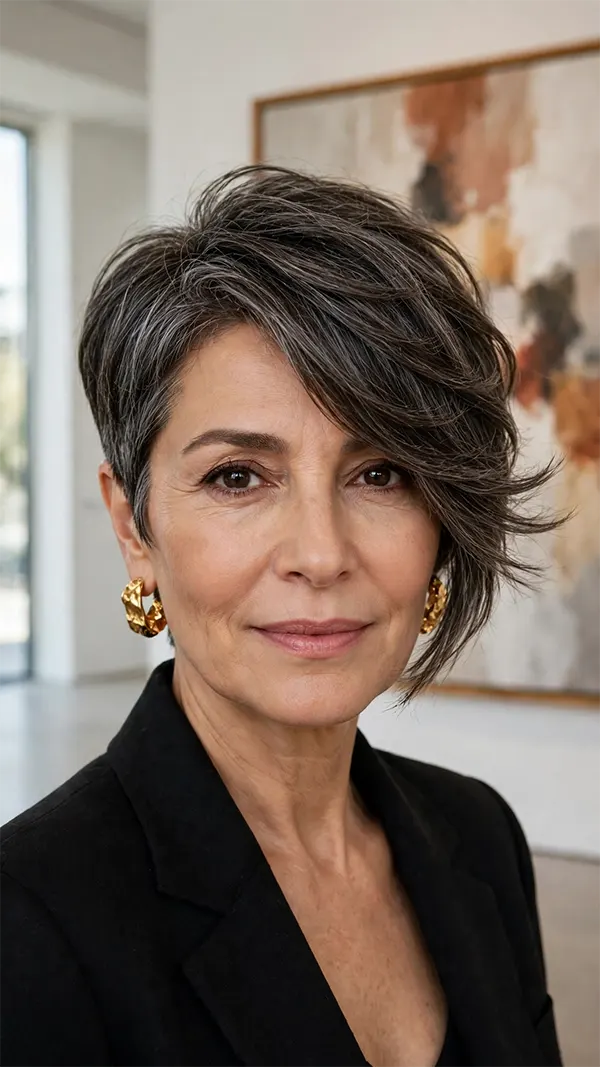
The asymmetrical pixie is cut with one side noticeably longer than the other. The longer side may sweep across the forehead or fall near the cheekbone, while the shorter side is tucked close to the ear. The top is textured and lifted, and the back stays tapered. It is a fashion-forward cut, and the imbalance creates a graphic line that feels both artistic and intentional.
The uneven length draws attention to one side of the face, which can be flattering if you want to highlight a cheekbone or soften a strong jaw. It also adds personality to a short cut, so the style does not feel predictable. Straight and slightly wavy hair shows the lines most clearly, and darker colors or silver emphasize the contrast. If your hair is curly, the asymmetry works too, but it needs a stylist who understands how curls behave.
To style it, part your hair toward the shorter side and blow-dry the longer side smooth and sleek with a paddle brush. A touch of texturizing spray on the shorter side gives movement. A subtle difference of one to two inches is easier to wear than a dramatic one, and it grows out more gracefully. Plan trims every five weeks because the line needs to stay sharp to look deliberate.
Design Detail
Choose the longer side based on your natural part and your best features. If you wear statement earrings, make sure the shorter side shows them off.
Ask your stylist to cut the line with the hair dry. It lets them see how the hair truly falls and keeps the asymmetry looking natural.
17. Feathered Pixie
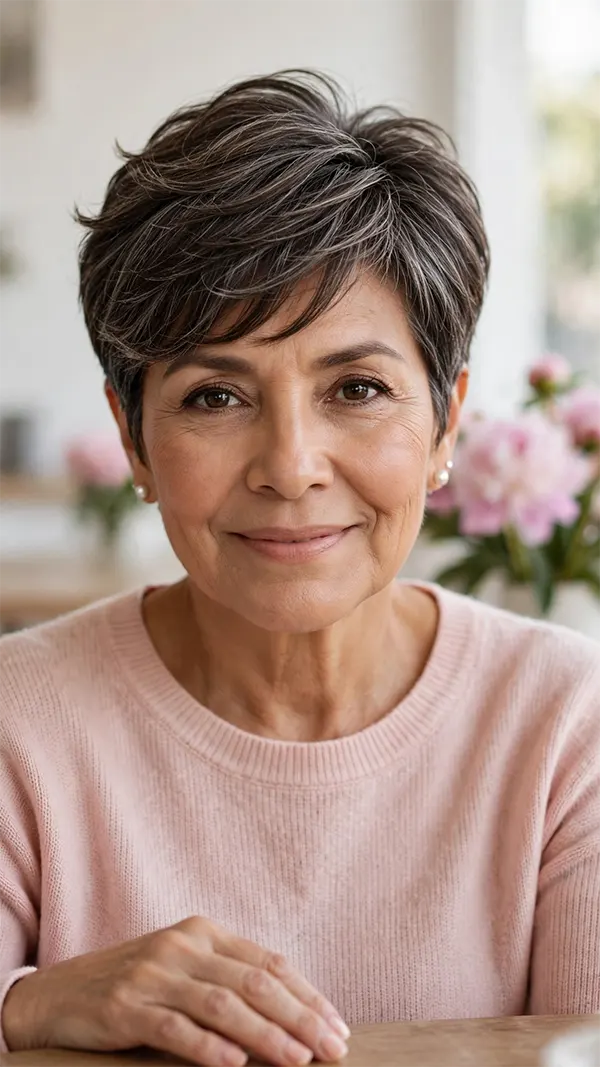
The feathered pixie has fine, wispy ends that look like soft feathers. The layers are cut at gentle angles so each piece tapers to a delicate point, and the overall shape stays light and airy. The top is slightly longer than the sides, and the fringe sweeps softly across the forehead. It has a delicate, romantic quality that makes it one of the most feminine pixie cuts you can choose.
Feathered ends do a lot for mature hair. They remove blunt, heavy edges that can look harsh, and they create a soft transition between lengths. The cut suits fine-to-medium hair, where the feathery layers add the look of body. It also pairs well with gray, since the soft ends blend silver and darker strands together. Oval and heart-shaped faces look especially lovely with this gentle shape.
To style it, use a small amount of light cream and blow-dry with your fingers, directing the feathered pieces upward and slightly forward. A flexible hairspray keeps them in place without stiffness. Avoid heavy products, which collapse the delicate ends. If you like a bit more shape, curl the fringe lightly with a small iron. Trim every five to six weeks, because feathered ends lose their finesse quickly once they grow past a certain point.
Styling Tip
Finish by running a little shine spray over the feathered tips only. It adds a healthy gloss without weighing down the rest of the hair.
If the ends start to look ragged, a light dusting trim at the salon is usually enough. Frequent small trims beat waiting until the shape has fully lost itself.
18. Curtain Bangs Pixie
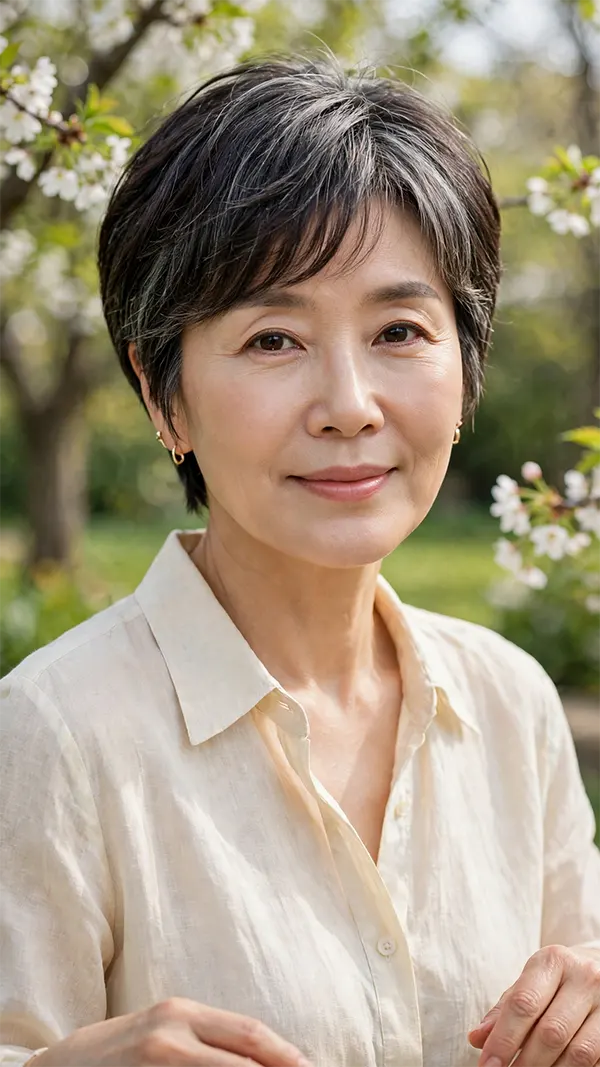
Curtain bangs split in the middle and sweep out to each side; on a pixie, they create a charming, face-framing effect. The bangs begin around the brow bone and blend into short layers at the sides, so they never look separate from the rest of the cut. The back and sides stay tapered and neat. The overall look is soft, youthful, and slightly retro, with a gentle romance that surprises many people who expect pixies to be severe.
These bangs are especially kind to the forehead and eyes. The center opening reveals the face, while the sides soften the temples, so the lines look quieter and the eyes look brighter. They also grow out beautifully, which makes them a safe way to try bangs for the first time. Straight and slightly wavy hair holds the shape best, and fine hair gains a sense of fullness around the face.
Style the bangs by blow-drying them with a round brush, pulling them outward from the center parting. A little dry shampoo at the roots keeps them from collapsing during the day. If they separate too much, rub a tiny bit of cream between your fingertips and press them back together. The rest of the cut needs little effort. Maintain with a bang trim between salon visits and a full trim every six weeks.
Face Shape Note
Long and square faces look especially lovely with curtain bangs, because the sideways sweep adds softness and width. Round faces should ask for slightly longer bangs to avoid extra width at the forehead.
Heart-shaped faces benefit from bangs that begin a touch lower. It adds balance around the cheeks and softens a pointed chin.
19. Spiky Pixie
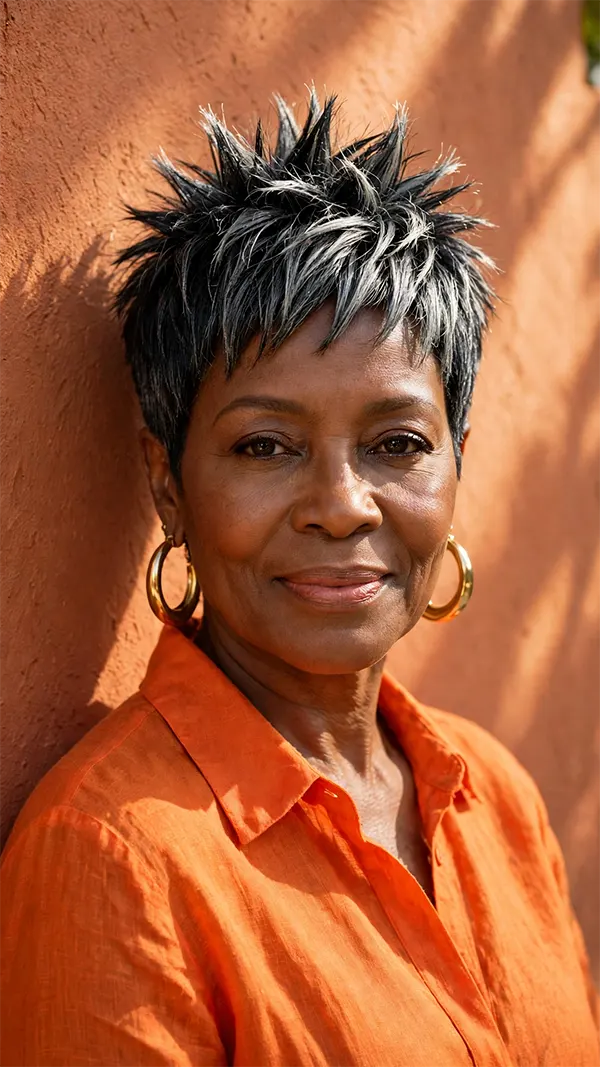
The spiky pixie is short, bold, and full of energy. The top is cut into small, pointed pieces that stand upright, usually with a bit of product to hold them in place. The sides and back are close and tidy, so the spikes stand out clearly. It is a cheeky, confident look that tells everyone you are not trying to blend into the background, and it suits women with a playful streak.
Despite its edgy reputation, a spiky pixie can be surprisingly flattering. The upward texture adds height, lengthening the face and lifting the features. Fine hair looks thicker because each strand stands on its own, and silver hair looks striking when the tips catch the light. The key is to keep the spikes soft and slightly rounded instead of sharp and rigid, which suits mature features far better than a harsh, gelled look.
Styling takes a few minutes. Apply a small amount of matte paste or clay to dry hair, twist small sections upward between your fingers, and set them with a light spray. Avoid heavy gel, which can look stiff and dated. This cut grows out quickly, so plan a trim every four to five weeks. If you tire of the spikes, the same cut can be smoothed down for a sleeker finish on a quieter day.
Wear It For
Casual weekends, outdoor events, and relaxed gatherings suit this cut best. It matches jeans, bold earrings, and bright lipstick without any extra effort.
For work, smooth the spikes down slightly with a little serum. The same cut then looks neat and polished while keeping its lively character.
20. Sleek Slicked-Back Pixie
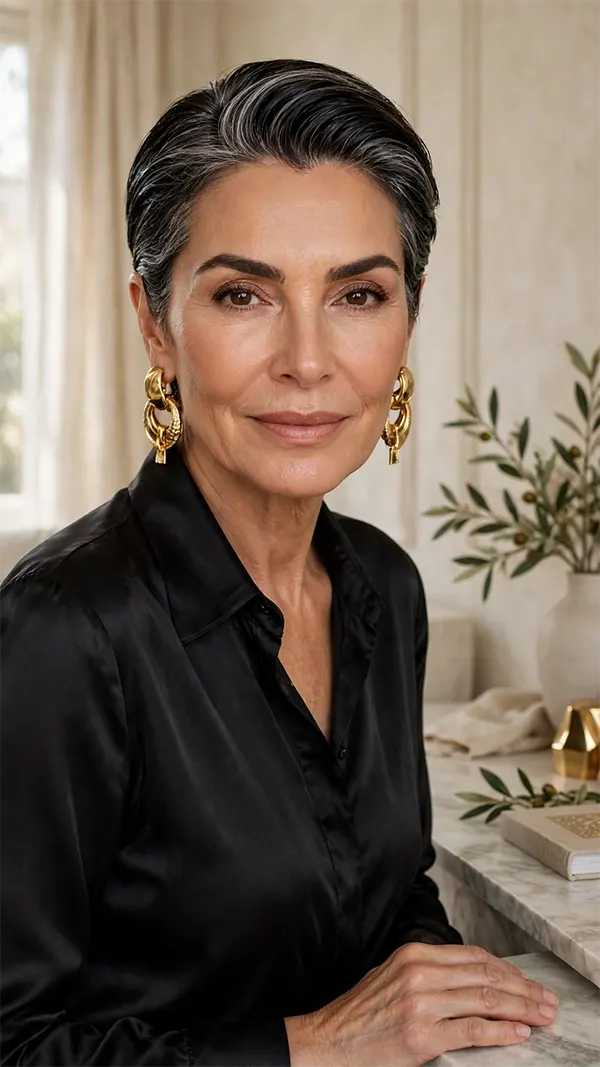
The sleek, slicked-back pixie is smooth, glossy, and sophisticated. The hair is brushed back from the forehead and set with a light styling product, so it lies close to the head with a mirror-like finish. The sides are short and clean, and the top is just long enough to sweep back neatly. It has a polished, almost Hollywood quality, and it makes a strong statement with very little fuss.
This look shows off the face completely, highlighting the bone structure, eyes, and jawline. It suits women with defined features or those who like a clean, confident appearance. Dark hair gains a rich, glossy sheen, silver hair looks like polished metal, and blonde hair takes on a soft glow. Because the style is smooth, healthy hair matters, and regular conditioning is worth the effort.
To create it, apply a small amount of lightweight styling cream or pomade to damp hair, then comb it back with a fine-tooth comb or brush while blow-drying. Finish with a shine spray and a touch of hold. Avoid using too much product, as it can look greasy or wet. A trim every five weeks keeps the shape tidy, and a monthly deep conditioning treatment preserves the shine. This is a sharp, elegant choice for special occasions.
Why It Works
The smooth finish draws attention to the face and creates clean, intentional lines. It also pairs beautifully with statement earrings and defined brows.
If you prefer something softer, leave a few short wisps at the temples. They break up the severity and add a touch of femininity.
21. Salt and Pepper Pixie
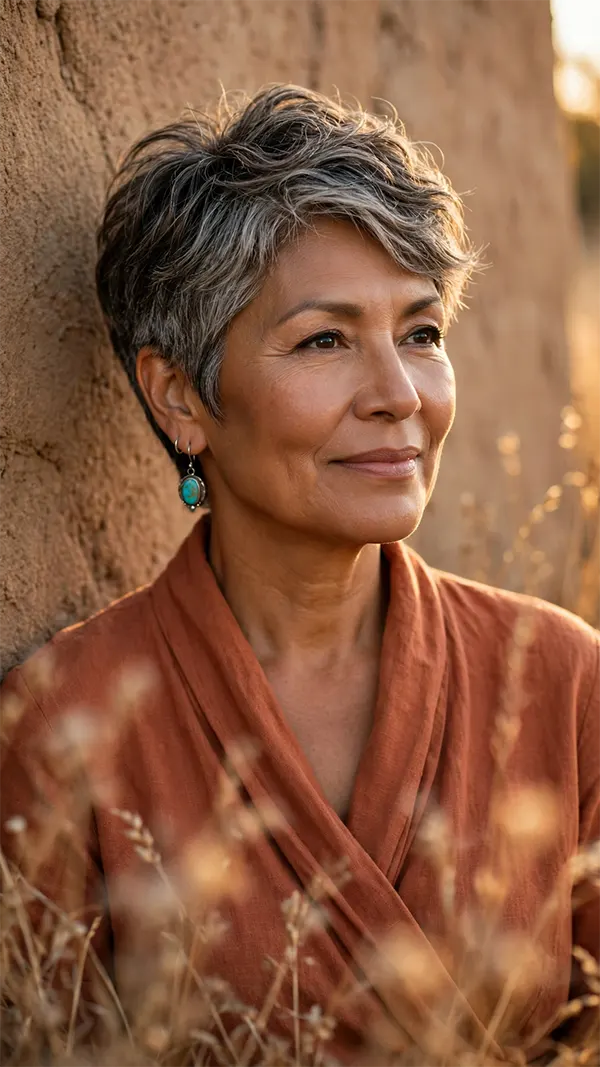
A salt-and-pepper pixie celebrates the mix of dark and silver strands that many women develop naturally. The cut is short and layered, with soft texture on top, and it lets the blended color create its own dimension. The mix of tones looks rich and natural, and the pixie shape keeps it neat and polished. It is a low-effort, high-style choice that skips the root touch-up cycle altogether.
The layers are important because they separate the strands and show off the contrast. Without them, mixed colors can look patchy. With them, the light and dark pieces blend into a soft, textured effect that looks like deliberate highlights. This cut suits many face shapes and works with straight, wavy, and curly hair. A glossing treatment can enhance the shine and make the silver look brighter and more even.
For styling, use a lightweight cream to smooth the strands and a texturizing spray for movement. Salt-and-pepper hair can be coarse, so a leave-in conditioner helps soften it. Avoid heavy products that dull the silver. A purple shampoo every couple of weeks prevents yellowing. Plan a trim every six weeks, and if you want to even out the tones, ask your colorist for a clear gloss or a subtle neutral toner that harmonizes the mix.
Color Note
If you are growing out your color, ask for lowlights that match your natural gray. They make the transition look soft and intentional rather than like regrowth.
Rinse with cool water at the end of each wash. It closes the cuticle and keeps the silver tones looking glossy and clean.
22. Copper Pixie
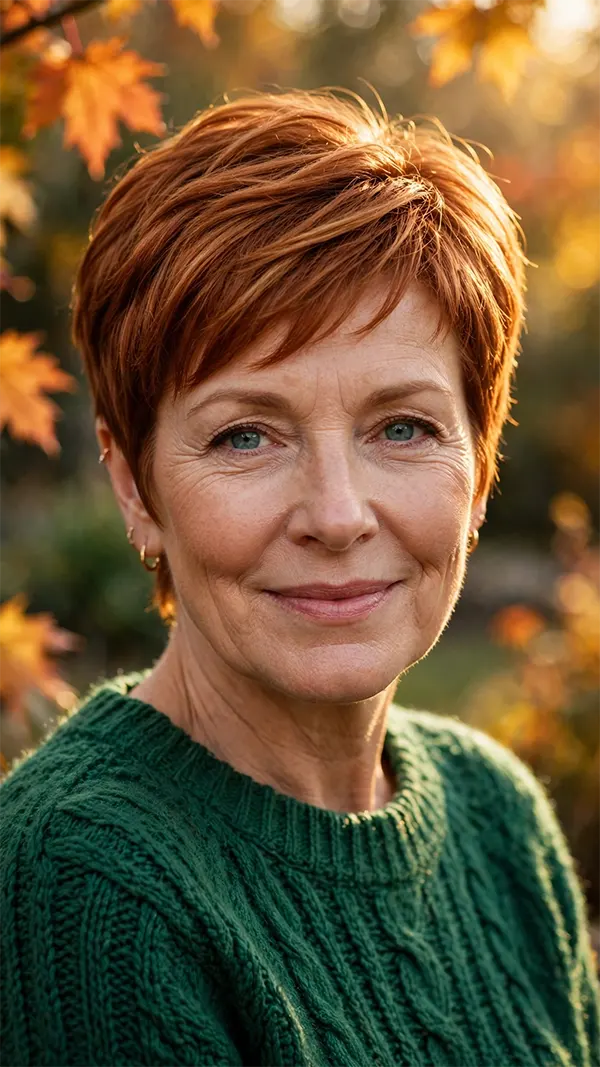
A copper pixie brings warmth and brightness to a short cut. The color ranges from soft apricot to deep auburn, and it looks especially rich on a layered pixie, where the texture catches the light and reveals different shades. The effect is cheerful and glowing, giving the whole face a healthy flush. It is a lovely option if you want a change that feels bold without being extreme.
Copper flatters many skin tones, particularly warm and neutral ones, and it can brighten a complexion that has lost a little color. It also blends gently with gray, so regrowth looks soft. A subtle, golden copper suits those who want a quiet change, while a deeper auburn copper makes a stronger statement. The pixie shape helps because the short length keeps the color looking fresh and evenly toned from root to tip.
Copper fades faster than most colors, so use a color-safe shampoo and rinse with cool water. A color-depositing conditioner every couple of weeks keeps the warmth vivid. Protect the color from heat with a good spray, and avoid very high temperatures when styling. Schedule a gloss or toner every six weeks to keep the shade rich. A trim every five to six weeks keeps the shape neat, and the color stays beautiful throughout.
Undertone Guide
Warm skin tones suit golden copper, while cooler skin tones look better with a deeper, rosy copper. Ask your colorist to test a small section first, since copper looks different on every base color.
If you want to ease in, start with copper lowlights through a brown base. They give a warm glow without a full color commitment.
23. Caramel Balayage Pixie
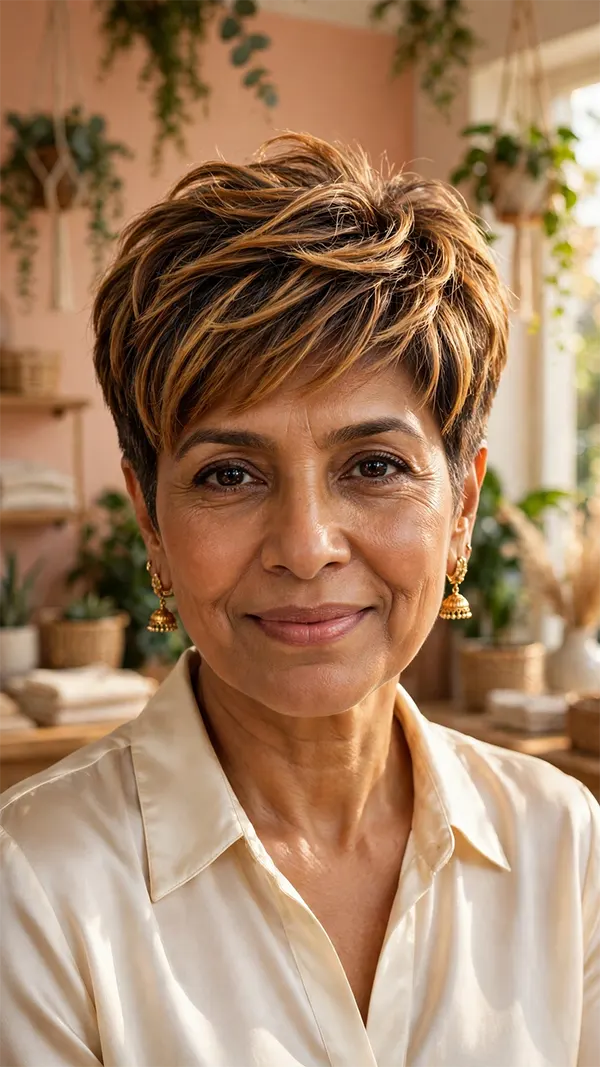
A caramel balayage pixie uses hand-painted highlights to add soft, sun-kissed color to a short cut. The color is brushed onto the top layers and around the face, with the darkest tone left at the roots and the lightest at the tips. The result is a natural gradient that looks like hair lightened by summer, and the cut shows off every shade. It is a warm, glowing look that takes the pressure off exact roots and regrowth.
Balayage suits pixies because the short length shows the gradient clearly without needing much hair. It adds depth to flat color, and it makes fine hair look thicker by creating light and shadow. The caramel tone flatters medium and warm skin tones in particular, and it blends gray hairs into the highlights so they look planned. Soft layers on top allow the lighter pieces to catch the light as you move.
Because the color is blended, the upkeep is lighter than with traditional highlights. You can often go ten to twelve weeks between color appointments, and the grow-out looks soft. Use a sulfate-free shampoo and a weekly mask to keep the tone fresh. Style with a light cream and a loose blow-dry to show off the movement. Trim every six weeks to maintain the pixie shape, and ask for a gloss at the salon whenever the shade feels dull.
Color Note
Bring photos to your colorist that show the exact warmth you want. Caramel can look golden, beige, or reddish, and a picture clears up any confusion.
Ask for the brightest pieces to be placed around the face. It brightens the complexion and makes the whole cut feel more flattering.
24. Pixie for Round Faces
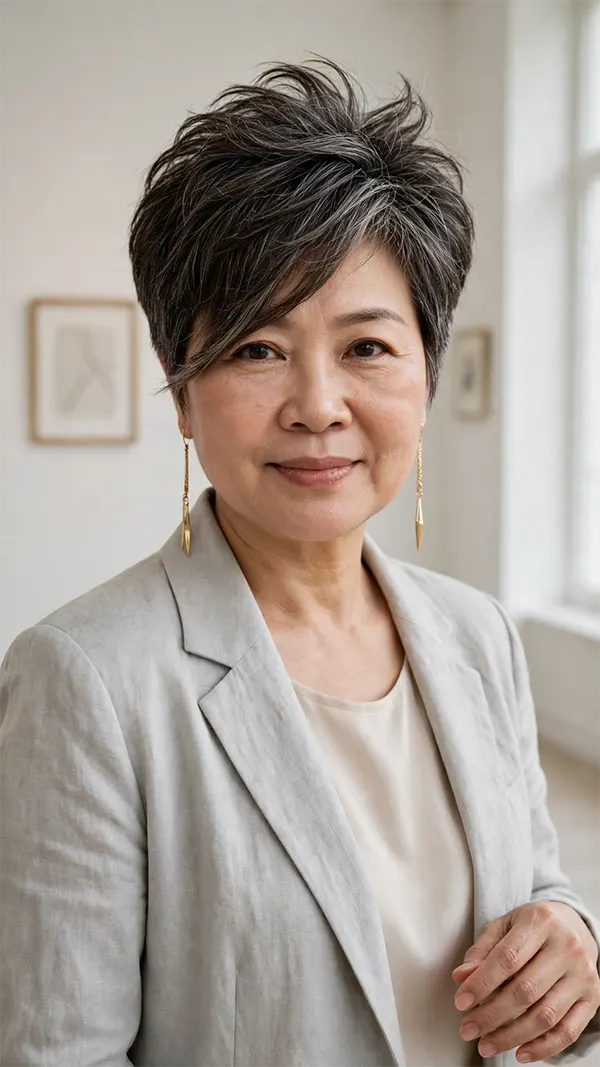
A pixie for a round face is cut to add height and length rather than width. The top is left longer and lifted, the sides are kept close and tidy, and the fringe is swept diagonally instead of cut straight across. The shape creates a vertical line that visually lengthens the face and gives it a more defined outline. It proves that round faces do not need to avoid pixies; they need the right proportions.
The lifted crown is the most important detail. It draws the eye upward, creating the impression of a longer, slimmer face. Side-swept fringe breaks up the roundness across the forehead, and shorter sides expose the cheekbones, which adds definition. Avoid heavy layers on the cheeks, since they add width. Fine, straight, and wavy hair all work well, and a touch of volume at the crown finishes the shape.
For styling, use a root lift product and blow-dry the crown upward, then shape the fringe with a small round brush. A flexible hairspray keeps the height in place. Choose a stylist who understands facial balance and ask them to check the proportions as they cut. Plan a trim every five weeks, since the height depends on the sides staying short. If the sides grow too long, the shape loses its slimming effect.
Face Shape Note
Keep the fringe diagonal and slightly long. A short, blunt fringe adds width and works against the lengthening effect you want.
Choose earrings that hang below the jawline, such as long drops or slim hoops. They echo the vertical lines of the cut, making the face look longer.
25. Pixie for Thick Hair
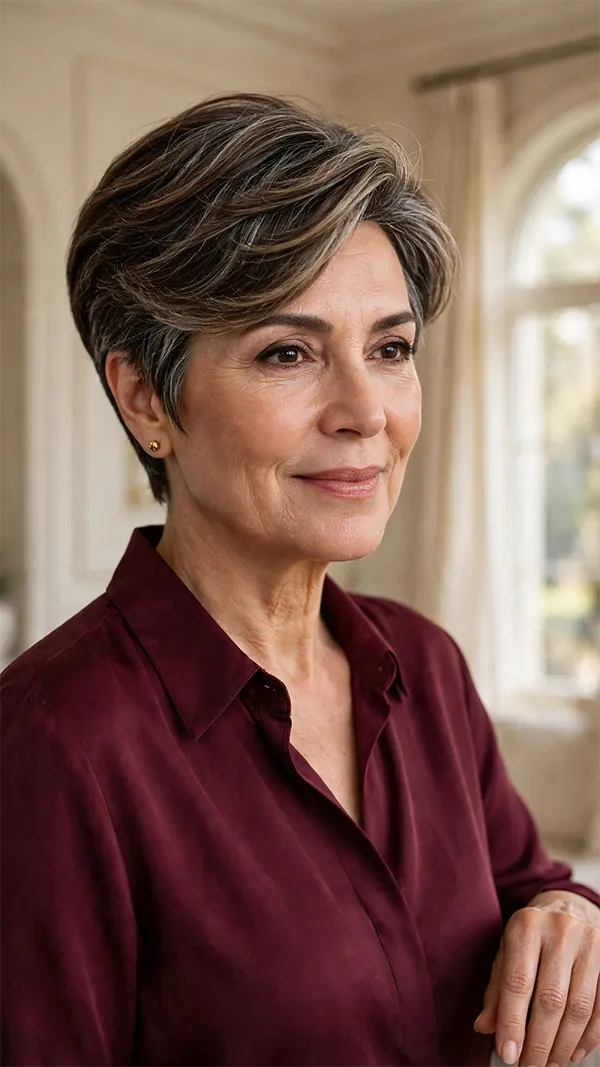
Thick hair can feel heavy and warm in a short cut, so this pixie is built to lighten the load. The cut uses internal layers and careful thinning to remove bulk without sacrificing shape. The outside stays smooth and neat while the inside is lightened, so the hair sits close to the head and moves easily. The final look is clean, balanced, and far more comfortable to wear than a heavy, solid cut.
Thick hair tends to form a pyramid shape in short styles, wider at the bottom than the top. Internal layers prevent this by redistributing the weight so the silhouette looks neat. A longer top gives you more styling options, while tapered sides and a tapered apex reduce heat and bulk. Coarse or gray thick hair often benefits most, since shorter lengths soften the texture and make it more manageable. Wavy thick hair looks especially full and bouncy.
For daily styling, a smoothing cream and a quick blow-dry with a paddle brush are usually enough. Use a heat protectant to guard against damage, and add a leave-in conditioner if your hair feels wiry. Avoid over-thinning, which can leave ragged, uneven ends. A good stylist will remove weight gradually and check the shape as they go. Plan a trim every six weeks, since thick hair grows out visibly and the shape collapses once the weight returns.
Maintenance Tip
Never skip trims with thick hair. The weight returns quickly, and the cut starts to feel heavy again. Regular visits keep the internal layers working.
Choose a light hair oil for the ends instead of a thick cream. Thick hair already has plenty of body, and lighter products keep it sleek without adding bulk.
26. Tapered Natural Coily Pixie
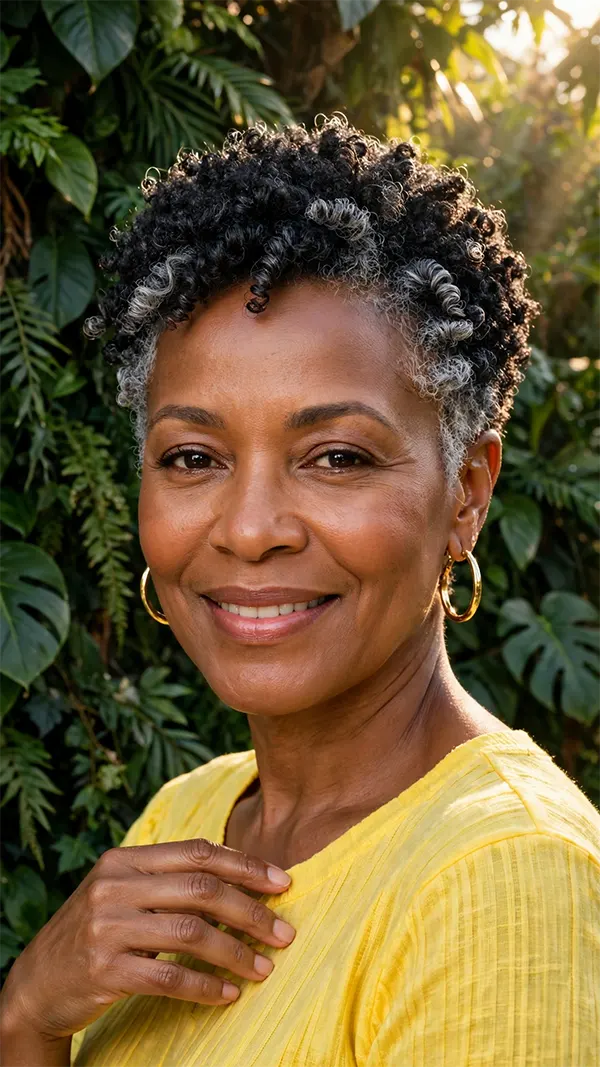
The tapered natural coily pixie celebrates tight coils and curls in a short, shaped cut. The hair is tapered neatly at the sides and nape, while the top is left slightly longer to show off the coil pattern. The result is a defined, sculpted look that beautifully frames the face and highlights its natural texture. It is a graceful, low-maintenance style that makes the most of coily hair in a way that feels confident and polished.
A tapered shape suits coily hair because it keeps the outline crisp and balanced. The shorter sides expose the cheekbones and neckline, and the longer top gives the coils room to spring. Silver coils look especially striking, with a soft, cloud-like glow. Because coily hair shrinks when dry, a stylist who knows how to shape it dry or damp is a real asset, and it helps to describe the shape you want before the cut begins.
Daily care is simple but important. Moisturize with a water-based leave-in and seal with a light oil or cream to keep the coils soft and defined. Finger-style or use a pick gently to shape the top. Sleep on a satin pillowcase or wear a satin bonnet to protect the coils. Deep condition weekly, and plan a trim every four to six weeks to keep the taper clean and the shape neat.
Texture Note
Shape coily hair gently with your fingers or a wide-tooth pick. Combing dry coils with a fine comb breaks the pattern and causes frizz.
If the top feels dry in colder months, apply a small amount of shea butter or a rich cream to damp hair. It locks in moisture and keeps the coils bouncy.
27. Micro Fringe Pixie
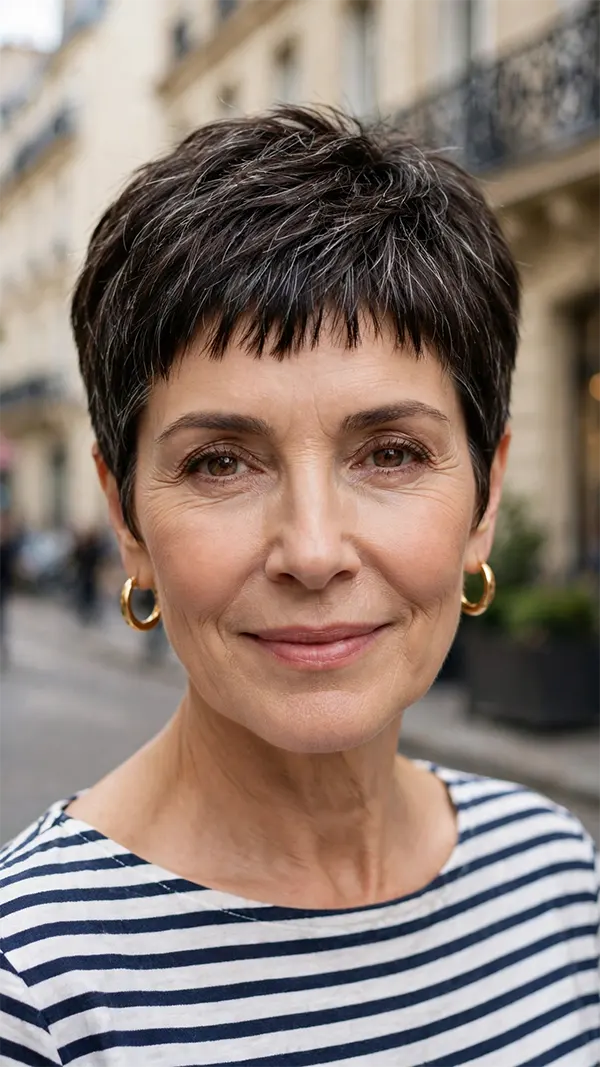
The micro fringe pixie pairs a very short, cropped cut with a tiny fringe that sits high on the forehead. The bangs are cut a little above the brows, giving the face a graphic, gamine frame. The rest of the hair is short and tapered, with a soft texture on top. It is a stylish, artistic look that has a distinctly European feel, like something spotted outside a Paris cafe, and it works for women who like a clean, bold frame.
A micro fringe draws immediate attention to the eyes and brows, flattering those with expressive features. It also lifts the look of the forehead, which can feel refreshing for many women. Straight, fine hair holds the sharp edge best, and the style looks beautiful in dark colors or silver. Because the fringe is short, it needs to be cut by someone confident, so choose your stylist carefully.
Style it by drying the fringe flat with a small paddle brush and a little smoothing cream. A flexible spray helps keep the line neat. This cut needs frequent fringe trims, ideally every three to four weeks, to keep the length precise. If it grows too long, it quickly loses its sharp character. Keep the rest of the cut tidy with a trim every five to six weeks, and consider a soft fringe option if you prefer less maintenance.
Design Detail
A micro fringe works best when your brows are well-groomed, because the two features frame each other. A little shaping and a soft brow color make a big difference.
Ask your stylist to cut the fringe slightly curved instead of perfectly straight. A subtle curve looks gentler and flatters mature features more than a hard line.
28. Soft Faux Hawk Pixie
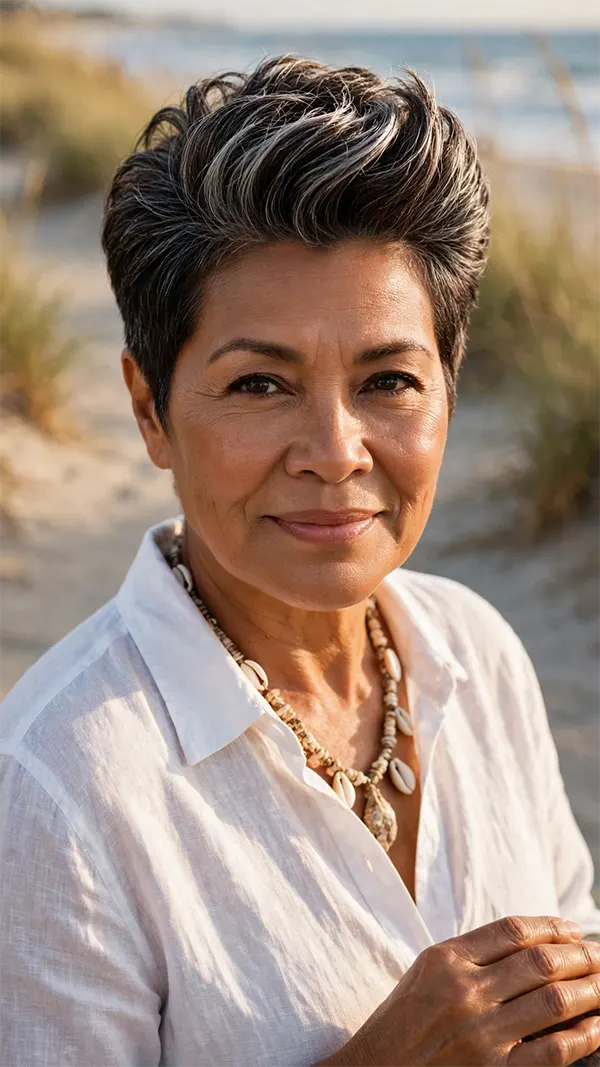
The soft faux hawk pixie lifts the hair along the center of the head into a rounded, upward ridge, while the sides stay short and smooth. Unlike a real mohawk, the shape is gentle and blended, with no sharp lines. The effect is a playful, energetic silhouette that adds height and attitude without feeling aggressive. It has the lively charm of a style that refuses to take itself too seriously.
This cut is a clever option for fine hair because the lift in the center creates height and the impression of density. It also elongates the face, which is helpful for round and square shapes. Straight and wavy hair respond well to the styling, and silver or platinum shades make the central ridge glow. The sides can be blended softly so the look stays elegant, and you can wear it as a polished or tousled version.
To style it, apply a volumizing mousse and dry the top upward with a small round brush, pushing the hair toward the center. Finish with a light pomade or paste to shape the ridge, and use a flexible hairspray for hold. For daytime, keep the lift low and soft. For evenings, raise it higher for drama. Trim every four to five weeks to keep the sides tidy and the center length balanced.
Volume Tip
Gently press the hair toward the center with your palms while it dries. This trains the direction and makes the lift easier to recreate each morning.
Use a small amount of dry texture spray at the base of the ridge. It adds grip, so the height stays consistent throughout the day.
29. Deep Side Part Pixie
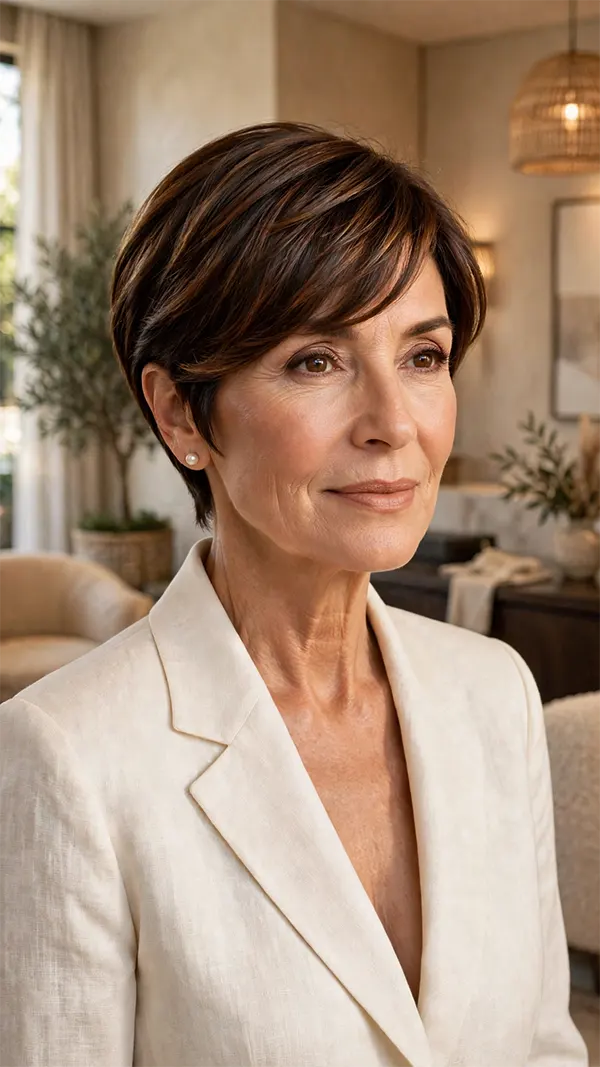
A deep side part gives a pixie instant polish. The hair is parted close to the arch of the eyebrow, and the longer side sweeps across the forehead in a soft curve while the shorter side is tucked behind the ear. The rest of the cut stays short and tapered, with light layers on top. It looks refined and slightly retro, and the asymmetry draws attention to the eyes and cheekbones in a flattering way.
This cut is useful if you want to soften the forehead without committing to bangs. The sweeping fringe covers part of it, creating a gentle, natural frame. It also adds volume to the part, which helps fine hair look fuller. Straight and slightly wavy hair holds the sweep most easily, and silver, brunette, and blonde all look elegant. Many women find it the most flattering of the everyday pixie styles because the deep part adds structure.
To recreate it, part your hair while it is damp, then blow-dry it flat against the part with a paddle brush to set the direction. Finish with a small round brush to lift the root, and set the part with a light spray. If the part keeps flopping back, dampen the roots and dry them again in the correct direction. Trim every five to six weeks, and ask your stylist to cut the part while your hair is dry.
Styling Tip
Choose the side where your hair naturally falls. Fighting a stubborn cowlick on the wrong side makes the style harder to manage every day.
Add a little shine serum along the sweep of the fringe. The smooth finish emphasizes the curve and gives the cut a polished look.
30. Plum Burgundy Pixie
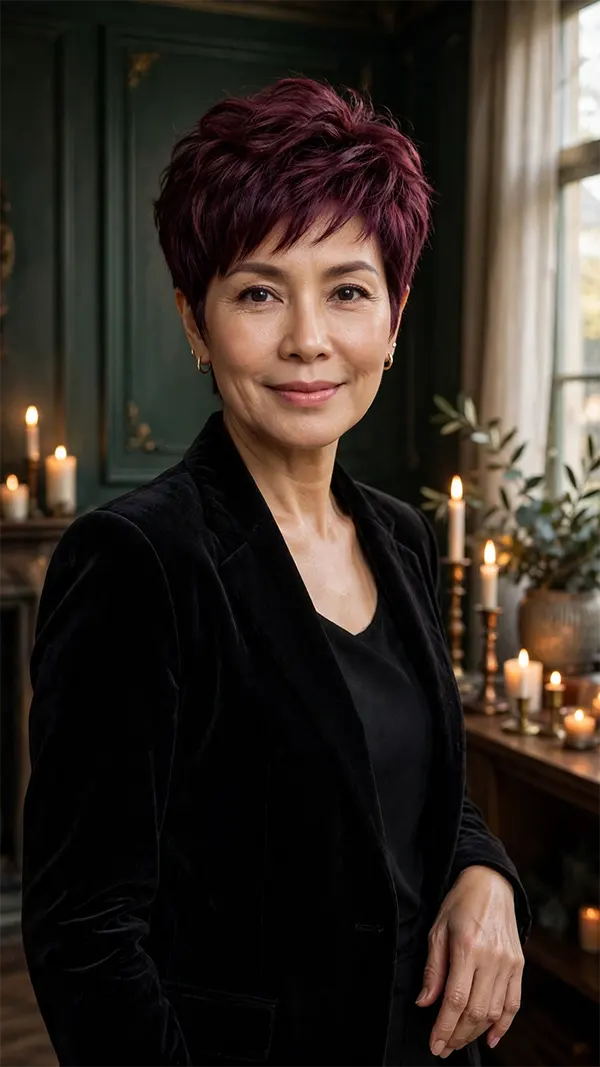
A plum burgundy pixie combines a short, textured cut with a rich, wine-toned color. The shade sits between deep purple and red, with a glossy, jewel-like finish that looks luxurious against a short shape. The layers on top let the color shift in the light, so it looks darker in shadow and brighter in the sun. It is a sophisticated way to add color without going fully bright, and it feels quietly bold.
Plum and burgundy tones suit many skin tones, especially fair, olive, and deeper complexions. They add depth to dark hair and can cover gray with a rich, even tint. The color is also kind to mature skin, since the warmth brings a healthy glow. A soft, wine-toned shade looks elegant, while a stronger violet-leaning shade makes a fashion statement. The pixie shape keeps the color looking intentional and neat.
Fashion colors fade faster, so use a color-safe shampoo and wash with cool water. A color-depositing conditioner every week keeps the tone vivid between salon visits. Protect the hair from heat and sun, since both can dull the shade. Style with a light cream and a small amount of shine serum for glossy results. Plan a refresh every six to eight weeks, and trim every five to six weeks to keep the pixie shape crisp.
Color Note
Start with a deeper plum if you are nervous about color. It reads as a rich dark brown in some lights and reveals its color in sunlight.
Bring a photo of the exact shade you like. Wine, plum, and burgundy overlap, and a picture helps your colorist hit the tone you imagine.
31. Grown-Out Messy Pixie
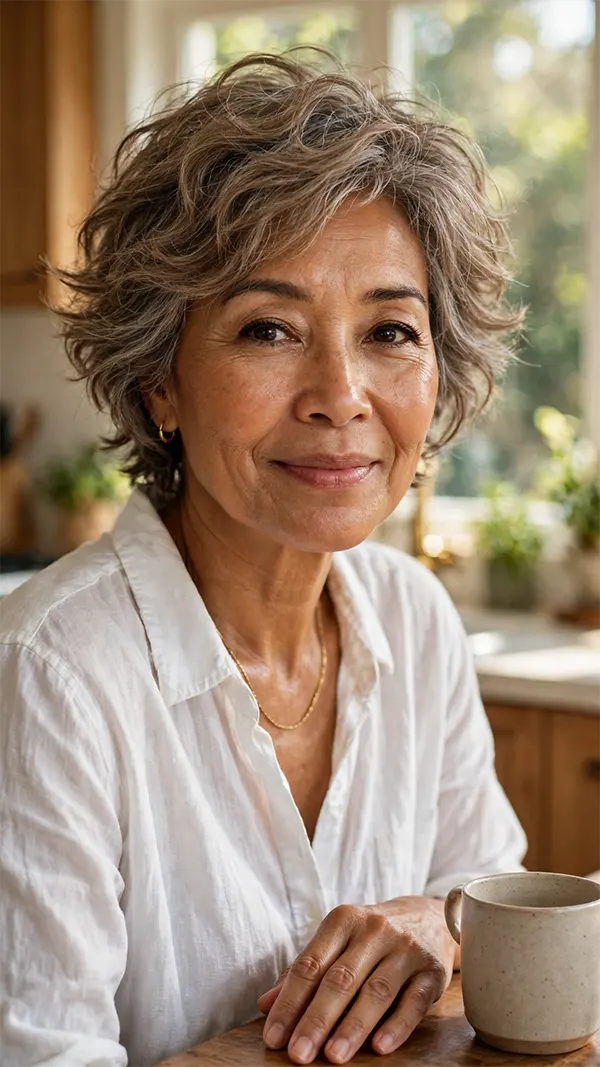
The grown-out messy pixie is what happens when a pixie has had a few extra weeks of freedom, and it looks surprisingly good. The hair is longer on top and around the ears, with soft, uneven layers that flop and curl naturally. The shape is relaxed and slightly bedhead, with a lovely effortless charm. It suits women who like a casual, lived-in look and do not want to book appointments every month.
The longer length gives you more room to experiment. You can push the hair back, sweep it across, or tuck it behind the ears. Fine hair gains soft volume as it grows, and wavy hair shows extra bounce. Because the cut is meant to look relaxed, small imperfections disappear into the texture. It is also a convenient stage if you are growing out your hair or transitioning from a longer style to a shorter one.
To style it, use a sea salt spray or a light texturizing cream, then scrunch the hair as it dries. A bit of dry shampoo at the roots adds body. Use your fingers to arrange the pieces instead of a brush. Keep the ends from looking ragged with a light trim every eight to ten weeks. If you decide to cut it shorter again, a stylist can easily reshape the cut into a polished pixie.
How to Wear It
Pair this look with soft knits, simple jewelry, and minimal makeup. The relaxed hair suits a natural, easy wardrobe.
A small clip or bobby pin at the side keeps the longer pieces out of your eyes. It also looks stylish and adds a subtle detail.
32. Gray Blending Pixie with Lowlights
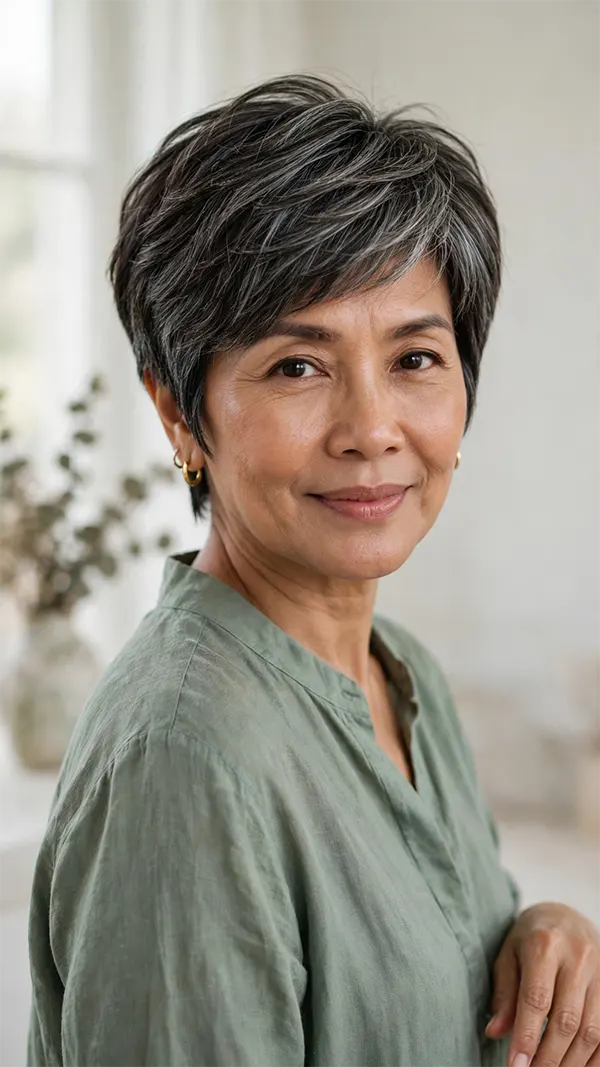
A gray blending pixie uses soft lowlights and highlights to ease the transition between your natural gray and your previous color. The cut is short and layered, and the color is placed in fine, blended pieces that mix silver with darker tones. The result looks like a natural salt-and-pepper effect, with no harsh line at the roots. It is a practical choice for anyone ready to stop covering gray without waiting for a long grow-out.
The short length is a big advantage here. Because pixie hair grows out quickly and is trimmed often, the old color disappears within a few months. The blended lowlights hide the transition in the meantime and add depth to the cut. This works for most hair colors, from brunette to blonde, and it is flattering on many skin tones. The layers on top let the mix of tones show through clearly, making the whole shape look rich and dimensional.
To care for it, use a gentle shampoo and a weekly conditioning treatment, and add a purple shampoo every couple of weeks to keep the silver clear. Style with a light cream and a little texturizing spray. Plan a toning appointment every ten to twelve weeks, and trim every five to six weeks to remove the older color faster. After a few cuts, your natural silver will take over completely, and you can ask for a simple gloss to keep it bright.
Salon Advice
Tell your colorist your goal is to grow out your gray, not to cover it. They will place lowlights to match your natural tone rather than choosing a solid color.
Ask your stylist to cut away the longest colored lengths over time. It speeds up the transition and keeps the cut looking tidy at every stage.
Choosing a Pixie That Complements Your Features
With 32 options, the choice comes down to a few details about you. Think about your face shape first, then your hair texture and thickness, then how much time you want to spend on it each day.
Face Shape
| Your Face Shape | What to Ask For | Pixies to Look At | Why It Works |
| Round | Height at the crown, diagonal fringe, short sides | 13, 24, 28 | Adds length and defines the cheekbones |
| Oval | Almost any shape | 1, 8, 16, 20 | Oval faces carry most proportions well |
| Square | Soft fringe, wispy edges | 2, 5, 17, 29 | Softens the jaw and forehead |
| Heart | Fuller layers at the sides, soft fringe | 8, 17, 18 | Balances a narrower chin |
| Long | Side-swept bangs, rounded sides | 2, 18, 31 | Adds width and softens length |
Hair Type
| Your Hair Type | Best Direction | Pixies to Look At |
| Fine or thinning | Lifted crown, soft layers, no over-thinning | 12, 13, 28 |
| Thick | Internal layers, tapered sides | 7, 25 |
| Wavy | Longer top, natural movement | 14, 15, 31 |
| Curly or coily | Rounded shape cut by a curl specialist | 6, 26 |
| Silver or gray | Layers that show the color, a gloss | 4, 21, 32 |
Routine
| Your Routine | Best Fit | Pixies to Look At |
| Under five minutes a day | Textured, shaggy, or curly styles | 3, 14, 15, 31 |
| Ten minutes with a blow-dry | Sleek or side-parted styles | 2, 20, 29 |
| Salon visits every four to five weeks | Undercut, micro fringe, tapered styles | 7, 9, 27 |
| Salon visits every eight to ten weeks | Soft, textured, grown-out styles | 14, 31 |
Budget matters too. Short cuts need more frequent trims, but they use less product and dry quickly. Color styles like platinum, copper, and plum add to salon costs, so plan for toning and glosses. If you want something low-cost, silver-salt-and-pepper, natural-texture styles save the most on color and styling.
How to Recreate Your Favorite Pixie at Home and at the Salon
The best haircut starts with a good conversation. Walking into the salon prepared makes the difference between a cut you love and one that is almost right.
- Gather two or three photos. Choose images of hair with a texture and thickness similar to yours. A photo of fine, straight hair will not help if yours is thick and curly.
- Describe the shape in plain words. Mention how short you want the sides, how long you want the top, and whether you want bangs or a part.
- Explain how you style your hair. Tell your stylist whether you blow-dry, air-dry, or use hot tools. The cut should suit your habits.
- Share your concerns. Mention thin areas, cowlicks, a high forehead, or any area where your hair misbehaves.
- Ask about maintenance. Find out how often you will need trims and which products will help.
- Ask for a quick lesson before you leave. Have your stylist show you how to dry and finish the cut so you can repeat it at home.
A simple home toolkit goes a long way:
- A lightweight volumizing mousse or texturizing cream
- A matte paste or clay for definition
- A heat protectant spray
- A small round brush and a paddle brush
- A flexible-hold hairspray
- A purple shampoo for silver or blonde hair
- A leave-in conditioner for dry or curly hair
For most pixies, the daily sequence is the same. Apply a small amount of product to damp hair, rough-dry with your fingers to about eighty percent, shape the roots and fringe with a round brush, define the texture with paste, and set with a light spray. Once you learn your pattern, the whole routine takes only a few minutes.
Making a Pixie Work for Your Everyday Routine
A haircut should fit the life you actually live, not the one you imagine on a perfect morning. Before you commit, ask yourself a few honest questions. How many minutes do you want to spend on your hair? How often are you willing to visit the salon? Do you prefer a polished finish or a relaxed one?
Here are a few simple formulas to help you decide:
| If You Want | Start With | Add This Detail |
| A low-effort, easy morning | A shaggy or messy pixie (14, 31) | Sea salt spray and an air dry |
| A polished, professional look | A side part or sleek pixie (20, 29) | Smoothing serum and a quick blow-dry |
| More volume on fine hair | A crown volume pixie (12, 13) | Mousse at the roots |
| A softer face frame | Curtain or wispy bangs (5, 18) | A small round brush |
| A color refresh | Copper, caramel, or silver (4, 22, 23) | A gloss every six to eight weeks |
Change only one thing at a time. If you love your cut, try a new part, a soft highlight, or a different finish. Small adjustments refresh your look without starting over, and they help you learn which details suit you best. That is how a haircut becomes truly yours.
Frequently Asked Questions
What are the best pixie haircuts for women over 50?
Soft, layered pixies; long pixies with side-swept bangs; and textured, choppy pixies are some of the most flattering. The best choice depends on your face shape and hair type. Fine hair does well with lifted crowns, thick hair needs internal layers, and curly hair needs a shape cut by someone who understands curls.
Do pixie cuts make you look younger?
They can, because a good pixie lifts the face, opens the eyes, and shows off the cheekbones. Heavy, flat hair can drag features downward. Soft layers, a gentle fringe, and healthy shine do the opposite. The shape of the cut matters far more than its length.
Which pixie works best for fine or thinning hair over 50?
A layered pixie with a lifted crown works best. Keep most of the length on top, avoid thinning too much, and use a lightweight mousse at the roots. Shorter hair looks fuller because there is less weight pulling it flat, and highlights add visual density.
Can I wear a pixie if I have thick or curly hair?
Absolutely. Thick hair needs internal layers and a tapered nape to remove bulk, while curly and coily hair needs a rounded shape cut by a curl-savvy stylist. Both can look beautiful in a pixie. Use moisturizing products and trim regularly to keep the shape neat.
How often should I trim a pixie cut?
Most pixies need a trim every five to six weeks to hold their shape. Undercuts, micro fringes, and tapered styles may need visits every four weeks. Shaggy, messy, and grown-out styles are more forgiving and can stretch to eight or ten weeks between appointments.
What if I do not like my pixie after it is cut?
Hair grows about half an inch a month, so a pixie grows out faster than most people expect. In the meantime, you can change the look with a different part, a headband, or a texturizing product. A good stylist can also reshape it into a bixie or longer cut.
Should I embrace gray with a pixie cut?
Gray looks wonderful in a pixie. The short shape reflects light evenly, so silver looks bright and dimensional. Use a purple shampoo every week or two, add a gloss at the salon, and keep the cut neat. If you are still growing out color, lowlights can ease the transition.
I’m Maria Foster, a fashion and beauty writer with 15 years of experience in the fashion industry. Being in my mid-40s has given me a real appreciation for style that feels beautiful, practical, and true to me.
I love sharing outfit ideas, hairstyle inspiration, hair trends, and simple beauty looks that women can actually enjoy wearing in everyday life.